Big Bang Poetry

Reinventing the Life of a Poet in the Modern World

Page 55 of 69

Take the Christian Science Monitor’s Poetry Test

QuizI took this test last night. Wasn't easy. But if you've been reading poetry voraciously for decades, you'll probably do ok. I've been reading poetry voraciously only sporadically over the last 20 years so I only did so-so. If they would have thrown in a bonus question about The Mary Tyler Moore Show, I would have nailed it!  (I won my Mary Tyler Moore Show Trivia Merit Badge in 1994, I'm proud to say).

Christian Science Monitor asks the question, Are You a Poetry Aficianado? And the gauntlet is thrown down!

MarymeritThis reminds me of my Name That Cher Tune test on Cher Scholar. I pick deep catalog snippets from the vaults of 40 albums and one single going back to 1964. One day a very flappable Cher fan wrote me an email (I wish I still had it) that said quite frankly, "You Bitch! This test is too f*$king hard!! Where are the new songs, bitch???" I remember telling him to calm down; if I made the quiz too easy, every sequined-loving kid out there would win it. He did calm down and we became fast Cher-friends.

Think about that when you're suddenly frustrated that you've never read any Wendell Berry (for no other reason than to have an online test validate your value as a mover and a shaker among poetry readers).

Here is the test.


Interesting Waite Phillips Quotes Pertaining to Writing

Dawnchandler I've spent the last 20 days with family and friends celebrating Monsieur Big Bang's graduation with his master's degree from nearby Highlands University. We took my parents up to the Cimarron area for a day. There we saw the remains of the town of Dawson, New Mexico. Dawson was a mining town important to our family because it's existence supplied the need for a railroad depot and a new town called Roy, New Mexico, where my grandparents were raised. Ironically, Roy still exists as a small town but Dawson was closed down decades ago by the railroad company that ran it. You can visit the cemetery and the memorial to the miners who lost their lives in some horrific mining accidents there.

We also visited Philmont Boyscout Ranch, where Monsieur Big Bang did his field work last summer. We visited the area where he camped (which is near the house of Gretchen Sammis, a very interesting woman rancher who was heir to the Chase Ranch) and toured the Waite Phillips house at Philmont. Oil entrepreneur Waite Phillips donated much of his New Mexico property to the Boy Scouts in the 1950s.I bought a little commemorative book of his epigrams from the gift shop. He had some good things pertaining to the writing life:

– If you want to be a singer, start to sing. (Elsie Robinson)
– A man is generally what he thinks about all day long. (Emerson)
– The man who never makes mistakes never makes much of anything. (Waite Phillips)
-  What is really important is what you learn after thinking you know it all. (Waite Phillips)
-  The big shots are only the little shots who keep shooting. (Christopher Morley)
-  'Tis not in mortals to command success but we'll do more Sempronius–we'll deserve it. (Shakespeare)
-  Those incapable of building seek to attract attention by tearing down. (Channing Pollock)
-  The trouble with many of us is that we would rather be ruined by flattery and praise than saved by honest criticism. (Waite Phillips)
– One of the most surprising compensations of life is that no man can sincerely try to help another without helping himself. (J. Pearson Webster)
– If we keep on going, the chances are we will stumble onto something but I never heard of anyone stumbling while sitting down. (Chas. F. Kettering)
– Regardless of ability, no one individual can accomplish and complete anything worthwhile without direct or indirect cooperation from others. (Waite Phillips)
– To hate is to hurt–not the hated but the hater. Fortunately I have learned by experience to reduce the hate factor to that of simple disapproval. (Waite Phillips)
-  An ancient Persian proverb states, "The dogs bark but the caravan passes on." So does modern man when subjected to unjust or petty criticism. (Waite Phillips)
– It is provided in the essence of things that from any fruition of success, no matter what, shall come forth something to make a greater struggle necessary. (Walt Whitman)
-  The credit belongs to the man who is actually in the arena, whose face is marred by dust and sweat and blood, who strives valiantly, who errs and comes short again and again, because there is no effort without error and shortcomings….who at the best knows in the end the triumph of high achievement and who at the worst, if he fails, at least fails while daring greatly, so that his place shall never be with those cold and timid souls who know neither victory or defeat. (Theodore Roosevelt)

And quoted in its entirety is this Rudyard Kipling poem, "If."

Artist Dawn Chandler does some amazing Philmont Boyscout Ranch paintings (see above). She's an alumni counselor of the Philmont Boyscout Ranch and I met her in one of Barbara Rockman's Santa Fe poetry workshops last year. Visit her website at: http://www.taosdawn.com/LandPhilmont01.html

Interesting note: I found out that girls can now join the Philmont Boy Scout Ranch summer treks through their co-ed Venturing programs. Although I'm skeptical of the recent decision by the Boy Scouts regarding gay counselors, I wish I would have had Adventuring programs when I was a kid. Girl Scouts never did anything too adventuresome and I dropped out after one year. Maybe they should have invented FagHag Scout Camp for me. I would have fit in well there, too: hiking treks by day, glitter crafts by firelight.


Comment on My Poem on a Virtual Poetry Circle

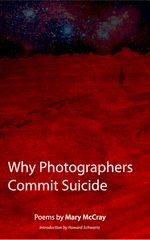
PoetrySavvy Verse & Wit was very kind to choose "Starbaby," one of the poems from Why Photographers Commit Suicide, for their 200th Virtual Poetry Circle.

 Please check it out and leave some comments!
http://savvyverseandwit.com/2013/05/200th-virtual-poetry-circle.html

I've also been meaning to complete the National Poetry Month blog circle on Savvy Verse & Wit. Here are my favorites from the second half of the month:

To see the full list, visit the tour's homepage.

Here are my favorites from the beginning of the blog tour.


New Reviews of Why Photographers Commit Suicide

Cropped-the-literary-yardOne of India's literary blogs, The Literary Yard, has posted a review of Why Photographers Commit Suicide. It's a mixed review with feelings that the Mars conceit was on "overdose" but the final verdict was: "In essence, I see the collection as a must-read because of the unique and distinct vision of the poet."

I also received a new Goodreads review:

"This startling poetry collection explores intricacies of space voyage
with a mid-western voice that breaks my heart. The appealing Mars-red
cover art is followed by whimsical illustrations inside. David Levy,
discoverer of the Shoemaker-Levy 9 comet, thinks this book is out of
this world and with good reason. If you love sci-fi, add this original
book to your collection."


30 Poems in 30 Days – I Did It!

JoyOMG! I finished! I did 30 poems in 30 days. It was exhausting and I was so cocky when I started. I thought I could just do some exercises in stanzas every day, nothing too high stress.

But even a little poem took about a half hour a day and the longer ones hovered around an hour a day. Turns out I had no issues with putting up unfinished work. My problem was dredging up the energy to get it done every day.

Beyond the forms I used from a book I was reading (The Ode Less Traveled), I didn't use any subject prompts and never made a decision on what to write about until that day or the night before at the earliest.

It was haaaaaard y'all!

And I was pleasantly surprised using Hello Poetry. I respect it for its Google-like simplicity. Also, I was surprised that so many people were online reading these poems. I was surprised to see which poems "trended" (like items trending on Google, become popular fast). Trending was an interesting issue because the poems I thought people would not like they sometimes did and the poems I thought they would love they sometimes didn't. And trending isn't everything. Some poems didn't trend (get read by a lot of people over a short period of time) but they did find a large amount of readers over a long stretch of time. For instance, see below.

The Poem Statistics

I have 30 poems up on Hello Poetry with a bonus opening haiku. In total, they've been read 3,369 times. Yes…three THOUSAND. Unbelievable. I received 12 likes on individual poems and 8 fellow Hello Poetry writers started "following me" which basically seems to mean they've bookmarked my homepage to check out again later. That's what I've gathered from finding others to follow myself.

These were the five poems that trended (numbers as of this morning):

Tremor in the Bowl – 236 readers
Ode to a Free Girl Writing Free Verse – 217
Do the Dead Who Love Us Know – 230
 - How the Devil Plays Bach – 235
Sword of Words – 340

But over time, five other poems received as many if not more reads:

An Artifice that Time Forgot – 283 readers
Crossing the Mississippi – 109
American Ghost – 104
Things I Love About Rhoda (As Told by Mary Richards) – 376
Things Those Tests Do Not Test – 180

So as seen above, my most popular poem did not trend. My least popular poems were my most recent one and the one dedicated to the Boston bombing:

Sonnet to Spam – 18
Finish Lines – 19

I still can't believe I did it. It took a lot of physical energy and I was glad when the month was over just so I could rest today! This took some sweat.

To see all the poems, visit my Hello Poetry home page.

I'm going to be MIA from blogging for about two weeks. Monsieur Bang Bang is graduating with his Masters in Archaeology and the entire clan is coming for two shindigs at our house. Then we're going to plan a move. So happy post National Poetry Month everyone and I'll see you on the other side.


New Reviews for Why Photographers Commit Suicide

500x800I received a jacket blurb for my book of poems this spring from David H. Levy, the poetry-appreciating astronomer famous for his co-discovery in 1993 of Comet Shoemaker–Levy 9, which collided with the planet Jupiter in 1994. What a thrill this was… and so very appreciated:

"Remember when, in Carl Sagan's Contact, the main
character said "They should have sent a poet?"  Now we have. In a
skeptical age, it is extraordinary that we still have dreamers. Mary
McCray is one of the best and brightest.  From the great Tharsis volcano
on Mars to Olympus Mons, these poems are a celebration of what is best
about humanity's exploration of the planets. We are moving out among the
stars, and Mary McCray is leading us there."
–David H. Levy, astronomer and author of The Quest for Comets and David Levy's Guide to the Night Sky

I was on cloud nine I tell you!

Last week I also received a review in Savvy Verse & Wit. Excerpts from the review:

"These poems mesh not only the exploration of space with the modern world
here on Earth, but they also harken to older themes of Manifest Destiny
dating back to America’s youngest roots as a nation.  It’s a collection
about the opportunities space exploration can represent, which is
highly ironic given the government’s recent decision to shut down the
manned shuttle program…a reflection of space, and the amazing experience of “Sex in Zero
Gravity”: 

“astronaut, astronaut –/kiss me with your incomplete
sentences/and your raw relativity,/run your fingers like lasers,/escape
velocity through my motor heart,/the acceleration thrust/of your
deep-space Cadillac cruising/my jelly-fish tremors,/touching the
swirling hurricane/that is the red G-Spot of Jupiter/” 

There has never
been such a beautiful references to spaceships taking off and hurricanes
on foreign planets in poetry to describe a sexual encounter.

[The book] is imaginative and one of the best written science fiction collections
of poetry out there, and it will have readers questioning their place in
the world and the need to explore more."

Last week, the book also received a mixed review in Star*Line , the publication of The Science Fiction Poetry Association. Reviewer Susan Gabrielle felt I "offer some uniqueness of language and
lovely images" but she didn't respond to the humor in the book. Whereas Savvy Verse & Wit singled out the poem "Sex in Zero Gravity" as a "beautiful reflection of a sexual encounter," Gabrielle read that poem as satire and wanted me to deal with the book's "subject matter in a serious and sustained way."

I talked this over with my husband due to the fact that my poems are, to a large degree, humorous. I gravitate to the queer and comical take. How should I take this first not-so-hot review? Monsieur Big Bang surmises that science fiction poetry is struggling to be taken seriously right now and so they may not feel inclined to enjoy the kind of funny I do with space poems.

I'd love to hear from others about this. What is your take on humorous versus "sober" poetry? Especially in the context of space and science fiction themes?

To get a copy of the book, you can visit Amazon or Smashwords. It's available in paperback or eBook.


"Remember when, in Carl Sagan's Contact, the main
character said "They should have sent a poet?"  Now we have. In a
skeptical age, it is extraordinary that we still have dreamers. Mary
McCray is one of the best and brightest.  From the great Tharsis volcano
on Mars to Olympus Mons, these poems are a celebration of what is best
about humanity's exploration of the planets. We are moving out among the
stars, and Mary McCray is leading us there." 

—David H. Levy, astronomer and author of The Quest for Comets and David Levy's Guide to the Night Sky

5 Books About Writing in Forms

Although my journey in forms is far from complete, so far I have made it through five books on the subject. If you are new to this sort of thing, I find it helps to take these books in small chunks, go away for a while and come back later rather than be overwhelmed by this brave old nerdy world.

HandbookWhen I was an undergraduate at The University of Missouri-St. Louis, The Poet's Handbook by Judson Jerome (of Poet's Market) was our assigned reading for one of my workshops. We never got around to it and for years I let it linger on my bookshelf intimidated by its very cover. Years later, I gathered some stones and read the book. Was I wrong! This book was a gentle soul, easing me into the study of forms, starting from a look at free verses and the importance of the line.

Myself, I have never been able to keep the terms of scansion memorized, no matter how many of these books I read. Although I do feel I have the musical concepts solidly internalized from years of reading, writing and listening to music closely. But like any good mechanic, you only become more engaged with the tinkering you do when you learn how the car works.

That said, it is comforting when Jerome says, "It compounds frustration, if not confusion, to realize that neither Chaucer nor most of the poets who followed him up to modern times ever actually analyzed verse this way. They just wrote it with rather amazing metrical consistency, and these complicated adaptations of Classical metrical [scansion] terms have been introduced by prosadist to explain the phenomena of the poet's practice."

That's right! Poets didn't bother with bracketing out their lines with marks and numbers. And  scansion and metrics are not scientific laws. The whole "science" is rather inexact but better than nothing when it comes to studying a poem's engine. In fact, depending upon how you read a poem, there can be open controversy over whether a certain phrase is make up to be one antipast or an iamb next to a trochee. No one needs to get that crazy or snobbish about i.

The Poet's Handbook is an accessible textbook that covers most everything metrical including a healthy section on rhyme. However, there's not much on the popular forms like sonnets and sestinas.

RussellYears later I picked up this book at a library sale, Poetic Meter & Poetic Form by Paul Fussell. Both Jerome and Fussell make valiant cases for the use of forms, although Fussell is more dense and stuffy in his defense of why we need to care about music:

"…that regardless of the amount and quality of intellectual and emotional analysis that precedes poetic composition, in the moment of composition itself the poet is most conspicuously performing as a metrist."

Composition! Dear me. He can be a bit heavy handed as in, "Civilization is an impulse toward order."

Maybe true, Jack, but thousands of years of civilization hasn't made us all that civilized. But here is where my politics creep in. Unfortunately, a discussion on form invariably leads toward politics. Hippie liberals are free verse fanatics and conservatives are nostalgic for an era of Andy Griffith order that never was. Forms and free verse are like kids in a custody battle in the middle of it all.

I think young writers today are happily living with writing in a melding of both free verse and forms as they like, which is as it should be. Older folk still seem to have their axe to grind, (like the kind of "classical" poetry The New Criterion has been consistently whining for over the last decades). The establishment complains there is no variety or passion, specifically anger, in modern poetry, all while refusing to  acknowledge the very passionate and angry poets already out there. Is it a coincidence this poetry is being written by minorities and young women? When you dig beyond the common complaints and ailments, the bedrock is always political when it comes to free verse versus form.

Anyway, if you'd like something more advanced, this book is interesting for that and Russell focuses his study on metrical variation (how to set up an expectation in meter and then thwart it for effect) and like Jerome's book, there is a section on free verse and how it fits in. He makes an excellent point with:

"a free verse poem without dynamics…perceptible interesting movement from one given to another or without significant variations from some norm established by the texture of the poem… will risk the same sort of dullness as the metered poem which never varies from regularity…The principle is that every technical gesture in a poem must justify itself in meaning."

Russell also covers the sonnet extensively but not much on other popular forms like sestinas and pantoums.

This is surely your stuffy, highbrow choice.

ReasonI don't know where I picked up Rhyme's Reason by John Hollander but its best attribute is that it's skinny and concise, less than 100 pages. But the book covers verse systems, meters, free verse, "aberrant forms," and various popular forms such as odes, sestina, villanelles, etc. I like that it also covers rhetorical schemes such as the epic simile. It also has the best section on rhyme of the books here.

This is good for a fast breeze through all the basic concepts. Not much evangelizing which is always appreciated.


NewbookLewis Turco's The New Book of Forms was the popular must-have book on forms when I was at Sarah Lawrence College in the mid-1990s. Turco's divides his study on metrics into sections: the typographical, the sonic, the sensory and the ideational level. I found this organization to be elusive and confusing and I had more question marks by his text than in any other book. However, the real meat of this book is the last 175 pages which include an index of every form imaginable with examples.

I've used this book entirely as an invaluable encyclopedia of forms. But it's very lacking on the background behind those forms so it wont do on its own.

OdeThis is the book I just finished over the weekend, actor Stephen Fry's The  Ode Less Traveled, a book that was given to me by a friend. This one is an oddball in the set. Fry is both accessible and off-putting. He's upper crust British, a Shakespearean actor (which gives some perspective on blank verse), and he goes blue inexplicably in parts beyond the naughty limericks (which are great, btw). He's also a (very knowledgeable) layman attempting to teach to newbies. Experienced poets may have no patience for this. Because I like to re-visit subjects as a newbie occasionally (as Zen Buddhists instruct me to do), I found this refreshing. His book even includes lessons and tables. He's also good at bringing in pop culture examples (a gesure too lowbrow for the other books). I also appreciated he definition of what poets do, that we are concerned with precision, "exactly about the exact, fundamentally found in the fundamental, concretely concrete, radically rooted in the thisness and whatness of everything." Later he says, "Much of poetry is about consonance in the sense of correspondence: the likeness or congruity of one apparently disparate thng to another. Poetry is concerned with the connections between things."

But his attempts at humor often fell flat with me.Very flat. And of course he falls into the political pit, calling most contemporary poetry, "feeble-minded political correctness…it is if we have been encouraged to believe that form is a kind of fascism." WTF? He defines "free-form meanderings" as "prose therapy" and navel gazing. Hey, a form doesn't prevent one from navel gazing.  Then he goes on to say he is "far from contemptuous of Modernism and free verse" and he worries you'll think he's an "old dinosaur." Which I do BUT as my grandfather always said, you can learn something from anybody and I did enjoy this book overall. 

A good light choice for newbies and the eternal newbie.


Miroslav Holub

Miroslav Years ago, I came across some poetry of Miroslav Holub in The Vintage Book of Contemporary World Poetry. I bought a used copy of his book Poems, Before & After which has been sitting on my shelves for a year or two.

This book was another surprise for me this year. I started to make a list of the poems I liked in this anthology and I was checking off every single poem so I gave up the list.

Holub was a Czechoslovakian poet and well-established microbiologist. His poems are a lovely melding of science and humanity. The book is divided into poems before 1968 and poems after 1968, the year the democratic revival was crushed by the Russians.

He has great commentary about poetry. The prose piece "Although" talks about how "a poem arises when there's nothing else to be done" and "art doesn't solve problems but only wears them out." From "The root of the matter"

There is poetry in everything. That
is the biggest argument
against poetry…

…the root of the matter
is not the matter itself.

From "Wisdom"

…poetry should never be a thicket,
no mater how delightful, where
the frightened fawn of sense could hide.

These poems in their surreal escapades reminded me of my favorite short story writer, Donald Barthelme, and are elemental weavings of the scientific, the haunting, the human and the moral. The poem "Evening idyll with a protoplasm" is a good example:

Over the house spreads
the eczema of twilight,
the evening news bulletin
creeps accross the facades,
the beefburger is singing.

A protoplasm called
Before

well-that's-life
bulges from all the windows,

tentacles with sharp-eyed old hags' heads,
it engulfs a pedestrian,
penetrates into beds across the road,
swallowing  tears and fragments of quarrels,
pregnancies and miscarriages,
splashing used cars and television sets,
playing havoc with the price of eggs,
simply puffing itself with adultries,
crossing off plotting spores of
things-were-different-in-our-day.

And even after dark it prosphoresces
like a dead sea drying up

between featherbed, plum jam and stratosphere.

All the poems expertly mesh contemplations on biology with the horrors of humanity. Some of my very favorites are "Heart Failure," "The end of the world," and "Reality." The After poems are darker, more cynical, and incorporate more storytelling. I loved the Brief Reflections On series, "Brief reflection on test-tubes" being my favorite. He delves even more deliriously into language in this section.

From "Whaling"

Metaphors face extinction
in a situation which itself a metaphor.
And the whales are facing extinction
in a situation which itself is a killer whale.

The book ends with some poems laid out in theatrical script that read almost like avant-garde short films. Of those "The Angel of Death" and "Crucifix" are my favorites.


« Older posts Newer posts »

© 2026 Big Bang Poetry

Theme by Anders NorenUp ↑