Reinventing the Life of a Poet in the Modern World

Category: Poetry Technology (Page 8 of 9)

30 Poems in 30 Days – I Did It!

JoyOMG! I finished! I did 30 poems in 30 days. It was exhausting and I was so cocky when I started. I thought I could just do some exercises in stanzas every day, nothing too high stress.

But even a little poem took about a half hour a day and the longer ones hovered around an hour a day. Turns out I had no issues with putting up unfinished work. My problem was dredging up the energy to get it done every day.

Beyond the forms I used from a book I was reading (The Ode Less Traveled), I didn't use any subject prompts and never made a decision on what to write about until that day or the night before at the earliest.

It was haaaaaard y'all!

And I was pleasantly surprised using Hello Poetry. I respect it for its Google-like simplicity. Also, I was surprised that so many people were online reading these poems. I was surprised to see which poems "trended" (like items trending on Google, become popular fast). Trending was an interesting issue because the poems I thought people would not like they sometimes did and the poems I thought they would love they sometimes didn't. And trending isn't everything. Some poems didn't trend (get read by a lot of people over a short period of time) but they did find a large amount of readers over a long stretch of time. For instance, see below.

The Poem Statistics

I have 30 poems up on Hello Poetry with a bonus opening haiku. In total, they've been read 3,369 times. Yes…three THOUSAND. Unbelievable. I received 12 likes on individual poems and 8 fellow Hello Poetry writers started "following me" which basically seems to mean they've bookmarked my homepage to check out again later. That's what I've gathered from finding others to follow myself.

These were the five poems that trended (numbers as of this morning):

Tremor in the Bowl – 236 readers
Ode to a Free Girl Writing Free Verse – 217
Do the Dead Who Love Us Know – 230
 - How the Devil Plays Bach – 235
Sword of Words – 340

But over time, five other poems received as many if not more reads:

An Artifice that Time Forgot – 283 readers
Crossing the Mississippi – 109
American Ghost – 104
Things I Love About Rhoda (As Told by Mary Richards) – 376
Things Those Tests Do Not Test – 180

So as seen above, my most popular poem did not trend. My least popular poems were my most recent one and the one dedicated to the Boston bombing:

Sonnet to Spam – 18
Finish Lines – 19

I still can't believe I did it. It took a lot of physical energy and I was glad when the month was over just so I could rest today! This took some sweat.

To see all the poems, visit my Hello Poetry home page.

I'm going to be MIA from blogging for about two weeks. Monsieur Bang Bang is graduating with his Masters in Archaeology and the entire clan is coming for two shindigs at our house. Then we're going to plan a move. So happy post National Poetry Month everyone and I'll see you on the other side.


Movies With Poetry: Edgar Allan Poe, Rimbaud, Verlaine, Alice Duer Miller

As part of my multi-media explorations of the world of poetry, I've searched Netflix and sprinkled my movie que with movies about poets or poetry. I am old fashioned and still get DVDs mailed to me; haven't tried streaming yet . Here are my first three movie reviews of poetry-related movies:

The Raven (2012)

RavenMr. Big Bang and I actually saw The Raven, starring John Cusack, last year in the the-A-ter. Basically, this movie took some basic facts about Edgar Allan Poe's life and embellished them into a psychological-action thriller, ala the latest Sherlock Holmes fare.

I'm not against this sort of thing by definition (I kind of liked Gothic from 1986), but the results here were disappointing for these reasons:

  • John Cusak, although he "gains an inky black goatee and loses as much of his puckish ironic attitude as possible" (Entertainment Weekly, May 11 2012), is badly cast. He's still John Cusack and I never forget it.
  • To create the psychological thriller part of the movie, Poe is made to chase a murderer who is copycatting his short-story murder techniques. Saw-like gruesomeness ensues with scythe-pendulums, burials alive, and melodramatic poisonings. You've read it, they got it here. I can just imagine the snarky, angry review Edgar Allan Poe would give this movie for stealing all his maniacal devices.
  • It's got the gore but not the haunting skill. Entertainment Weekly said it best, "there are no unspoken shadows haunting his soul." He's just a messed-up drunk.
  • In trying to create early 1840s Baltimore, they filmed the movie in Belgrade and Budapest.  The results were off-kilter: for instance, the movie had no black actor extras (zero) and Baltimore was a slave state and the roads and buildings all looked too Central European. 

The pictures below say it all, over the top and heavy handed.

Raven2
Raven3 


Total Eclipse (1995)

TotalFirst of all this movie was hard to get a hold of. It was the first and only movie that sat languishing in my Netflix que waiting for all the girls and boys who are obsessed with Leonardo DiCaprio to get their hands on it first in order to see all his naked scenes.

And there's plenty of nudity to go around between DiCaprio who plays Arthur Rimbaud and David Thewlis who plays Paul Verlaine. That's one perk of the movie but other than that you get DiCaprio playing his sullen, cocky and incorigable best (as seen in many other films of his early oeuvre) and Thewlis plays his pathetic, doormat of a mentor. Both are in this 1871 bisexual affair for their own poetic ambitions (only Thewlis falls for good).The movie is full of their gay, ugly tantrum fights.

I will say Thewlis has an extraordinary profile and I found his mugging more interesting than DiCaprio's mugging although both characters became very unappealing very fast. Rimbaud is an attention-whore with a juvenile urge to shock and Verlaine is a veritable pTotal2sychopath who sets his wife's hair on fire for no reason. Worse than that, he can't take a hint.

The movie, like many, glamorizes poetry. However, there are very few scenes of the poets actually talking about poetry (as you know they would be) or writing any of it. At one point Rimbaud has been trying to write (off camera I guess) and he cries out, "It's so difficult!" but then later states soberly, "The writing has changed me."

Verlaine dramatically calls absinthe "the poet's third eye." At one point Rimbuad laments, "The only unbearable thing is that nothing is unbearable." What? Is that a logic puzzle? The movie was supposedly based upon the correspondence between the poets and like most biopics, the narrative is choppy and uneven.

But there were things I did like: the movie covers class issues among poets, something I feel is rarely discussed today. Rimbaud and Verlaine both struggle with money and time. There's a good exchange in this regard between Rimbaud and his mother:

Rimbaud's Mother: This work you do, is it the kind of work that would lead to anything?

Rimbaud (angrily): I don't know. Nevertheless it's the kind of work I do.

Who hasn't had that conversation with their mom? The movie is also about how some people literally consume their mentors and how dangerous that relationship can be.

Rimbaud, when asked to read some of his poems declares, "I never read out my poetry!" In the end, there is professional truth in his monologue about why he gives up writing poetry (he had been mostly full of hot air about it: "I decided to be a genius…I decided to originate the future!") and at the end, he dismisses his mentor as a "lyric poet" and goes off to Africa.

Roger Ebert had this to say, "The poems can be read. The film must stand on its own, apart from the
poems, and I'm afraid it doesn't. To write great poems is a gift. To be
interesting company is a different gift, which neither Verlaine or
Rimbaud exhibits in "Total Eclipse." One admires the energy and
inventiveness that Holland, Thewlis and DiCaprio put into the film, but
one would prefer to be admiring it from afar."

The White Cliffs of Dover (1944)

DoverGee, do I love it when my obsessions converge! On my other blog, I Found Some Blog…by Cher Scholar, I've been tracking Cher's month as co-host of Turner Classic Movies on Friday nights. Cher is a huge fan of classic movies and since 2011 has been dropping by to co-host movie nights on TCM. This month she's been doing a series called It's a Woman's World, powerful female-starring movies of the 30s and 40s. The first Friday was a set of four movies on Motherhood. Last Friday she did a set of war movies, one of which was the movie about an American (Irene Dunne) living in England during World War I and World War II called The White Cliffs of Dover, a movie I've only ever heard of because it was one of Elizabeth Taylor's first movie appearances.

But interesting to us on this blog, the entire film was based on a poem. Imagine that! It's a very long poem (a "verse novel" says Poem Hunter) by Alice Duer Miller called "The White Cliffs." A verse novel. Imagine that! The narration of the film starts out with Irene Dunne reciting the first
stanza of Miller's poem and then flips over to poetry written for the
film by Robert Nathan. Poetry written for a film! Imagine that! The Los Angeles Times did a story about Robert Nathan when he died in 1985. He had published 50 books of poetry and fiction.

Alice Duer Miller's original poem was influential in many ways. According to Poem Hunter:

The poem was spectacularly successful on both sides of the Atlantic,
selling eventually a million copies – an unheard of number
for a book of verse. It was broadcast and the story was made into the
1944 film The White Cliffs of Dover, starring Irene Dunne. Like her
earlier suffrage poems, it had a significant effect on American public
opinion and it was one of the influences leading the United States to
enter the War. Sir Walter Layton, who held positions in the Ministries
of Supply and Munitions during the Second World War, even brought it to
the attention of then-Prime Minister Winston Churchill.

Alice Duer Miller was also influential as a suffragette:

She became known as a campaigner for women's suffrage and published a
brilliant series of satirical poems in the New York Tribune. These were
published subsequently as Are Women People?. These words became a
catchphrase of the suffrage movement. She followed this collection with
Women are People!
(1917)

The movie is your basic war-time romance/tearjerker about a woman who loses everyone she loves in two wars. I don't particularly like war movies and a weekend watching four of them ("Three Came Home" from 1950 was particulary harrowing) put me into quite a funk. People never learn. None of our laments about war are new, etc.    
Roddy

The New York Times recently called the movie "A Cinderalla story in sweet disguise" but I couldn't disagree more. Her life was full of tragedy and lonliness shortly after she married. Had she picked boyfriend number one, she might have had an entirely happier life in America.

At least the movie is good for the appearance of Roddy McDowall who plays the young, charming son.


New Video! Poet in Real Life: The Job Interview

Big Bang is proud to announce the premiere of our first video, Poets in Real Life: The Job Interview. One of my mentors in this whole process of publishing and blogging suggested I use the site Xtranormal to create it. So that we did. Tell us what you think.


The Making of Poet in Real Life: The Job Interview

Xtranormal was pretty cool in many ways. It was not free, althought it claims to offer a free basic plan. But many of the animation sets you will need to choose, anything more than two characters and special effects…many of these things cost "points" which you will need to buy. On the bright side, points are cheap. My 3 minute movie above cost 400 points. The cheapest point plan was 1200 points for $10 bucks. That breaks down to about 3 movies at this level for $10. I may not use Xtranormal beyond that. Not sure at this point. I had a hard time finding two voices that could pronounce all the words (like "profudity" for the girl and "quote cheese in their crackers" for the guy). Also many of my browsers struggled with the video files. I had to rotate between Firefox, Explorer and Chrome.

Poetry for Professionals

A good article in Harvard Business Review, "The Benefits of Poetry for Professionals" from 2012.


The Overwhelming World of Poetry Websites

PoetryGone is the world of ink and quill poetry. Well, actually there probably is a website out there dedicated to writing poems with ink and a quill pen; I just haven’t found it yet. But for the most part, poetry has entered the Internet age, like it or not.

And maybe this isn’t the end of the world. Ink writing, as can be seen in the graphic to the left, was a bit messy in its own way. When you start to dip into the world of poetry and literature websites, it’s easy to get overwhelmed and throw yourself into lamentations that there are too many poets, too many bloggers, too many people spouting their opinions.

You may say there are not enough readers (for your poetry, let’s be honest). But I’ve just spent hours and hours over the last few months visiting literally hundreds of writing, literature, academic and poetry blogs and websites and all of these folks are happily reading and reading ravenously. I don’t believe for one minute that it’s a shame so many people are blogging about literature and poetry. I think it means only that the Internet has felled the gates of the gatekeepers and the masses have risen to talk about their love of books.

Today we have to be our own gatekeepers. Which for those complainers, this might be a drag for you. It means more labor in the service of literature. (You don’t sit on your fat ass reading books for nothin!)

I have discovered, however, that most literature websites have very messy blog rolls (lists of their favorite websites). Believe me, I’ve dealt with these blog rolls quite intimately. You have no idea perusing them which blogs are good for news, which blogs are good for commentary, which are good for book reviews.

And this is what makes my blog roll superior, in my humble opinion. I’ve used the social bookmarking site StumbleUpon to house my blog roll and recently I’ve created handy lists to categorize all the many fine websites. My categories are based not on what a website or blog may have been created to provide, but what I personally find useful about the blog. For instance a blog may be a book-review blog but I find it more useful in keeping up with industry news and so I’ve categorized it as such.

Please feel encouraged to visit my blogroll and peruse or “follow” my lists or leave comments about the way they’re organized or what would be more helpful.

All 107+ of my favorite sites can be found randomly on my StumbleUpon Likes page.

You can view all 10+ lists on my StumbleUpon List page.

Here are the individual lists

  • Poems to Read – Sites that primarily exist to provide you with good poems to read.
      
  • Lit Chat – Braniacs working over all kinds of literature topics.
      
  • Ruminations on Poetry — like Lit Chat but all poetry braniacs.
      
  • Lit News – My most favorite type of literature site: gossip!
      
  • Life as a Poet – Blogs that talk about the day-to-day life of being a poet. Invaluable honesty.
      
  • Off-the-Beaten-Path Book Reviews – Quirky reading journeys.
       
  • Books as Objects – Sites that “cover” book design.
      
  • Specialty Poetry – Sites that deal with specific kinds of poetry, war poetry, avant garde poetry, Sci Fi, Mathematical, sacred poetry, translations.
     
  • Interaction – Sites that provide ways for you to interact with other poets, teachers or get involved in the world of poetry.
      
  • Good Literary Distraction – Sometimes you just get tired of heady literary bickering and you want a website with pictures of books that have fallen into the bathtub or posts from a bookstore owner or reviews of the covers of dime-store novels or posts that will talk you down from ever desiring an academic career.
        

2 More Poetry Podcasts Reviewed

PodcastContinuing on my journey of exploring poetry podcasts, I've caught up with two more programs.

To catch a poetry podcast, you can either visit iTunes and download episodes that appeal to you or you can subscribe to a podcast on iTunes and have the latest episodes (audio programs similar to NPR interviews), download automatically to your mobile listening device (iPod or iPhone or other brand) whenever you do updates. You can also listen to these downloaded audio files from your computer if you don't have a mobile thingamajig. Just visit iTunes (or podcast homepage if one exists).
  

P4tPoets for Tomorrow – Recommended with Caveat

There are only five podcasts here and they stopped producing more in 2010 so these are a bit outdated. I listened to two podcasts on the topic of "The Self," both  interviewing or showcasing a New York City performance poet.  I felt the podcasts did not stay true to the Self topic and in one episode the sound quality was a bit raw. One episode interviewed a poet who grew up struggling to define himself in a land of NYC gangs and he was very much a new poet working his way through the world of performance poetry. For this reason, this podcast is not for the self-serious poet listener. If you have a hard time suffering newbies, go elsewhere for your fix. I liked that about this podcast, how democratic it was in interviewing experiences of poets on many levels.

The second podcast on The Self, blew me away. It was a 14-minute performance of a poem about the Philippines called "Colt 45" by Daniel Darwin, an autobiographical rant with heavy refrains. The poem covered a lot of territory both physically and intellectually describing American-Philippines conflicts, Asian sexuality, homosexuality and finally going meta by breaking the 4th wall. It was definitely a performance you had to hang in there for…but I was glad I did.

Depending on your poetic temperament, there may be finds in here for you.

SplScottish Poetry Library – Highly Recommended

I listened to their 45-minute interview of Robert Pinsky. Best sound quality of all the podcasts I've heard so far. Very professional sign-ons and sign-offs. Pinksy had somewhat funny things to say like, "My voice is my instrument…I write with my voice." He talked about his love of jazz and his www.favoritepoem.org readers-reading-poems project which he stared when he was US Poet Laureate. I was intrigued by Pinksy's claim that he "doesn't advocate for poetry," meaning Why does poetry need an advocate? It's great! If people love it they'll come to it. I appreciated that kind of attitude, coming from a position of power as it does, very Riot Grrrl 3rd-wave feminist thinking-like.He said poetry does not need an ambassador, a defender, commercials. "It's like advocating singing."

I also appreciated how Pinsky threw love to pop culture icons like Sid Caesar as influences. He also talked about studying with Francis Fergusson and his ideas of art imitating actions, about Pinksy's idea of pitch in poems, musicality, and his Poem Jazz CD project.

This is definltely a podcast worth following.

See more reviews of poetry podcasts.


Poetry Podcasts

IpodRecently I've started to explore poetry podcasts, available free from the iTunes store. It's been good, good times listening to these podcasts over the last few weeks.

I had download issues exploring them through my iPhone. I had trouble getting podcast segments down to my phone at all and then quickly ran out of my data-plan bytes. It was much easier to deal with it all from my iTunes interface through to my iPod.


Poets Reading Their Poems

PoetsorgPoets.org – Not Recommended

This would be an interesting podcast to recommend. After all, they're posted by The Academy of American Poets. But this is the podcast that gave me the most technical anguishing. The last podcast was posted in March of 2008 and the rest are listed as available…until you try to download them and iTunes can't locate them for you. I listened to the only available March 2008 segment called Ars Poeticast, a series of readings of poems about poetry to celebrate National Poetry Month of that year. The podcast ran 9 minutes with readings by Philip Schultz ("Ars Poetica"), Russell Edson ("Soup Song") and Robert Kelly ("Science"). I loved "Science"

Science explains nothing
but holds all together as
many things as it can count

science is a basket
not a religion he said
a cat as big as a cat

the moon the size of the moon
science is the same as poetry
only it uses the wrong words.

I also loved Kenneth Koch reading "One Train May Hide Another." Would have loved more Podcasts but alas…Poetry.org has left us at the altar.


NhNews Hour Poetry Series
Highly Recommended

I listened to four of these. They're short and sweet (3-5 minutes) and well edited:

– Mark Doty reading his "Handel's Messiah" (posted on 12/21/11). The segment not only included his reading, but excerpts of Handel's piece. "Glory shall be revealed" indeed.

-  Tony Hoagland reading "Romantic Moments" (posted on 2/14/12). This poem surprised me with its Santa Fe locations of Canyon Road, the Plaza, pink adobes and plaza jewelry stores.

– For sentimental reasons, one of my favorite poets is Phil Levine, (known as our "working class poet"), 82 years old and talking about being Poet Laureate and reading his perennial "What Work Is" (posted on 8/10/11). They talked to him about working at the auto plant in Detroit with the ubiquitously condescending question elitist poets love to ask: "What was poetry then?" Levine also talked touchingly about his wife who "honors what he is doing" and how important it is to be honored "not by an abstract nation but by family. It keeps you going."

– Natalie Diaz on location on a boat trip through the Mohave desert down the Colorado River talking about her weekly workshops to preserve the Mohave language (and make a talking computer dictionary for students) and themes of hunger in her work. You get to hear her read, which is extraordinarily full-throttle.

ApAuthors & Poets – Recommended

From the Academy of Achievement, lots of good stuff here. I was only able to get to the 13 minute Rita Dove segment from June 1994. She talks about where inspiration comes from and reads "Flash Cards" and the beautiful Billie Holiday poem "Canary." Loved her quote in the reading warning us that "Evil is not stupid and can be very creative." The last podcast was posted in October of 2012.


LolLearn Out Loud – Recommended

Simple: readings of a single poem or two, sometimes by the original poet. I like the broad range of eras and styles represented. The last podcast was added in October 2010 and there are 21. I picked William Yeats reading "The Song of the Old Mother" and "The Lake Isle of Innisfree." What a creepy reader he was, rolling his r's and reading like an incantation. Have I just been cursed?


IfIndie Feed – Highly Recommended

Probably one of my favorite podcasts. They are short (6 minutes) and updated frequently, recording live performances of indie poets around the country followed by short interviews with them. I listened to Greek American Angela Kariotis read HiNRG protest poetry from her one woman show Stretch Marks (posted on 2/6/13). Loved it. Also listened to Brendan Constantine (posted on 2/8/13). He read a bit overbearingly in that tone of poets. He was much more comfortable in his interview. His father is Michael Constantine from My Big Fat Greek Wedding. Brendan is a poet and teacher. The host asked him if he planned to go into acting and he said "No, two dead end jobs are enough."


Interviews and Lectures


PtpPoet Tech – Recommended

There are some aggravations with this podcast. They were a bit tricky to  download, there aren't many and they stopped on 3/17/10. Also host Will Brown could have edited them a bit cleaner and the interviews are via phone.

However, when I finally listened to the last 45-minute podcast, an interview with poet/gamer Radames Ortiz and his multi-media partner musician Jonathan Jindra, I was blown away. It was worth the slight hassle. They talked about multi-media poetry projects, poetry CDs with "extra features" (how interesting!), social media marketing, theatrical projects with projectors, comics poetry…they so had me a hello. Ortiz read his poem about gaming called "Grand Theft Auto Monstrocity." The podcast ran a bit too long but I was inspired by their projects.


PlPoetry Lectures – Highly Recommended

The Poetry Foundation has about a million podcasts. I picked this one to start with and wasn't disappointed. The first lecture/interview explored Palestinian poets Fady Joudah and Ghassain Zaptan (posted on 1/13/13). The host had a calm NPR voice and delved into what Palestinian poetry is all about, both classical and modern. They explored themes of statelessness, longing and revolution. They also read from two women poets. One had written a great archaeology poem called "Bone Taste" and I couldn't catch the author's name but the lines went like this:

Who will teach us to protect our bones
from archaeologists and myths
that glow in the plazas.
The worms will ask us
the questions of the Gods.
But who will ask them
about the taste of bones?

They implored us to never stop learning from the younger generations and discussed the art of translations, saying "rewriting is the closet form of reading" and translations offer something new to English, not just "an anthropological study of another culture." What is created is a new thing.

I also listened to the podcast Three Native American Poets from 3/20/12. These podcasts run about 45 minutes and this one had Allison Hedge Coke interviewing Linda Hogan and Sherwin Bitsui, both alumni of the Institute of American Indian Arts. They talked about native aesthetics and ceremonials, colonialism and their favorite poets: James Welch (they read "Harlem, Montana. Just Off the Reservation"), Ofelia Zepeda, Simon Ortiz, N. Scott Momaday, Leslie Silko, Maurice Kenney, and Diane Burns. Sherwin talked about border towns. Linda talked about poetry in the body ("What would my feet write? Where does the mind really live? Where does the poem really come from?") Sherwin talked about restorative poetry and always having to re-harmonize yourself to place. He recommended James Thomas Stevens (current faculty at IAIA) and read from Stevens' poem "Tokinish."

Serendipitous because James just gave me a copy of his book Bulle/Chimere which I hope to start next week.


The Top 15 Joys of Physical Books With Which eBooks Cannot Compete

Book

My anthropologist husband, Mr. Bang Bang, said to me this weekend, "Culture is always changing. That is, in fact, the definition of culture. If it never changed, we wouldn't even have books."

So if you hate the inevitable march of culture (and it's eBooks), you have to forsake your beloved books as well.

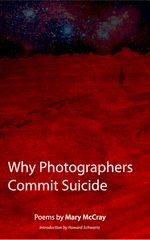
I have come around to eBooks. Last year I published my own eBook campanion to Why Photgraphers Commit Suicide. You can't escape the reality that eBooks save trees, they save author's money (with bigger royalties due to lower production costs), and they save your customer both money and time (for example, if they need to download research material quickly for deadlines). In this brave new world, book-lovers will have categories of books they own: favorite books on a bookshelf and school books, research books or "books to take a chance on" for the mobile devices.

But as much as I appreciate the benefits of eBooks, there are still a few ways in which physical books rule:

  1. You can hallow out a book to sneak a gun into your lover who is in prison.
     
  2. Marooned in the cold wildnerness, you can use the pages of a book to start a fire and stay alive.
     
  3. You can read a book in a bathtub without the worry you will drop it into the water and subsiquently be out of a $300 phone.
     
  4. You can read a book on the beach without the fear it will be stolen from under your beach towel while you are tubing in the sea.
     
  5. Related to items #3 and #4, a book can survive water damage.
      
  6. With your physical book covers, you can impress other passengers on trains and plains. You're an intellectual, not a frivolous Draw Something gamer.
     
  7. You can become a connoisseur of the smell and feel of various book papers.
      
  8. You get to savor the delicious sound of flipping pages and spine bending.
     
  9. With paper, it's easier for Fascists to make a book burning look dramatic.
     
  10. It's harder for robbers to steal your entire library inadvertently while they are stealing your techie toys.
     
  11. You get to experience the feel of a pen as it rolls ink out to create your marginalia.
      
  12. You get the obsessive compulsive satisfaction of organizing and re-organizing your bookshelves to impress your house guests.
      
  13. Real books work in a pinch to steady lopsided dinner tables.
     
  14. Dog-earring.
      
  15. Best of all is the joy of unpacking after a move and pulling all your books out of boxes with delight in remembering long lost treasures you somehow forgot you had.


Social Media and Mobile Apps for Authors

SocialmediaJust finished the book Social Media and Mobile Apps for Authors by Gail Z. Martin.

If you're new to social media and need a short book to get your started, to explain why social media is important for you and to give you a quick overview of the major players (right now) in the social media arena, this is the book for you.

For more advanced social media users, this might only provide a short list of new tips and ideas.

I was hoping smartphone apps would be discussed at greater length than four pages at the back of the book, and then only the more general apps like DropBox, eFax and DragonDictation. You might find more information about the latest apps by searching Google for the term "best apps for poets."


3 Poetry Apps Reviewed

One of my goals this year is to explore poetry apps on my iPhone. There are many many many. Some are helpful and fun. Some are annoyingly boring and pointless.


JdPoets & Writers
(free) is one of the pointless ones. You can only manage your subscription with it, something it takes a simple website to do. Obviously P&W miss the point of why an app is worth having. No one will be using this non-tool (even subscribers) and so the advertising opportunity of luring in new subscribers with a free tool is missed. P&W should look to the business model of United Airlines and their app for an appreciation of how to make an app that is useful beyond your limited customer base but that will further your brand.

Poetry Daily (free) 
Pdis a very popular poetry-of-the-day site that has offered up a very easy to use app. I actually look forward to Poetry Daily's well-picked fare. My only issue with this app is that you cannot re-size the text to fit your screen. For poems with long lines you have to move your screen right then left for every single line. It's annoying. I give up on every poem wider than the size of my iPhone. This happens more than you'd think. User frustration is not what makers of apps want for their customers.

I've tried a few visual poetry apps for fun. They were of limited gaiety to be honest. The first was Visual Poet (free). Basically this poem just matches three photos of your choice with three lines of verse you enter. I can't see what use this would be beyond a haiku. To try it out, I created a visual poem from the first haiku in my 2004 book St. Lou Haiku. You can pick the photos from Tumblr, Flickr, Google or your camera and adjust the font size and positioning. Then you can email it.

ArchpoemCredits:

St. Lou Haiku
Mary Elizabeth Ladd &  Julie Wiskirchen
2004
Timberline Press
ISBN 0-944048-32-3
29 pages: 107 haiku/4 illustrations by Clarence Wolfshohl       
5.5×8.5/letterpress

The poem represented was composed by Julie Wiskirchen.


A similar program is called Visual Poetry (0.99). This app is slightly more fun in that it takes a line of poetry and creates some word art out of it. There are color and font choices and 18 art styles, which I felt was a limited amount. You can then email the art piece to your friends.

I tried something with the first line from my 2012 book Why Photographers Commit Suicide: "Imagine your life in a glass box."

ImagineCredits:

Why Photographers Commit Suicide
Mary McCray
2012
Trementina Books
ISBN 0985984503
87 pages/8 illustrations by Emi Villavicencio       
9×6/paperback and eBook


Of all three apps reviewed so far, I would probably only recommend Poetry Daily for repeated use, although I will keep watching Virtual Poetry and the new art opportunities for one liners.


« Older posts Newer posts »

© 2026 Big Bang Poetry

Theme by Anders NorenUp ↑