Big Bang Poetry

Reinventing the Life of a Poet in the Modern World

Page 66 of 69

A New Book on Joy Harjo

CbOver the weekend I was checking out the hours of my local bookstore and I noticed on their homepage that Joy Harjo has a memoir out called Crazy Brave. In fact, I had just missed her reading at the bookstore this weekend. Fudge!

I love Joy Harjo. I don't know when I first heard about her but I have her book of poems The Woman Who Fell From the Sky and I went to see her one-woman show in Los Angeles a few years ago at The Autry Museum, Wings of Night Sky, Wings of Morning Light. I felt like crying through the whole show I was so moved. Afterwards I asked her to sign my book and my husband talked to her about Muskogee history. I felt like an oddball fan the whole time.

The memoir is published by Norton (which is big and impressive). My husband and I went to the bookstore this morning and I saw the memoir but I talked myself out of buying it…although I kept looking at it longingly and pathetically. My birthday is next week and my husband surprised me by just buying me a copy when he checked out. He said it was an early present to launch birthday week.

I was so tickled! Going to start reading it today.

Monday Poetry News Roundup

Poetry headlines in the news

Publishing News

Contests

Calls for Submissions

An Old Book About William Dean Howells

WdhLast year I read Ron Power's biography of Mark Twain (I picked it up for a dollar at the LA Times Festival of Books). There I learned about William Dean Howells as a literary critic (I had read his novel, Hazard of New Fortunes, in college). Howells came up in the old book on Emily Dickinson I read a few weeks ago. His significance in bringing up so many writers of The Guilded Age intrigued me and so I picked up this book, William Dean Howells, An American Life by Kenneth S. Lynn, from the library at Highlands University in Las Vegas, New Mexico.

According to Lynn:

"Howells is rivaled only by [Ezra] Pound for his sure identification of the literary geniuses of his generation."

His reviews at The Atlantic singled out many underdog writers including:

  • Henry James and his first short stories — many other editors and critics were hostile toward James' early published stories. Howells defended him.
  • Sarah Orne Jewett
  • Frank Norris when McTeague was published.
  • Stephen Crane after he self-published Carrie and was having trouble getting his book reviewed and into bookstores. Howells was the only critic willing to give the book a review.
  • Mark Twain — Howells gave some love to Innocents Abroad, gave a positive review to Roughing It and gave editing advice to an early draft of Old Times on the Mississippi. Later, when most critics presumed Twain was simply a humorist, Howells' commentaries on Twain gave his works artistic respect and transformed the way we read Mark Twain today.
  • Emily Dickinson – when her poems were first published after her death, reviewers were tentative and the public didn't know what to make of them. Howells championed her as a legitimate talent.

For some reason, Howells did not review Edith Wharton although privately he stated she was gifted. He also ignored Theodore Dreiser, many speculated, because Dreiser's work in Sister Carrie was too sexual.

Howells championed "western writers" and realists when the literati of the time was stuck in the grip of old Bostonian/New England writers and their romances. Howells said,

"Art must relate to need or it will perish."

Biographer Lynn also takes a close look at the unique heroines in some of Howells' novels compared similarly with Henry James heroines like Daisy Miller:

"One of the primary qualities of James and Howells' American Girl characters is their steel-like will."

Another interesting piece of trivia about Howells: his grandfather and father were both early abolitionists, long before it was a popular cause before the Civil War. Howells became one of the founding members of the NAACP.

Moment of Craft Fridays: Variations on Rhythm

Theodore_RoethkeTheodore thinking about his worrisome rhythms

One thing I've learned from many poetry workshops is that the sections of my poems that really hit it off with readers are those lines or phases which dramatically break a previously set rhythmical pattern. Like an orchestral piece of music, you take comfort in the ever-predictable musical phrases. However, it's the line that varies from that predictability that stops the show and turns out to be a crowdpleaser.

I figure it works like the architecture of a good joke.  Subverting expectations creates a laugh, creates a little heart squeeze.

In the book, On Poetry & Craft, the compilation of Theodore Roethke's essays and random thoughts, in the essay called "Some Remarks on Rhythm," Roethke explores the ways rhythms work to serve our poems:

While our genius in the language may be essentially iambic, partially in the formal lyric, much of memorable or passionate speech is strongly stressed, irregular, even 'sprung.'

What about the rhythm and the motion of the poem as a whole? Are there ways of sustaining it, you may ask? We must keep in mind that rhythm is the entire movement, the flow, the recurrence of stress and unstress that is related to the rhythms of the blood, the rhythms of nature. It involves certainly stress, time, pitch, the texture of the words, the total meaning of the poem. We've been told that a rhythm is invariably produced by playing against an established pattern….It's what Blake called "the bounding line," the nervousness, the tension, the energy of the whole poem. And that is a clue to everything. Rhythm gives us the very psychic energy of the speaker…

It's nonsense, of course, to think that memorableness in poetry comes solely from rhetorical devices, or the following of certain sound patterns, or contrapuntal rhythmical effects. We all know that poetry is shot throughout with appeals to the unconsciousness, to the fears and desires that go far back into childhood…"

Self-Publishing Poetry: First Things First

SpSo a week or so ago I spoke about why you might want to self-publish a book of poetry. Now I'm going to talk about the first few things I did to get my own project rolling.

Do Some Book Learnin'

First thing, I educated myself on what this bitch would entail: how to format a book, how to format an eBook, and what POD means. I would recommend these books to get your feet wet:

Self-Printed, The Sane Person's Guide to Self-Publishing by Catherine Ryan Howard – Also self-published, this book is full of step-by-step, no-nonsense, tough-love advice. I couldn't have done what I'm doing without this book.

The Fine Print of Self-Publishing by Mark Levine This is a market study on most of the self-publishing services out there. You must read this book to know how to be a savvy shopper. I was able to avoid an overpriced, poor-quality offer from a local publisher because I had read this book.

Sell More Books!  by J. Steve Miller — This book is good for two reasons: one is that it is full of typos and layout disasters, which exemplifies, in every detail, the pitfalls of self-publishing. But like my grandfather once said, you can learn something even from from a fool. Which brings me to the second reason to like this book, although the production of it may suck, the marketing advise in this book is still very good.

— Find the latest book on Search Engine Optimization (SEO) and the latest book on social marketing. Internet rules change so fast, you need a book published no earlier than 2011.

Create a Publishing and Marketing Plan

Publishing entails a zillion details, so you need to make a to-do list. It all may look overwhelming but remember, as actor Sherman Hemsley taught me in one episode of Amen, you can eat an elephant one bite at a time.

You also need a separate marketing plan. All the how-to guides on self-publishing agree on this fact: you need some real educating in marketing to sell your book.

Assets, Companies, Permissions, Introductions

  1. Set up a website. You have to at least have a website if nothing else. You can do this for free on WordPress.
        
  2. Self-publishing is remarkably affordable to do these days. But most guides I've read recommend you spend some cash on three items: your profile photo, your book design, and an editor for your book. I found a professional photographer I knew, Stephanie Howard, to take my profile photos. I've also researched the book designer and editor I want to use. They say this is the most crucial aspect of your project, a respectable cover. It's worth paying for. And if Sell More Books! had hired an editor to catch all the typos, the book wouldn't seem like something done by an amateur.
  3. Most poets love to begin their poems with an introductory quote to give the poem some gravitas. But you can overdo it. When you publish, you need to make some hard choices with those quotes because, unless the quote is from a piece of work in the public domain, you will need to seek permission to use it from the original publisher. This could take up to eight weeks to obtain and you should be prepared to hear the answer No. Do your poems lean on these quotes like a crutch? You should be able to live without them. I have two quotes left in my manuscript and I'm still waiting to hear back from the respective publishers, Discover Magazine and HarperCollins.
  4. You don't have to start an LLC book company to self-publish, but you can if you want a creative logo on your book jacket or your own ISBN number (alternatively, you can use the ISBN  provided by CreateSpace or the POD-publisher of your choice). In New Mexico, it costs about $35 to form an LLC and $35 more to obtain a business licence.
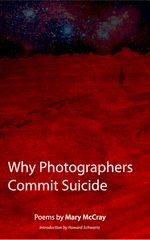
  5. I also arranged to have my first poetry mentor write the introduction to my book. This was probably the most sentimental piece of the project so far. This person taught me (pretty much) everything I know about crafting poems. My first semester with him was truly life changing and I was honored he agreed to contribute to my first book.

Mark Doty

MdWhen I was at Sarah Lawrence in the mid-90s, Mark Doty came to teach for one semester. All the second-year graduate students fought tooth and nail to get in his class. First-years had to sell off their first born to get a shot. At the time, I was probably heard to ask, "Who is Mark Doty?"

That's because before Sarah Lawrence, the only living published poets I knew where Howard Schwartz and Steve Schreiner (my teachers from the University of Missouri), Tom Lux and Alice Fulton  (because Steve Schreiner introduced me to them) and Philip Levine (and I don't know how I heard about him).

When Philip Levine finally came to read at Sarah Lawrence, he walked right by me, I felt like I had just experienced a celebrity sighting. What a silly thought: a celebrity poet.

Anyway, after moving to LA and diligently attending each Los Angeles Times Festival of Books every spring, (literally, the Cochella of books….if you want to see a million people in one place buying books, this is the biggest book festival in the universe), I got to know Mark Doty who was there year after year reading in the poetry nook. I grew to be quite a fan of his very funny, comforting and touching reading-style. On the Festival of Books panels, (real head-food, those free panels), his comments were also embracing and brilliant. I loved him! I could then see why the poetry students at Sarah Lawrence drew blood over the chance to get into his class. I wish I had been more savvy and aggressive back then too.

And then I read Dog Years. What can I say about Dog Years. It is indescribable. If you have a dog and love literary memoirs…walk, don't run to this book.

I have his book of poems Atlantis, much of which is about his lover's death from AIDS. I think what I love about Doty's poems are the way his brain gravitates toward particularity. From "Grosse Fuge" talking about his dying lover:

Mostly he looks away, mouth open,
as if studying something slightly above
and to the right of the world.

or the end of the poem "Breakwater," his ability to be obliquely specific:

now that we have come to rest,
as mysteriously as ever,
as nearly perfect a shape
as ever we'll discern.

or from "Atlantis," his heartbreaking and arresting similes:

and I swear sometimes
when I put my head to his chest
I can hear the virus humming
like a refrigerator.

If I could be the Dead-head-esque groupie of a poet, I would drive from town to town to be the obsessed fan of Mark Doty. But I have no time for this because I am committed to tracking the never-ending farewell tours of Cher.

Further reading:

Reading Poetry to Conchas Lake

IMG_7186We recently went camping to Lake Conchas Dam in eastern New Mexico.This is an area I've wanted to visit because it's near the Goodnight Loving Trail (although the dam wasn't there then) and also because it's near an area called David Hill under the town Mosquero New Mexico. The lake was also mentioned in this month's New Mexico Magazine as having the most shoreline-per-camper of all the lakes in New Mexico…which, in this empty state, is really sayin' something.

IMG_7183So I was able to add two new photos to Reading Poetry to Animals and Things that Don't Care: I was snubbed by both lake twigs and my own shadow.

It's rough out there.


Don’t Be a Martyr

MartyrPoets on the cross 

A few weeks ago I was having a conversation with someone online about the state of poetry and they made this comment to me (and this is not the first person to make this comment to me) that it was all a bit like shouting out into the void.

I wasn't sure if this person meant the process of blogging, the act of trying to turn the poetry industry around or the very act of writing and sharing poetry itself.

Or just living for that matter.

I was speaking to my husband, a former labor rep, about it. He said there is always a group of people out there who would rather lament the state of things than to work to change the situation. I see this in many poets I know. I think they almost prefer their status as outsiders.

I was innocently reading the book How Not to Write a Novel by Mittelmark and Newman (actually a very good book, albeit very snarky) and came across this stinging sentiment: "Some people can do backflips, walk on their hands, or juggle flaming swords. Some people can even recite poetry in public without losing their dignity."

Ouch. Are we the unpopular, ridiculed kids of literature?

Sadly we are. Unless we stand up for poetry against the bullies out there. Unless we start networking like poet politicians to make friends with other intellectual disciplines.

Or you can choose what you have. And I feel many out there secretly get off on poetry's anemic cult status.

As they say, if you are looking for the right person in your life, become the right person in your life. Which is a paraphrase of Mahatma Gandhi who said "Become the change you want to see in the world."

Or as Deepak Chopra said, "In your own personal transformation is the transformation of the world."

For further reading: think outside the lament

Monday Poetry News Roundup

Poetry headlines in the news


Publishing News

Contests

Poetry association and guild contests are booming for some reason.

Moment of Craft Fridays: Doing it Like Hart Crane

HartWell, turns out the book from 1937, Hart Crane, The Life of an American Poet by Philip Horton, was a regular page-turner. I read it in four days and loved how Horton gave Crane's life-events an evenly-spread psychological context, something I'm missing from the more recent poet biographies (Savage Beauty: The Life of Edna St. Vincent Millay by Nancy Milford, for example). Which reminds me, Edna was only given a throw-off mention in Crane's biography (on one page as "that girl poet") when in fact she was in her prime contemporaneous with Crane in New York City, although she swam in different circles.

Otherwise the biography was pretty open about Crane's life, including his  sexuality (although the author treated it, albeit sympathetically, as a mental disorder). Much theory was made over Crane's dramatic childhood and his relationship to his work. Horton provided a very strong defense of the more difficult aspects of Crane's poetry, aligning him more with T. S. Eliot in spirit and technique, as opposed to the other famous writers of the Lost Generation, his contributions including:

  • his revival of Elizabethan blank verse
  • his use of unusual words
  • his incorporation of complex machinery and mechanical activities of his time, the industrial age, (the spiritual values of airplanes, subways and skyscrapers), and understanding these developments as both oppressive and corrupting versus freeing and enlightening.

Interestingly, Hart Crane wrote a poem to Emily Dickinson and among his more popular poems were excerpts from his opus "The Bridge" (compared by Horton to T.S. Eliot's "The Wasteland" as a great epic about America) and his Voyages poems. In Hart Crane's life, he only published two books White Buildings (1926) and The Bridge (1930) before he committed suicide in 1932 by jumping off a steamship sailing from Mexico to New York. His body was never found.

Craft talk in the book

Quote from his letters:

"I can say that the problem of form becomes harder and harder for me every day. I am not at all satisfied with anything I have thus far done, mere shadowings, and too slight to satisfy me. I have never, so far, been able to present a vital, living, tangible–a positive emotion to my satisfaction. For as soon as I attempt such an act I either grow obvious or ordinary, and abandon the thing at the second line. Oh! it is hard. One must be drenched in words, literally soaked with them to have the right ones form themselves into the proper pattern at the right moment."

"Let us invent an idiom for the proper transportation of jazz into words! Something clean, sparkling, elusive!"

"One works and works over it to finish and organize it perfectly–but fundamentally that doesn't affect one's way of saying it."

Horton discussing the poem "Faustus and Helen:"

"Technically, it showed important extensions of craftsmanship: the long rhythmical lines approximating the pentameter without, however, committing themselves to any distinct pattern; the enrichment of language and music fused by syntax and assonance into an idiom unmistakably his own–these things brought him a sense of power and confidence….a milestone for him, making the step from minor to major intention. It's subject matter indicated an expansion of consciousness, a shift of interest from the particular to the universal. He had achieved at least  a partial realization of his long-standing desire to write of the 'eternal verities'…to ally his work firmly with tradition and still to express fully the spirit of his own times."

Horton talking about Crane's circle of literary friends:

"For almost a year the four met [Hart Crane, Gorham Munson, Jean Toomer and Waldo Frank] frequently, tacitly recognizing a kind of spiritual brotherhood that bound them together in a unit distinct from other factions of the artistic world. Their catch words were 'the new slope of consciousness,' the superior logic of metaphor,' 'noumenal knowledge,' the interior rapports' of unanimisme, the doctrine of Jules Romains."

Horton talking about Crane's use of words:

"His attitude towards language was much like that of a painter to his pigments. He gloried in words aside from their meaning as things in themselves, prizing their weight, density, color, and sound; and gloated over the subtle multiplicity of their associations."

"Crane appears to have built up his poems in blocks of language which were cemented into coherent aesthetic form by the ductile stuff of complex associations, metaphors, sound, color, and so forth. This would account for the juggling about of lines from one context to another with what seems to have been a kind of creative opportunism. Actually he was doing no more than the painter or sculptor who strives for what has been called 'significant form.' His enthusiastic study of modern painting was having its own influence…he considered [his poems] not as vehicles of thought so much as bodies of the impalpable substance of language to be molded into aesthetically self-sufficient and complete units….Crane intended these poems not as descriptions of experience that could be read about, but as immediate experiences that the reader could have…The reader was not necessarily expected to derive any more rational meaning from these poems that from those state of consciousness, experienced by everyone at the same time, which forever elude the conclusive grasp of reasonable understanding and expression."

For Horton, this is why Crane can be classified as a mystical poet, for his search of the elusive consciousness.

Speaking of mystic poets and that which "forever elude the conclusive grasp of reasonable understanding and expression," I went to my local Santa Fe performance space last night to see the documentary Rumi, Returning. It was an awful mess. A room full of baby boomers grunting over Rumi poetry, so many of them the theater ran out of chairs and one elderly lady tried to sit on my lap (not kidding). The film was convoluted, pompous and looked like something shot in the 1980s, complete with bad sound, camera jumps and travel footage of Turkey overused in all the wrong places.

« Older posts Newer posts »

© 2026 Big Bang Poetry

Theme by Anders NorenUp ↑