Reinventing the Life of a Poet in the Modern World

Category: Whole Life of the Poet (Page 17 of 19)

Opera About Oscar Wilde

OscarA few years ago I heard that the Santa Fe Opera would be doing an opera about Oscar Wilde in 2013. Although I'm hot and cold about the Santa Fe Opera and opera in general, I have seen about five of their shows (years ago in regular expensive seats and now usually in standing-room only). I was excited there would be a new opera about a famously flamboyant writer.

I even went to my Eldorado library to get Richard Ellmann's biography of Oscar Wilde. 
Ellman

Monsieur Big Bang took me to see the show two weeks ago, playing its second night of a World Premiere. We did the $15 SRO and unfortunately the house was packed so we never had the opportunity to be moved up to un-purchased seats. Due to our move and preparations for the writing sequester weekend, I was already exhausted and had to prop myself up for most of the show.

The opera focuses on Wilde's persecution for "gross indecency," the first half building up to his sentencing and his refusal to flee and the second half dealing with his time in jail. We spend no time learning of his early successes in criticism and theater or about his life after prison. And this is by design. The opera is solely about his persecution for being unapologetically gay. 

In some ways I get this and in some ways I miss those lost plot points. We never see Oscar at work writing or being witty at parties and salons. We do get to hear some of his amazing children's tales and their stunning metaphors (but only a line here or there). The play also glamorizes Wilde somewhat and by not addressing his tragic after-prison life, this reinforces that. In truth, Wilde probably should have fled. He ended up exiled in France anyway, mistreated and broke. By fleeing, he would have probably salvaged more of a life for himself. The play tries to give him honor in facing the dragon.

I love the program artwork for the show. It shows an iconic portrait of Wilde built out of his  famous lines. I bought a t-shirt of it. I loved some of the opera's figurative special effects as well: the jack-in-the-box judge, the crib that becomes prison bars.

SeethruWhat's special about the Santa Fe Opera is not only the quality of its programs but the uniqueness of its dedication to all types of opera fans (from tourists to obscurists), its interest in showcasing new operas and its stage design which opens out to display the scrub of juniper hills stage right and the Santa Fe mountains (through the stage and to the left). Many shows also include some dramatic weather in the background. I have also come to really enjoy the free lectures before shows.

During the Oscar lecture, we delved into some of his best aphorisms, an overview of the aesthetic movement, a bit of his biography, and we were read in entirely two of his tales for children (beautiful long poems surely), "The Happy Prince" and "The Nightingale and the Rose." We also learned about the opera's musical motifs and some supposedly familiar half-steps that were not familiar at all to me. 

How does the opera handle Lord Alfred Douglas? I really liked how they handled him actually. "Bosie" was represented in the Ellman biography and in the opera lecture as an irresponsible, spoiled rich kid. He does not speak or sing in the opera but is ever-present as an obsessive thought in Oscar's mind. His character takes many guises but is always recognizable as the thin, effeminate Boise who performs a series of ballet segments that become very passionate and physical with Oscar.

The opera also includes a characterization of Walt Whitman who serves as kind of a guiding angel for Wilde. He is dressed all in white with a straw hat. His shadow looms large over the set. The opera merges his writings with Oscar Wilde's regarding the soul and the body. Frank Harris is another large character in the book. Harris was a publisher  and friend of Oscar's who wrote the first famous (but inaccurate) biography of Oscar Wilde. William Butler Yeats and George Bernard Shaw are also mentioned in the opera as supporters of Oscar during his trial.

Monsieur Big Bang is actually an opera-aficionado (unlike a more ambivalent me) and he enjoyed the opera; but as he said, you won't come out of this one humming an aria. The music seems understated in service of the story. I feel this way about most of the more obscure operas I've seen in Santa Fe. The local fans we know here are liking the opera, being fans of its star, but the reviews have been mixed. Some local fans have told us all new operas seem to get mixed reviews by default. 

The opera was directed by Kevin Newbury and written by Theodore Morrison and John Cox especially for newly famous countertenor David Daniels. Creators felt he was a good match for Wilde's alleged Mezzo-like voice.

Although the opera doesn't cover the breadth of Wilde's life, its aim is more to serve up a message and a warning in light of current events. Near the end of the opera the character of Oscar says, "I have made my choice; I have lived my poems." I respect not only that sentiment but these opera creator's choices of focus in not letting a rambling biography limit them in telling the story they wanted to tell.


Movie Forms

ConjFor decades I've loved horror movies. Not slashers, not torture movies, not flimsy excuses for violence against women, but good old fashioned haunted house movies.

In high school, we loved the amusement park-like adrenalin rush. But over the years, and before the meta-horror movies like Scream and Scary Movie, I began to see that horror movies were their own forms. Like westerns particularly, these genres have rules and structure. The filmmakers who break the rules well usually turn out to be those who know and understand the rules.  Just like writing in poetry forms.

For the last two decades I've been discouraged by masochistic, misogynistic horror movies like Saw and misfires like Paranormal Activity and Insidious and the bleak Japanese-inspired films like The Ring. Two years ago I wrote an Open Letter to the Horror Movie industry on I Found Some Blog by Cher Scholar.  I missed the architecture of a good ole ghost story, which is not an easy story to pull off. It takes an understanding of tone and timing. Horror movies are filled with tried and true tricks. It takes an artist to make some old gotchas work.

Which is why I love the new movie The Conjuring. Some above C-list actors, an artful set and costuming, deft direction and some newly formulated scares make this a strong example of its form.


The Karma of Encouragement

Parents

I want to take a break and talk about ways of being as a poet. One of the things that gets me down from time to time is the negativity festering in any circle of creative people, poets, filmmakers, studio artists.

If you run a website, you get a lot of spam. Here is a piece of classic spam I received on Big Bang Poetry's blog before I added CAPTCHA to my commenting procedures.

I'm impressed, I must say. Actually rarely to I encounter a blog that is both educative and entertaining, and let me tell you, you have hit the nail on the head. Your notion is outstanding; the issue is something that not sufficient individuals are speaking intelligently about. I'm extremely happy that I stumbled across this in my search for some thing related to this. Michael Kores.

Wow, Michael Kores took the time to be so vague about my deep thoughts! Alas, spam disguised as false flattery is very bad energy. It's a waste of everyone's time (who buys shoes from a link on a blog comment?), and it's pandering to our endless hunger for compliments. And failing miserably to boot. So it's bad marketing and it's bad flattery. And it's a jerky thing to do. I wrote a poem about this spam for NaPoWriMo.

Last week, I finished the first draft to my next book of poems. And as I'm re-tooling and re-configuring, I'm also wondering (with some trepidation) where I can go for some good feedback. Commonly you turn to your trusted readers, your friends. I'm going to a "writing sequester" in a week and a half in Phoenix, Arizona. Two writer friends are coming from Los Angeles and my cousin is coming from Alaska so we can all meet, write and talk about our writing projects.

My husband and I have been discussing being friends with artists, getting encouragement for your work, giving encouragement to others and the psychology of the age we're living in. I'm going to talk more about this later. I have a theory about this age of artists and what our legacy will most likely be (stay tuned for that).

This all came up because my husband, Monsieur Bang Bang, the archaeologist, has been working as a historical consultant for a new television comedy western called Quick Draw. He spent years as a TV writer in LA and two of his best friends are television actors. He's been involved with successful projects of his own and also projects that didn't get picked up. He's been through the whole production process and the gamut of emotions that ensues. He also knows how hard it is to get anything made and on the air.

Not only did Quick Draw get picked up but it's first few episodes are very funny, testing on the show went great and the show is full of enthusiastic guest stars like Frangela, Tim Bagley and the band Eagles of Death Metal. So who knows how it will all turn out but you hope as you go along with any proejct, you'll get encouragement from your friends. It's interesting to me how often you're disappointed.

It seems to be human nature to secretly want your friends to fail. Ultimately, their success reflects on you. These feelings rob you of any potential enthusiasm. I've gone through this myself when  former classmates succeed. I see my former classmates go through this, too. Monsieur Bang Bang reminds me that success can also bring to you a bad form of false flattery, people who want favors. That's like it's own kind of spam.

When I started this project of Big Bang Poetry, I decided I would channel one of Oprah's big lessons: consider your intent in everything you do. Are your intentions good or bad? This idea has clarified my entire approach to poetry, all my projects and even my relationships. I used to fret about how my relationships were going. I used to second guess all that I said or did. All this anxiety has disappeared for me because I constantly know what my intent is and I try to keep it positive. I may be misunderstood from time to time but I'm walking forward with a positive intent. And I'm at peace with that.

This means I'm not trashing schools of poetry, I'm trying not to make snide remarks about other artists (sometimes this is hard because snarkiness can be some bitchy fun), and I tap into my enthusiastic support for all my friends and fellow artists. Honestly, it is there; it's just buried under knee-jerk jealousy.

This, like any other way of being, takes practice. You'll start to notice when you support your friends with their projects, you'll get silence back from them on yours. Then you have to decide for yourself how to handle that. I do believe the cumulative amount of good intent you put out into the universe will come back to you. Negative people tend to get negative returns. It's classic karma.

And yes, bad things happen to good people. But I believe karma stretches over many lifetimes and you must do what you can with the life you've been given (thanks Gandalf).

Bottom line: if you want to be at peace with yourself as a creative person among other creative persons, practice generous feelings toward them. Sometimes I get a little bummed and wonder who I can share my success stories with (few as they are at the moment). I want encouragement from friendly artists and I think ultimately that's what want that from me. Finding each other is part of the whole process of being human.


Poetry News: Poetry Used for Good and Evil; The Robot Poet Critic

It's been a while since I've done a news and link roundup so I have some good stuff:

Poetry Used for Good and Evil

The Automated Poetry Critic

How can you tell the difference? Ha! (Knee slap.) A program has been designed to pare out the professional poets from the amateurs: Poetry Assessor! I
just put my favorite poem in there (by a somewhat controversial poet)
and it spit back a score of 3.2! I couldn't get the evaluating PDF up for a justification on that outrage. Put your favorite poem in there and tell me what you get.

Publishing

Tips from the Dead & The I-Thought-They-Were Dead

Check Into It


Demand Quality in Your Sandwiches

TunaIt's been a while since I've done a Whole Life of the Poet post.  Due to some arm fatigue, I recently bought a massage package. The first massage hurt so bad I had to focus my mind on a reward in order to endure it. Mid-muscle-knead, I settled on purchasing a tuna sub sandwich directly following.

As a poetic aside, why do we call these things sub sandwiches? Because they look like submarines? Subway brand sub sandwiches have complicated the issue by making us think of subway trains. All of which makes me wonder if this is a food item marketed to children. However, kids never opt for these oval delights. You only ever see adults buying sandwiches shaped like submarines. It's all so confusing tonally.

I love talking about food. I love reading about food. I loved Waiter Rant and Antony Bourdain's Kitchen Confidential. I loved all of Ruth Reichl's books: Tender at the Bone, Comfort Me With Apples and Garlic and Saphires.  I loved My Life in France by Julia Child. I can't cook to feed myself but I love reading about others who see the art and drama surrounding food.

And I think the quality of your sub sandwich is crucial to your well-being as a writer.

Most of us get our subs from chain takeout restaurants and we each have our favorites. I've noticed different franchises within a chain can serve drastically different qualities of sandwich. For instance, I usually crave a tuna sub. Over the years I've watched various minimum wage slaves prepare this sandwich. Full disclosure: I shop at Subway and recently heard the rumor that this franchise never gives raises above minimum wage which is why you probably never see the same "sandwich artist" there more than twice. I have found that various sub shops consistently offer up the same quality of sandwich, be it good or poor.

For instance, my local shop in Mar Vista where I lived in Los Angeles served practically inedible subs.  In Santa Fe I've been to three shops: one on Cordova which serves a moderate amount of tuna, one on Cerrillos by Lowe's who is the most stingy with their tuna and one on Rodeo Drive serving the best, most tuna-packed subs I've even encountered.

To get the best value for my poem-earning chump-change, I try to always frequent the Rodeo shop. My next goal will be to learn to cook in order to wean myself off of corporate subs so I won't feel guilty about buying from a chain who refuses to reward the good labor of submarine sandwich artistry.


The Benefits of Poetry Classes

ClassIn one marketing manual I read last year, the author stated the key to success was to always be learning. I agree with this and so I plan to always be a student.

With the rising costs of college, not everyone can  afford to continue with the big degree programs. But community college classes are a great alternative.

This spring I took a poetry workshop class with Barbara Rockman at the Santa Fe Community College. I took this popular class last year also and in each class I met others who had taken the class more than once. I was so excited to be back in touch with other poets that last year I got a little teary-eyed. I loved picking up copies of everyone else's new poems at the start of each class. All those new poems–I got a kind of a shopper's high.

What I've learned in Barbara's classes:

  1. Discovered new directions for your writing from directed assignments (odes, sonnets, themes)
  2. Got reminders on tips, tricks and mechanics
  3. Learned new ways of being as a writer, explore the spirit of writing (thinking about the more meditative aspects of what you do)
  4. Got good suggestions for further readings on craft
  5. Listened to other students talk about movies that have inspired them creatively
  6. Learned the names of new poets to explore
  7. Enjoyed a connection: conversations, social moments before and after class
  8. Found out where local poetry events take place
  9. Learned about poetry mailing lists
  10. Received good feedback on my own new poems

This spring I also took a class on Nobel Prize Winning Poets taught by David Markwardt. We studied the first half of all the Literature category winners who were poets. Most of them I had never read.

  1. I loved Rabindranath Tagore and was fascinated by his one-sentence, one-line writing style. So logical!
  2. William Butler Yeats has never been one of my favorite poets but I make some headway with him during this class and did enjoy all the comments from our group.
  3. The big shock for me was how much I liked T.S. Eliot this time around. I've always had issues with Eliot, ever since I had to read "Prufrock" at my high school in St. Louis. Because Eliot is from St. Louis (he's right there in the University City walk of fame), the town has had a love-hate relationship with him. He's an expat after all. Midwesterners don't cotton much to that sort of thing. Also, he always seemed such a snob, a Negative Ned. At Sarah Lawrence when we read "The Wasteland" in a craft class, I went so far as to declare (somewhat snobbishly in my own way) that "any poem whose footnotes were longer than the actual piece had big issues with flow." That entertained the teacher but truthfully I wasn't giving the man a chance. In David's class we stuck to the more manageable poems and I was surprised at how dark and creepy they were…right up my alley! His depictions of horror would inspire anyone who loves ghost stories (guilty as charged!). Eliot can also be silly and irreverent which I didn't expect. 
  4. I didn't connect much with Juan Ramón Jiménez
  5. or Gabriela Mistral. Don't know if this is an issue of the poems or the translations (or me).
  6. And although I was really looking forward to the Neruda class. Monsieur Big Band and I had a Neruda poem read in Spanish at our 2009 wedding. My husband picked it out because he wants to do to me what the spring does to the cherry tree. ;-)   Unfortunately, I had to miss that class.

Because three of our six writers were Spanish-speakers, we talked a lot about the art of translation, including discussions on:

  • word choice
  • tone,
  • musicality
  • figurative vs. literal language
  • the ego of the translator

I really enjoyed these classes and was sorry to see them come to an end. Whenever I take a class in ceramics I find some new inspiration or new way of looking at things from each new teacher. Different teachers see things differently. One might show you how to work the wheel with their technical advice, but another one might have some spiritual advice that gives you just that little extra push towards understanding. Honor every teacher's point of view and this will broaden your own knowledge of any craft.


Latest Poetry Journals and Catalogs

ApI enjoyed this season's American Poet issue (from The Academy of American Poets) much more than last issue. The articles were less dense and obtuse. Carl Phillips does a great explication of Frank O'Hara's poem "To The Harbormaster." Jane Hirshfield reviews the new book Black Aperture by Matt Rasmussen (who won The Walt Whitman Award). I like the poems she excerpted about grief and gun violence, especially "Trajectory" ("After spiraling twice/it exits the barrel") and "Chekhov's Gun" ("Nothing ever absolutely has to happen. The gun/doesn't have to be fired").

I usually like David Wojahn poems and the ones in here don't disappoint. Mark Doty talks about Brenda Hillman's poetry. Mark Doty never disappoints either. Edward Hirsh talks about Gary Snyder. I like his poem "As for Poets." Like the last issue, I love the Manuscript Study feature, this one focusing on May Swenson's "The Question." Wow, what a revision there.  There are some new books out that look interesting to get: The Collected Poems of Ai, Anne Carson has a new book, red doc>, and Susan Wheeler's Meme looks good. I hated the send-up gravitas of the cover when I first got it, but something about it has stuck is my paw and I keep looking at it.

AprGerald Stern is on the cover of the latest American Poetry Review. Another chance to figure him out. Another failure. His "companion" Anne Marie Macari also has a review in the issue. Anne Marie was in my class with Jean Valentine at Sarah Lawrence. I sat next to her a few times. She was newly divorced, she told me. Soon after I graduated, it was rumored she had "hooked-up" with Gerald Stern. Gossip, gossip. So it's interesting they're in this issue together. Another one of my classmates, Ross Gay (in my class with David Rivard) has poems in this issue as well. Now Ross I remember better. I had a crush on him. And that was my only crush at Sarah Lawrence. But I never got to know him. He seemed very private.

I like Jennifer Militello's poems "Corrosion Therapy" and "Criminal How-To." Kathleen Ossip does an interesting light piece on Anne Sexton. I like Charlotte Matthews' "Patron Saint of the Convenience Store" and "The End of Make Believe." There's a huge excerpt on Trobairitz (female Troubadour) poetry from around the 13th century. I felt I should have liked this more than I did. It teetered on having some feminist interest for me but I just couldn't get into it. I felt the same way about Ray Gonzalez's "Crossing New Mexico with Weldon Kees" series of poems. After all, I am in New Mexico now. I should get all the references.  What blew my socks off was the poem "Woman and Dogs" by Adam Scheffler. Like I loved it enough to pin up.Here's how it begins,

My girlfriend's dog is small and fat and neurotic
and smells at night like an African meat flower.
It loves her more than some people love anyone
in a riddle of love it worries at, lying there on the floor.

Also liked James Galvin's "Simon Says," and "Long Distance" and Kettje Kuipers' "A Beautiful Night for the Rodeo." Although I enjoyed it, I have no idea why that article on TV cars was in there, except to point out the American-ness of cars. I liked that long Christopher Buckley poem and Alex Lemon's "The Righteous Man is an Advocate of All Creatures." I felt the poems were stronger than the essays this issue.

CcrThe Spring 2013 Copper Canyon Reader also came to my mailbox this month. Merwin's book of Selected Translations seems interesting in light of all the translations we read and discussed in the Nobel Prize winning poets class I just finished.  There wasn't as much that appealed to me in this issue, which is unusual. I liked Michael McGriff's excerpt from his poem "My Family History as Explained By the South Fork of the River." I also liked Robert Bringhurst's "A Quadratic Equation" and David Wagoner's "A Brief History," an ars poetica:

without knowing what it was waiting for
in places where it didn't belong,
how it broke down, how
but not why it made marks again
and again on pieces of paper.

I'm a sucker for quote-books, so I'm sure I'll buy Dennis O'Driscoll's book Quote Poet Unquote. From the excerpts,

Poems are never made out of 100% good will and good tidings. There is always a little cold wind in a good poem. — George Szirtes


Interesting Waite Phillips Quotes Pertaining to Writing

Dawnchandler I've spent the last 20 days with family and friends celebrating Monsieur Big Bang's graduation with his master's degree from nearby Highlands University. We took my parents up to the Cimarron area for a day. There we saw the remains of the town of Dawson, New Mexico. Dawson was a mining town important to our family because it's existence supplied the need for a railroad depot and a new town called Roy, New Mexico, where my grandparents were raised. Ironically, Roy still exists as a small town but Dawson was closed down decades ago by the railroad company that ran it. You can visit the cemetery and the memorial to the miners who lost their lives in some horrific mining accidents there.

We also visited Philmont Boyscout Ranch, where Monsieur Big Bang did his field work last summer. We visited the area where he camped (which is near the house of Gretchen Sammis, a very interesting woman rancher who was heir to the Chase Ranch) and toured the Waite Phillips house at Philmont. Oil entrepreneur Waite Phillips donated much of his New Mexico property to the Boy Scouts in the 1950s.I bought a little commemorative book of his epigrams from the gift shop. He had some good things pertaining to the writing life:

– If you want to be a singer, start to sing. (Elsie Robinson)
– A man is generally what he thinks about all day long. (Emerson)
– The man who never makes mistakes never makes much of anything. (Waite Phillips)
-  What is really important is what you learn after thinking you know it all. (Waite Phillips)
-  The big shots are only the little shots who keep shooting. (Christopher Morley)
-  'Tis not in mortals to command success but we'll do more Sempronius–we'll deserve it. (Shakespeare)
-  Those incapable of building seek to attract attention by tearing down. (Channing Pollock)
-  The trouble with many of us is that we would rather be ruined by flattery and praise than saved by honest criticism. (Waite Phillips)
– One of the most surprising compensations of life is that no man can sincerely try to help another without helping himself. (J. Pearson Webster)
– If we keep on going, the chances are we will stumble onto something but I never heard of anyone stumbling while sitting down. (Chas. F. Kettering)
– Regardless of ability, no one individual can accomplish and complete anything worthwhile without direct or indirect cooperation from others. (Waite Phillips)
– To hate is to hurt–not the hated but the hater. Fortunately I have learned by experience to reduce the hate factor to that of simple disapproval. (Waite Phillips)
-  An ancient Persian proverb states, "The dogs bark but the caravan passes on." So does modern man when subjected to unjust or petty criticism. (Waite Phillips)
– It is provided in the essence of things that from any fruition of success, no matter what, shall come forth something to make a greater struggle necessary. (Walt Whitman)
-  The credit belongs to the man who is actually in the arena, whose face is marred by dust and sweat and blood, who strives valiantly, who errs and comes short again and again, because there is no effort without error and shortcomings….who at the best knows in the end the triumph of high achievement and who at the worst, if he fails, at least fails while daring greatly, so that his place shall never be with those cold and timid souls who know neither victory or defeat. (Theodore Roosevelt)

And quoted in its entirety is this Rudyard Kipling poem, "If."

Artist Dawn Chandler does some amazing Philmont Boyscout Ranch paintings (see above). She's an alumni counselor of the Philmont Boyscout Ranch and I met her in one of Barbara Rockman's Santa Fe poetry workshops last year. Visit her website at: http://www.taosdawn.com/LandPhilmont01.html

Interesting note: I found out that girls can now join the Philmont Boy Scout Ranch summer treks through their co-ed Venturing programs. Although I'm skeptical of the recent decision by the Boy Scouts regarding gay counselors, I wish I would have had Adventuring programs when I was a kid. Girl Scouts never did anything too adventuresome and I dropped out after one year. Maybe they should have invented FagHag Scout Camp for me. I would have fit in well there, too: hiking treks by day, glitter crafts by firelight.


Comment on My Poem on a Virtual Poetry Circle

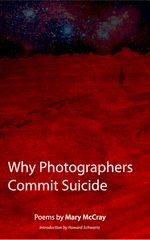
PoetrySavvy Verse & Wit was very kind to choose "Starbaby," one of the poems from Why Photographers Commit Suicide, for their 200th Virtual Poetry Circle.

 Please check it out and leave some comments!
http://savvyverseandwit.com/2013/05/200th-virtual-poetry-circle.html

I've also been meaning to complete the National Poetry Month blog circle on Savvy Verse & Wit. Here are my favorites from the second half of the month:

To see the full list, visit the tour's homepage.

Here are my favorites from the beginning of the blog tour.


Movies With Poetry: Edgar Allan Poe, Rimbaud, Verlaine, Alice Duer Miller

As part of my multi-media explorations of the world of poetry, I've searched Netflix and sprinkled my movie que with movies about poets or poetry. I am old fashioned and still get DVDs mailed to me; haven't tried streaming yet . Here are my first three movie reviews of poetry-related movies:

The Raven (2012)

RavenMr. Big Bang and I actually saw The Raven, starring John Cusack, last year in the the-A-ter. Basically, this movie took some basic facts about Edgar Allan Poe's life and embellished them into a psychological-action thriller, ala the latest Sherlock Holmes fare.

I'm not against this sort of thing by definition (I kind of liked Gothic from 1986), but the results here were disappointing for these reasons:

  • John Cusak, although he "gains an inky black goatee and loses as much of his puckish ironic attitude as possible" (Entertainment Weekly, May 11 2012), is badly cast. He's still John Cusack and I never forget it.
  • To create the psychological thriller part of the movie, Poe is made to chase a murderer who is copycatting his short-story murder techniques. Saw-like gruesomeness ensues with scythe-pendulums, burials alive, and melodramatic poisonings. You've read it, they got it here. I can just imagine the snarky, angry review Edgar Allan Poe would give this movie for stealing all his maniacal devices.
  • It's got the gore but not the haunting skill. Entertainment Weekly said it best, "there are no unspoken shadows haunting his soul." He's just a messed-up drunk.
  • In trying to create early 1840s Baltimore, they filmed the movie in Belgrade and Budapest.  The results were off-kilter: for instance, the movie had no black actor extras (zero) and Baltimore was a slave state and the roads and buildings all looked too Central European. 

The pictures below say it all, over the top and heavy handed.

Raven2
Raven3 


Total Eclipse (1995)

TotalFirst of all this movie was hard to get a hold of. It was the first and only movie that sat languishing in my Netflix que waiting for all the girls and boys who are obsessed with Leonardo DiCaprio to get their hands on it first in order to see all his naked scenes.

And there's plenty of nudity to go around between DiCaprio who plays Arthur Rimbaud and David Thewlis who plays Paul Verlaine. That's one perk of the movie but other than that you get DiCaprio playing his sullen, cocky and incorigable best (as seen in many other films of his early oeuvre) and Thewlis plays his pathetic, doormat of a mentor. Both are in this 1871 bisexual affair for their own poetic ambitions (only Thewlis falls for good).The movie is full of their gay, ugly tantrum fights.

I will say Thewlis has an extraordinary profile and I found his mugging more interesting than DiCaprio's mugging although both characters became very unappealing very fast. Rimbaud is an attention-whore with a juvenile urge to shock and Verlaine is a veritable pTotal2sychopath who sets his wife's hair on fire for no reason. Worse than that, he can't take a hint.

The movie, like many, glamorizes poetry. However, there are very few scenes of the poets actually talking about poetry (as you know they would be) or writing any of it. At one point Rimbaud has been trying to write (off camera I guess) and he cries out, "It's so difficult!" but then later states soberly, "The writing has changed me."

Verlaine dramatically calls absinthe "the poet's third eye." At one point Rimbuad laments, "The only unbearable thing is that nothing is unbearable." What? Is that a logic puzzle? The movie was supposedly based upon the correspondence between the poets and like most biopics, the narrative is choppy and uneven.

But there were things I did like: the movie covers class issues among poets, something I feel is rarely discussed today. Rimbaud and Verlaine both struggle with money and time. There's a good exchange in this regard between Rimbaud and his mother:

Rimbaud's Mother: This work you do, is it the kind of work that would lead to anything?

Rimbaud (angrily): I don't know. Nevertheless it's the kind of work I do.

Who hasn't had that conversation with their mom? The movie is also about how some people literally consume their mentors and how dangerous that relationship can be.

Rimbaud, when asked to read some of his poems declares, "I never read out my poetry!" In the end, there is professional truth in his monologue about why he gives up writing poetry (he had been mostly full of hot air about it: "I decided to be a genius…I decided to originate the future!") and at the end, he dismisses his mentor as a "lyric poet" and goes off to Africa.

Roger Ebert had this to say, "The poems can be read. The film must stand on its own, apart from the
poems, and I'm afraid it doesn't. To write great poems is a gift. To be
interesting company is a different gift, which neither Verlaine or
Rimbaud exhibits in "Total Eclipse." One admires the energy and
inventiveness that Holland, Thewlis and DiCaprio put into the film, but
one would prefer to be admiring it from afar."

The White Cliffs of Dover (1944)

DoverGee, do I love it when my obsessions converge! On my other blog, I Found Some Blog…by Cher Scholar, I've been tracking Cher's month as co-host of Turner Classic Movies on Friday nights. Cher is a huge fan of classic movies and since 2011 has been dropping by to co-host movie nights on TCM. This month she's been doing a series called It's a Woman's World, powerful female-starring movies of the 30s and 40s. The first Friday was a set of four movies on Motherhood. Last Friday she did a set of war movies, one of which was the movie about an American (Irene Dunne) living in England during World War I and World War II called The White Cliffs of Dover, a movie I've only ever heard of because it was one of Elizabeth Taylor's first movie appearances.

But interesting to us on this blog, the entire film was based on a poem. Imagine that! It's a very long poem (a "verse novel" says Poem Hunter) by Alice Duer Miller called "The White Cliffs." A verse novel. Imagine that! The narration of the film starts out with Irene Dunne reciting the first
stanza of Miller's poem and then flips over to poetry written for the
film by Robert Nathan. Poetry written for a film! Imagine that! The Los Angeles Times did a story about Robert Nathan when he died in 1985. He had published 50 books of poetry and fiction.

Alice Duer Miller's original poem was influential in many ways. According to Poem Hunter:

The poem was spectacularly successful on both sides of the Atlantic,
selling eventually a million copies – an unheard of number
for a book of verse. It was broadcast and the story was made into the
1944 film The White Cliffs of Dover, starring Irene Dunne. Like her
earlier suffrage poems, it had a significant effect on American public
opinion and it was one of the influences leading the United States to
enter the War. Sir Walter Layton, who held positions in the Ministries
of Supply and Munitions during the Second World War, even brought it to
the attention of then-Prime Minister Winston Churchill.

Alice Duer Miller was also influential as a suffragette:

She became known as a campaigner for women's suffrage and published a
brilliant series of satirical poems in the New York Tribune. These were
published subsequently as Are Women People?. These words became a
catchphrase of the suffrage movement. She followed this collection with
Women are People!
(1917)

The movie is your basic war-time romance/tearjerker about a woman who loses everyone she loves in two wars. I don't particularly like war movies and a weekend watching four of them ("Three Came Home" from 1950 was particulary harrowing) put me into quite a funk. People never learn. None of our laments about war are new, etc.    
Roddy

The New York Times recently called the movie "A Cinderalla story in sweet disguise" but I couldn't disagree more. Her life was full of tragedy and lonliness shortly after she married. Had she picked boyfriend number one, she might have had an entirely happier life in America.

At least the movie is good for the appearance of Roddy McDowall who plays the young, charming son.


« Older posts Newer posts »

© 2026 Big Bang Poetry

Theme by Anders NorenUp ↑