Reinventing the Life of a Poet in the Modern World

Category: Today’s Pillar of Poetry (Page 2 of 8)

New Year, New Attitude, Olivia Gatwood and Joan Didion

RupalOk, let’s get started. We have a lot to get to. First off, happy 2022. New year, new adventure.

I received a Masterclass subscription for Christmas and I started right away with Ru Paul. I felt he would be the best person to help me reorient myself to the new year. His talk was about recalibrating the self at the deepest level.

The class was not about drag, per se, other than his famous quip, “We’re all born naked, the rest is drag.” It was mostly about tuning your frequency to what people see. Not suprisingly he recommended meditation for this and talked about cycles of cynicism that stall in bitterness, how the ego co-opts joy. He talked about his cultural lighthouses (Monty Python being a surprising one). In the second half, he also gave red-carpet and makeup tips (which are always mesmerizing to watch). For example, he says if you want more money wear a suit. Full stop. I don’t need any more money, so I won’t be buying new suits. But I appreciate the spirit in which that advice was given. He talked about your life’s work being to communicate yourself, but lest we fall into an ego-hole, he also talks about paying it forward and serving others. (“It doesn’t work if we’re all solo agents”). He tells you how to talk to your inner kid.

CornellwestThen I watched the Cornell West Mastercalls which completely turned me inside out. West’s suggestion that we could see differently, act courageously and feel deeply was the invitation I needed to sign up in the first place). Ostensibly this class was an introduction to Philosophy, what does it mean to be human, etc.? Surprisingly he talked a lot about love and music. He asked us to, like Socrates, question our presuppositions. We can’t live without them, he says, but we need to question them with humility. We need to learn how to die. That was a big one. He talks about moving from being an observer to being a participant. He talked about pity versus compassion and he inspired me to read Eugene O’Neill’s The Iceman Cometh to learn the difference.

I really needed to hear his message about leaving “a bit of heaven” behind “in a world run by the hounds of hell,” to stay out there in the thick of it, even though things are really awful right now. After all, if the cracked vessel Cornell West can move ahead in the world with a positive attitude, what the hell is wrong with me?

He said that no matter how bad things are, love, joy, holiness and the sublime are still happening. (and I have to remind myslef, still happening on the internet). Both Ru Paul and Cornell West helped me reorient myself to 2022, not just in spite of recent anxieties but a lifelong one as well. 

So how do these Masterclasses relate to writing? Well, these talks were both about what you choose to pay attention to and that's what writing is all about at its deepest level too.

That said, I’m excited about two new projects this year, an online poem about my grandfather and a more traditionally conceived Katharine Hepburn epic. NaPoWriMo 2022 is also coming up in April. I’ll only be doing two more years of NaPoWriMo and then I’ll have reached my goal of 300 poems. I haven't decided if I'll follow the prompts one last time or pick another theme.

DidionI was very sad about the news that Joan Didion had passed away. Didion is my favorite writerly model for many reasons. After moving to Los Angeles many years ago Sherry, a friend from Sarah Lawrence College recommended Joan Didion as the best writer about LA (or California, I can’t remember exactly what she said). But yes, she is. I checked out every Joan Didion book from the Redondo Beach library. Although she was not a probable writer for me to love as a John-Wayne loving, glamourous, Hollywood insider. My favorite books of hers were Where I’m From (which helped me think about my own family history in a critical way) and The Year of Magical Thinking (which made me soberly approach my own magical thinking).

Didion also helped me think about Los Angeles in a new way. She talked about America and the cult of exclusion (class, race, etc.)…she understood intelligentsia and she understood California and she was a long-time New York City resident. She could credibly make the case for a west coast intellectualism. And yet no one seemed more included, seemed more a part of the upper crust of that culture than did Joan Didion…and yet she called it out anyway, which is remarkable.

Some interesting tributes online:

Joan Didion and the Voice of America: This piece talks about her connection to Normal Mailer and V.S. Naipaul’s pessimism-as-style, how that was always misread as white-woman fragility. The article also focuses on her important writings about race and how she typed out Hemmingway’s sentences to learn the craft of the sentence. The article also mentions “her ability to combine the specific and the sweeping in a single paragraph.” Apparently the writer is working on a Fall 2022 exhibit on Didion at the Hammer Museum. I look forward to that.

Joan Didion’s California: This article talks about “the foundational mythologies of California” and “Didion’s generational ties with the state…her mercurial and melodious sentences…her signature lilt…her own indelible, intruding, and exacting subjectivity…the routine admission of her presence across all her writings…her deep displays of sentimentality” and how “no one who enunciates the moods of this place [California] quite like Didion does….to write hard about the places we love and has permitted us to be a little glamourous while we do it.”

What Joan Didion Saw:  “Didion was a pattern-seeker” this article says, she found “the markers pointing out how the whole thing worked….through her efforts, the craft of journalism changed…her ominous, valley-flat style…[working] in the danger zone between sensibility and objectivity: to be receptive to a passing feeling, a change in cast, and then to bear down, with unsparing rigor, in the work of understanding why.” The article explains her “flash cuts”…her “restless mind” and quotes Didion to say, “In retrospect, we know how to write when we begin. What we learn from doing it is what writing was for.” Didion teaches us “how to put together a paragraph, whether to add the ‘the’ or not…what to do with those sentences, how to turn the craft of storytelling away from shared delusion, is the effort of a life.”

Nobody Wrote Sentences like her: According to Didion, “to shift the structure of a sentence alters the meaning of that sentence, as definitely and inflexibly as the position of a camera alters the meaning of the object photographed.” This article talks about her “incisive, steely prose,” the piercing restraint … palpable down to the grammar, which she called “a piano I play by ear.” The article also mentions her musicality, “controlled and concise sentences,” how she deconstructed mythologies including the California dream, the myth of New York City, her disillusionment, her economy, her questioning of the self, her sarcasm and irony, her understatement and the enigmatic way she could convey a mood.

There are two Library of America editions available:

The 60s/70s Joan Didion

The 80s/90s Joan Didion

And a book about her writing style, Joan Didion: Substance and Style by Kalthleen Vandenberg 

Dunne-didionDidon’s husband writer John Gregory Dunne was no slouch about writing about Los Angeles himself. And their movies are worth checking out. A particular favorite of mine from my college Al Pacino obsession is The Panic in Needle Park

Didion taught me there was a way to speak as the self in a self-obsessed time, how you can be hard on yourself or ambivalent about yourself without letting yourself either disappear or take over the message. Not that I ever get there, but she’s the writer I most wanted to be like, the reality of her suffering, the mythology of her seemingly enchanted life, the hard, slogging work…all of it.


PartyA  friend of mine in Albuquerque recently told me about the book of poetry Life of the Party by Olivia Gatwood because it’s a book about violence against woman (which we were talking about at dinner one night) and because Gatwood is an Albuquerque poet.

There are some really good poems in the book but it was honestly a hard read for me. Very hard. I could only read a few poems A WEEK because I felt the author put herself in dangerous situations and then felt traumatized by them. She did things for men long past when she could (and should) have easily stopped. Dare I even say it, she felt like a doormat complaining about being a doormat.

But I then felt a lot of guilt over blaming the victim (because some crappy things happened to her). Her lack of boundaries frustrated me (granted, I have too many probably) but many of her conclusions were a bridge too far for me.

But that said there were some great poems: “Girl,” “Ode to Pink,” “Ode to the Women on Long Island” (a particularly memorable one  I recommended to Monsieur Big Bang for a character of a show he's working on), “Sound Bites While We Ponder Death."

Over Christmas I discussed the book with friends at a dinner party and how I was struggling over how to verbalize my frustration with Gatwood’s lack of boundaries. My friend who recommended the book, her significant other gently said to me, “maybe her definition of love is very different from yours.” And I was like, oh yeah; that would explain it pretty much. 

Talking about books with other people is a good thing.

The Poem That Came to Me After January 6, 2021

I read this poem in an old essay I dug out this morning. It felt so timely delivered after yesterday's grim sedition on a symbolic place.

The Summer Thunder
by Howard Moss

Now the equivocal lightning flashes
Come to close for comfort and the thunder
Sends the trembling dog under the table,
I long for the voice that is never shaken.

Above the sideboard, representation
Takes its last stand: a small rectangle
Of oak trees dripping with painted greenness,
And in the foreground, a girl asleep

In a field who speaks for a different summer
From the one the thunder is mulling over—
How calm the sensuous is! How saintly!
Undersea light from the lit-up glen

Lends a perspective to an arranged enchantment,
As peaceful as a Renaissance courtyard
Opened for tourists centuries after
Knights have bloodied themselves with doctrine.

Glück, DiPrima, Heine and Vincent Price

Louise LouiseLouise Glück has just won the Nobel Prize in Literature,  which is great news. Diane DiPrima has died, which is bad news.


Tribute article for Diane Di Prima:
NPR

Read more about Louise Glück: 
New York Times
The Guardian

I had a whole set of posts about Halloween ready this year but then I got sick the week of Halloween and then the U.S. election happened last week and since we're on the brink of Civil War here, I'm not that enthused about revisiting fictional horrors. But I have been interested lately in Vincent Price movies. This is another week of Cher/Poetry blog cross-writing about him.  

But anyway, this week I watched his movie Diary of a Madman and there was a poem in it by Heinrich Heine:

HeineA Woman

Sie hatten sich beide so herzlich lieb (They both loved each other so dearly)

They loved each other beyond belief —
She was a strumpet, he was a thief;
Whenever she thought of his tricks, thereafter
She'd throw herself on the bed with laughter.

The day was spent with a reckless zest;
At night she lay upon his breast.
So when they took him, a moment after,
She watched at the window — with laughter.

He sent word pleading, " Oh come to me,
I need you, need you bitterly,
Yes, here and in the hereafter. "
Her little head shook with laughter.

At six in the morning they swung him high;
At seven the turf on his grave was dry;
At eight, however, she quaffed her
Red wine and sang with laughter!

VpriceVincent’s character explains how each stanza ends with the same words but a different tone.

Finally, around Halloween I heard about two new books of early short stories by women, two books which claim to prove women were some of the earliest adopters of surreal and scary stories.

WwWomen’s Weird, Strange Stories by Women (1890-1940),
edited by Melissa Edmundson (2019)
There’s a Women’s Weird II coming out soon.


Ww-klingerWeird Women, Classic Supernatural Fiction by Groundbreaking Female Writers: 1852-1923, edited by Morton and Klinger (2020)

Poems in Pop Culture: Sea of Love

WhPart of my coronavirus routine is watching old movies from the 1980s in an attempt to crawl back into my childhood. Don't ask. 

In any case, I watched one of my old favorites a few weeks ago, Sea of Love, only to discover I like it a lot LESS now, (as opposed to Tootsie, the closing scene of which reminded me of Sea of Love in the first place). I find it so much less sexy now. Although I still like Al Pacino, I'm much less affected by his sad, puppy-dog shtick and the whole story feels much seedier and ickier post #metoo (unlike Tootsie which held up recently at a Netflix movie party with a group of women I know).

But anyways….there's a poem scene in it! I had no memory of this.

In the movie, the cops are under the mistaken impression that the killer is a woman who loves poetry in her want ads. So they go to Frank Keller's (Al Pacino) apartment to try to write a poem to entice the murderer. Al Pacino's father, played by William Hickey, comes up with a gem his deceased wife once wrote in high school. The cops are dumbfounded and use this poem in their ad.

Lady—I live alone within myself
like a hut within the woods.
I keep my heart high upon a shelf
barren of other goods.
I need another’s arms to reach for it
and place it where it belongs.
I need another’s touch and smile
to fill my hut with songs.
I remain–

A single, white, male, 42, NYW
POB 233

Puppy-dogWatch the scene

A Good Short Story for Writers

RbSo lately I've been trying to skim a stack of short story anthologies so I can get a shelf back for my pop-culture theory books.

Anyway, I was skimming through a huge book called The Art of the Story, edited by Daniel Halpern, a book I bought with three friends to read together but we never did; and I came across a good Russel Banks story called, "My Mother's Memoirs, My Father's Lie, And Other True Stories." You can read it here at Vanity Fair. There's a misprint in the Vanity Fair version. The story really ends with this sentence "Who would listen?" The last sentence is a repeat of a sentence higher up in the story.

In any case, if I were a professor or teacher I would have my students read this story (even poets because we're telling stories in our own way). This story is a little gem about telling stories, why we tell them and how we tell them. It's also a great story about how we're searching for intimacy when we tell stories.

The narrator describes how his mother seeks intimacy with big, false stories. Then he describes how his father seeks intimacy with self-absorbed, false family history. Then, at the end, there is a moment of real intimacy when his mother tells a very honest but structurally flawed story.

And there's the heart and emotion of the piece, how flaws (and flawed moments) work in ways other more dramatic tactics do not.

It's not only a good writing lesson, but a good life lesson.


Poems Hidden in Other Things

Me-emOften in the world you come across poems that aren’t really poems, like comic strips or panels. My Dad argues that these are not really literature but I think they are, otherwise The New Yorker wouldn't publish their brand of pithy visual comics.

Liana Finck's visual poems can be found in the magazine. And I recently saw in a copy of Bon Appetit (which a friend has gifted us), where she did a very interesting alternative take on the food pyramid.

She's also on Instagram and has done a graphic memoir. Yes please. 

Henry David Thoreau, Nature and Poetics and a New Podcast

ThoreauHenry David Thoreau

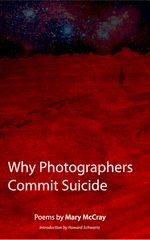
I have written about science and poetry on this blog before, all the way back from when I published my first book of poetry, Why Photographers Commit Suicide, a book part science poetry and part science-fiction. I'm always interested in breaking down the divide between literature and science. In that spirit, The Atlantic magazine published a great article tying Henry David Thoreau to this, "What Thoreau Saw" by Andrea Wulf.

Here are some pertinent quotes:

"Thoreau was staking out a new purpose: to create a continuous, meticulous, documentary record of his forays. Especially pertinent two centuries after his birth, in an era haunted by inaction on climate change, he worried over a problem that felt personal but was also spiritual and political: how to be a rigorous scientist and a poet, imaginatively connected to the vast web of natural life. Thoreau’s real masterpiece is not Walden but the 2-million-word journal that he kept until six months before he died. Its continuing relevance lies in the vivid spectacle of a man wrestling with tensions that still confound us. The journal illustrates his almost daily balancing act between recording scrupulous observations of nature and expressing sheer joy at the beauty of it all. Romantic predecessors like Samuel Taylor Coleridge and, centuries before that, polymaths like Leonardo da Vinci thrived on the interplay between subjective and objective exploration of the world. For Leonardo, engineering and math infused painting and sculpture; Coleridge said that he attended chemistry lectures to enlarge his 'stock of metaphors.'"

"For Thoreau, along with his fellow Transcendentalists, the by-now familiar dichotomy between the arts and the sciences had begun to hold sway. (The word scientist was coined in 1834, as the sciences were becoming professionalized and specialized.)"

… "Crucial though the data and reports are, they eclipse precisely the sort of immediate, intuitive, sensual experiences of nature that are, in our Anthropocene era, all too rare. For Thoreau, a sense of wonder—of awe toward, but also oneness with, nature—was essential. We will, he understood, protect only what we love."

… "Attention to the pivotal moment when he began to use his journal as he never had before. On November 8, 1850, a year or so after his naturalist’s regimen had begun"… 

…“And this is what truly staggers the mind,” Walls goes on. “From this point, Thoreau did not stop doing this, ever—not until, dying and almost too weak to hold a pen, he crafted one final entry."

."Steeped in the sciences, Thoreau emphasized that orderly data needn’t be dead. Carl Linnaeus’s binomial system for classifying plants was “itself poetry,” and in the early 1850s Thoreau jotted in his journal, “Facts fall from the poetic observer as ripe seeds.”

"Still, Thoreau felt the limits of disciplined scrutiny. 'With all your science can you tell how it is, and whence it is, that light comes into the soul?'"

"The following summer he summed up the dilemma. 'Every poet has trembled on the verge of science."

Good stuff. 

Poetry Unbound

My friend Kalisha tipped me off to this new podcast, Poetry Unbound, which is beautifully produced and digestible in short ten-ish minute podcasts. The first one I listened to was this poem by Raymond Antrobus, "A Poem About When We’re Disbelieved" posted on March 16. This podcast not only asked listeners to complete some homework at the end but made me quite emotional. 

More good stuff. 

Electronic Lit & The Curious Case of Edgar Allan Poe

GrimlyI keep trying to think outside the book and this makes me appreciate books. But also things that aren’t books.

Recently I read two anthologies of Edgar Allan Poe stories that pushed the boundaries of prose on paper. One was an illustrated anthology I bought back when we lived in LA: Tales of Death and Dementia, Illustrated Edgar Allan Poe by Gris Grimly. Grimly also did a similar Mystery and Madness book with other Poe tales.

Edgar Allan Poe stories are perfect candidates for visual remediation in cartoons, comics and animated apps. Poe is famously Gothic and his stories can be dense slogs. These formats open up his stories with a bit with some visuals and sound. His plots are always so inventive but written so, well, gothically, that he’s stayed relevant in probably every medium but probably least of all books. Interestingly, all Poe products seem to use his face as part of their branding. He’s got such a Gothic mug.

The illustrated book included these stories:

The Tell-Tale Heart
The System of Doctor Tarr and Professor Fether
The Oblong Box
The Facts in the Case of M. Valdemar

As a side note, my brother and father had an argument on a recent visit about whether comics (illustrated novels, etc ) rise to the level of art. My Dad and I were on the side that they did. My brother, who did illustrate pretty well as a kid, believes they do not.

Articles on the topic:

I would also recommend for consideration, The Carter Family, Don’t Forget the Song by Frank M. Young and David Lasky which I feel rises to the level and comes with a CD. You could argue that folk music history tracks really well to an illustrated novel, especially to communicate landscape and scenes and for dialogue-heavy storytelling.

There are three apps of Poe stories from iClassics. I read them all on my iPad. This was an even better experience than the comic stories because animations and interactivity brought out the visual beauty of the stories with a full orchestra and rich color. Much of the animation is triggered by interactivity which gave the stories an exciting feeling of suspense you wouldn’t get from even page turning. In fact, the apps were kind of really scary. Stories were interspersed with poems.

iClassics also had a great feature where you could scan through the pages at any time to see how much more reading was ahead. You could flip through them and go backwards to find parts of the story behind you.

My only complaint with these beautifully created experiences is the overly fetishistic cartoon boobs on all the Gothic gals. Firstly, kids are reading these. Secondly, it indicated these apps were created by a bunch of immature boys considering none of the men in the stories got the same hyper-sexed treatment.

App 1:

The Mask of the Red Death
Annabel Lee
The Oval Portrait
The Tell-Tale Heart

App 2:

The Black Cat
The Raven
Hop-Frog

App 2:

The Facts in the Case of M. Valdemar
Alone
The Cask of Amontillado
Eldorado

Here are some screenshots to compare the drawings from the comic and the app.

The Tell Tale Heart Comic Book

20190728_114601 (1)

20190728_114516


The Tell Tale Heart App

20190728_114612 (1)

20190728_114718


The Facts in the Case of M. Valdemar Comic Book vs. App

20190728_114945

20190728_115110


Here's a video sample from the app.

I also read iClassics’ The Legend of Sleepy Hollow which is very wordy for a short story but the app made it finally readable for me. For someone who loves The Headless Horseman story, especially the Scooby Doo episode which scared the beejesus out of me when I was a kid  and the TV movie where I developed a preteen crush on Paul Sand. However, I’ve never been able to get through the original short story.

One interesting thing was the reference of the word “cowboy” in The Legend of Sleepy Hollow. I was surprised by this considering the story was written so early, in 1820. Was this an app translation issue or was that word really in the story? Through Project Guttenberg site, I was able to do an online text search to see if indeed it was in the source. It was.

Unrelated to this project, I’ve been reading a great book about digital literature (more on that later). Anyway, the book talks about all the uses of Google’s Ngram viewer (a tool that uses Google Books to search word usage throughout time. So I searched for the word “cowboy” and found the big spike of usage in 1880 (as expected, post Civil War, during the western expansion and the great cattle drives). So where did Washington Irving pick it up in 1820?

With the ngram viewer I could see there were no usages in 1797 and then a few in 1798:

https://books.google.com/ngrams/graph?content=cowboy&year_start=1775&year_end=2000&corpus=15&smoothing=3&share=&direct_url=t1%3B%2Ccowboy%3B%2Cc0#t1%3B%2Ccowboy%3B%2Cc0

The first appearance was 1798 according to the Ngram viewer but cowboy history tells of a much-earlier reference. Jonathan Swift coined the word in 1725 while simply referring to the boy who tends cows. So Washington Irving was using a very boutique word for the time.

Over the weekend I also read Oscar Wilde’s The Cantefield Ghost, which I had never read. I also watched the 1940s movie which was silly and I really struggle watching Margaret O’Brien for some reason. The app was a much better experience of the original story.  I also love the sound of pages turning, which has the sound of really good parchment paper. This was my favorite iClassics app so far.

iClassics also have apps on other writers like Charles Dickins, Jack London, Lovecraft…the scary stuff mostly.

ChoicesI’m also reading Inkle’s choose-your-own-adventure version of Frankenstein retold by Dave Morris. This version takes place in France after the Revolution. So far this format hasn’t been very engaging. Although I do love the visual of having scraps of paper stitched into scrolls for each choice you make. This app requires much more reading and the choose your own adventure format isn’t as satisfying when you already kind of know the ending, such as with autobiographies (sorry Neil Patrick Harris) stories you already know even if they’ve been retweaked.  It’s also hard in the Inkle book to tell how long each section will take to read. Turns out, this is a major feature of the paper book. I’m sleepy and I want to know how much more of a section I’m in for.


Online poetry classes: It’s been a while since I posted about online classes. I keep checking all the platforms and over the last year there haven’t been many offerings.

Except I just found this William Wordsworth class offered by Lancaster University delivered through FutureLearn (there’s more international stuff on this platform). So I signed up. Starts in September.

Happy Halloween: Poetry Card Final Week 17 (US, UK)

Edgar"Once upon a midnight dreary, while
    I pondered, weak and weary,

Over many a quaint and curious
    volume of forgotten lore—

While I nodded, nearly napping,
    suddenly there came a tapping,

As of some one gently rapping,
    rapping at my chamber door.

20171030_110034The Raven” by Edgar Allan Poe

I did not plan this card to fall in the last set for a Halloween post. I swear. These cards were picked completely randomly. I even purchased a dollar store tombstone for my office this month that says "never more."

Poetry: it's just magic.

Edgar Allan Poe had a rough life. He was “orphaned and destitute” in childhood and taken in by the Allan family of Richmond VA. From them he received a good education but he had health problems and came across as dark and destructive. With his “macabre tales" he "pioneered the modern detective story.” He is widely known for “The Raven” but this composition was the beginning of an unstable end.

Andrew-marvell“Had we but world enough, and time,
This coyness, Lady, were no crime.
We would sit down and think which way
To walk and pass our long love’s day…”

The last card of 48, “To His Coy Mistress” by Andrew Marvell.

When you look up the poem, the second paragraph goes on to say…

"But at my back I always hear
Time’s wingèd chariot hurrying near;
And yonder all before us lie
Deserts of vast eternity."

And this reminds me of a category of pop songs I dub the "Go All The Way" songs (after the Raspberries) that have been produced ever since.

Marvell was apolitical and pastoral while he was tutor to a lord’s daughter. Later, he became a "vicious political satirist and defender of John Milton and Oliver Cromwell" and an influential member of [British] Parliament.

Final stats:

Not a lot of diversity here but this is an older deck. I have a feeling a 2017 deck would rob less from the canon and more from women and people of color. Measly lack of women, especially British women from what I'm still convinced is a British deck, but many American women (almost half). The majority of poems are from the last two centuries which is understandable considering most people claim to be allergic to moldy old poems.

1 black American female
3 black American males
8 white American females
10 white American males
21 American poets (4 Americans of color, 9 women)

1 white Andalusian male
1 white Austrian male
1 Chilean male

13 white English males
2 white English females
1 white Scottish male
1 white Welsh male
17 British poets (all white, 2 women)

2 white French males
1 white Greek male
1 white Irish male
1 white Italian male
1 Japanese male

1 500s BC poet
2 1300s poet
1 1500s poet
3 1600s poet
1 1700s poet
15 1800s poets
25 1900s poets

Poetry Card Week 16 (UK, US)

Chaucer“Whan that Aprille with his shoures sote
The droghte of Marche hath perced to the rote,
And bathed ever veyne in swich licour
Or which vertu engendred is the flour…”

Prologue to The Canterbury Tales by Geoffrey Chaucer

Boy, spell check hated that verse. Literally, these are the lines that began English literature. I took a class in this book in college. It was required. But I have to say, the class was not as torturous as you might imagine. This is a story about a holy pilgrimage from London to Canterbury by 29 people who each get to spin a yarn along the way. It was funny and bawdy as I remember. Our teacher, on the other hand, was a stern old humorless bore. My Shakespeare teacher was a character herself. She was a veritable Shakespeare groupie who made her own pilgrimages to Stratford-upon-Avon and enthusiastically showed us her grainy snapshots.

Edwardlear“There was an older person of Dover,
Who rushed through a field of blue Clover;
But some very large bees stung his nose and his knees,
So he very soon went back to Dover.”

Limericks” by Edward Lear

According to the card, Lear “made the world safe for the limerick.” These are just nonsensical party games that were written to the grand-kids of his patron. They even came with comic graphics.

Langston-huges“And far into the night he crooned that tune.
The stars went out and so did the moon.
The singer stopped playing and went to bed
While the Weary Blues echoed through his head.
He slept like a rock or a man that’s dead.”

The Weary Blues” by Langston Hughes

According to the card, one of the “masterpieces of the Harlem Renaissance” in the 1920s.  Hughes spent his career perusing an authentic African American voice," one infused with the syncopation and stylings of black music; jazz, gospel, and blues." I've been collecting poems about dictators on my website and on Facebook. By far the biggest response I've received has been for excerpts of Hughes' poem "Let America Be America Again."

Current stats:

1 black American female
3 black American males
8 white American females
9 white American males
1 white Andalusian male
1 white Austrian male
1 Chilean male
12 white English males
2 white English females
2 white French males
1 white Greek male
1 white Irish male
1 white Italian male
1 Japanese male
1 white Scottish male
1 white Welsh male

1 500s BC poet
2 1300s poet
1 1500s poet
2 1600s poet
1 1700s poet
14 1800s poets
25 1900s poets

« Older posts Newer posts »

© 2026 Big Bang Poetry

Theme by Anders NorenUp ↑