Reinventing the Life of a Poet in the Modern World

Category: Think Outside the Lament (Page 4 of 7)

Twain and Place Endure Black Eyes While Confronting Issues About Race in America

TwainFisticuffs: Mark Twain and Vanessa Place Endure Black Eyes While Confronting (Sometimes Their Own) Issues About Race in America

Sometimes the literary community is so up its own derriere that it makes it hard to sort out what's what.  Vanessa place, described in articles as an academic, white woman, has been doing a performative literary project around the text of Margaret Mitchell’s Gone with the Wind, specifically the racist parts (although she’s slowly tweeting the whole damn thing), to question whether the heirs of Margaret Mitchell should be making money off of a work that has come to be seen as very racist.  A backlash occurred from allegedly from both black and white communities and Place was let go from a judging position with AWP.

Aaminah Shakur from Hyper Allergic tries to explain, "why a white poet should not be attempting to reclaim the 'N-word'"  claiming that Place is “someone engaging in offensive racism and Blackface.”

First off, I'm confused. Why do we accuse Place of perpetuating racism for a performance piece trying to alert us to the continued profits derived from racism?  Is Shakur misreading the piece? Or refusing to read it on its figurative levels.

Let’s start with the piece. Place is tweeting the entire novel to try to get the Margaret Mitchell heirs to make attempts to stop her in the name of copyright infringement. This will force them to admit they’re making money off the racist novel. Honestly, all this is small fish when you consider the money being made for Hollywood studios from all those classic movies made in the era of bold-faced racism. We live in a capitalist society. Nothing gets aired without someone making a buck. Sure, we can stop watching them. After all, those films get more and more disturbing each year. I went to college in St. Louis and for our first class in film studies, the teacher played us D.W. Griffith’s Birth of a Nation without any context. Cut to class two and we were all pretty offended by the racist parts. And this was in St. Louis, Missouri! In 1990! For those of you who don’t know, Ferguson is basically a suburb of the St. Louis metro area. So that was saying something.

But maybe we should be made to revisit sexist, racist, abusive history to remind ourselves that such things as bad human behavior are always on the verge of existence. Try to erase your past and you will be doomed to repeat it, don't they say? There’s a caveat that what we do when we revisit these racist spaces is to have a discussion about them in order to understand the insidious, sometimes hidden aspects of racism and how it works. Hopefully, this knowledge will helps us stop being racist. Many are accusing Place of not providing this context. However, she’s engaging in a somewhat stark performance piece. She’s not running a college forum.

The Daily Beast says that AWP’s particular issue was “unmediated quotes of Margaret Mitchell’s novel.” So okay, context would be better…well, I guess that depends on your performance piece. What I don’t understand is the accusation that Place can’t perform issues of race because she is part of academia (privileged) and a white person. The Daily Beast broke that issue down, saying “If Place lost one of her privilege badges—if she wasn’t white and an 'in academia'—would her attack on racism have more credibility?”

Do you see what’s happened there? Are you looking closely? Performing the piece has become itself a performance piece!

The Daily Beast quotes “professional provocateur” Place as saying,

“I’ve been thinking about the ways this concept works for six years, so it shouldn’t surprise me that people who have thought about it for six days, or six minutes, have a different view of it,” Place said of her detractors, noting that her Gone With the Wind Twitter feed only had 1,200 followers and the petition had 2,200 signatures. At least half of those who signed it may not have even seen her project. “That said, the literary world does seem to take things pretty literally,” she added.

This literal/figurative disconnect must sound familiar to all Mark Twain scholars. We hear the same controversy and charge of racist leveled at Mark Twain for his depiction of Jim in parts of The Adventures of Huckleberry Finn and for the heavy use of the N-word (which also matches the issue with Mitchell’s tome). Most Twain scholars will tell you, (and if you read the figurative level of the novel you can see), that Twain’s project for the novel was to challenge racist ideas. These included slave-holding attitudes, Jim Crow attitudes and, in hindsight we know, some of Twain's own racism. Which is to say he was trying hard NOT to be racist but ended up being racist in parts of the book anyway. 

Is that the worst thing that can happen? It seems to me the larger project for Twain and for all of us was the bare fact that he was trying to write through the process of becoming an anti-racist. In fact, much of his work supports anti-rasicm. The problem is he does this so imperfectly. Although his essay writing and political commentary was clearly anti-racist, his novels are too obscure. They’re not ever explicit enough in their racial messaging. At times he panders to racists. At other times, he confronts them with their inhumanity. He writes through it in the same way he writes through American Imperialism in Connecticut Yankee in King Arthur's Court.

The truth is Twain was born into a community whose cultural biases were racist and it took him time and effort to evolve his thinking away from those beliefs. He did what few of us have the balls to do, he worked through all this publicly. He was a once-poor, ultimately-successful white man imperfectly writing to address racism in America. The fact that his work opens up conversations about race every day, (which we say we need), seems lost on everybody.

Listen, people will always criticize controversial things they’ve never read, viewed or investigated, (heck, I do that with the Bible all the time), but that’s why I’m so thankful there are black scholars of Mark Twain who have read the books. Watch the Ken Burns documentary to see for yourself. Some people will also refuse to see the figurative level. Biological studies in mindfulness and meditation tell us know that some people have a physiologically harder time even seeing figurative levels. They consistently resist seeing metaphors, symbols and ironies working in any art piece. This is the same phenomenon I see happening with Vanessa Place's piece.

Black academics, black political leaders, social workers, presidents (!) have all been calling for national conversations about race and the response needs to come from everybody: black people who continue to experience racism on the street and white people who need to work through it within their possibly mixed and often racially one-sided communities. Yes, white academics should be the forefront in talking about race…even imperfectly. Maybe especially imperfectly. As if black discussions are race are perfect. They’re not. They’re full of personal bias and emotion, just like everyone else’s.

Our freakout over this piece just shows what mixed messages we continue to send. We complain about the dearth of white people writing about race. We say that white writers were stuck in an ignorant bliss of white privilege. White writers complain that they're too scared to dare to write about race for fear of being criticized and ostracized.  And apparently this is not an irrational fear.

I don’t think we’ve proven by any stretch that Place is a racist artist. But it’s a good question because it begs the next question: if you’re trying to expose racism, so what if you’re a racist. In fact, even better if you’re a racist. Because we can't have it both ways. We can't keep calling out the problem like a pack of victims and then villainize anyone who steps out to poke the monster with a small stick.

My husband in another life was involved with Chicago theater. He said a good performance piece is the one that makes people mad and gets a conversation going. You might say Place has succeeded. You might say AWP is a big performance piece of itself, all of us actors in the big piece called Wrangling Racism.  

According to The Daily Beast, the AWP says, “The group’s work must focus on the adjudication of the 1,800 proposals, not upon the management of a controversy that has stirred strong objections and much ill-will toward AWP and the subcommittee.” Which is another issue in itself.

Can you even imagine an established literary group with some stones?

PlaceI don’t know Place personally or her work well enough to say what kind of character she is. I can say my interpretation of the work is anti-racist and I will support any white artist taking on issues of race. I don’t support  the clusterfuck of criticism we seem to be indulging in.

Ironically, this news story coincides with a Supreme court decision on a Faceook murder-threat trial and the difference between perception and intent and what necessary for a jury instruction in a criminal case. There's a difference between perceived threat and intent. What's more important? Which gets priority? It’s probably one of the more crucial legal issues of our time, what with scary Stand Your Ground laws and online bullying. Weighing these two points of view has real implications on our lives and for our work.

So you should take some time to really think about it.


More Stories:

Hyper Allergic against Place: http://hyperallergic.com/208995/why-a-white-poet-should-not-be-attempting-to-reclaim-the-n-word/

In support: http://www.thedailybeast.com/articles/2015/05/28/does-tweeting-gone-with-the-wind-make-this-poet-racist.html

Arguments about arguments, if you care to go there: http://www.thestranger.com/blogs/slog/2015/05/26/22275249/a-poet-defending-vanessa-place-equates-signers-of-the-petition-against-her-with-the-cop-who-killed-mike-brown (The Stranger)


News & A Poet Who Conquered Twitter

EdPoetry News Coverage

6 Curious Things About Emily Dickinson, America's Favorite Recluse Poet (Huffinton Post)

How can poems transform the world? A chat with poet Jane Hirshfield (Washington Post)

Roque Dalton: The Revolutionary Life of a Revolutionary Poet (Roque Dalton, born May 14, 1935, should be seen in the same ranks as Jose Carlos Mariategui and Che Guevara. Like them, Dalton was a seminal figure for Latin American revolutionaries whose life was tragically cut short.  (Telesur TV)

Poet Anastacia Tolbert: 'What To Tell My Sons After Trayvon Martin' (KUOW.org)

Poet Wo Chan uses words to fight oppression (PBS NewsHour)  
Wo’s work has recently explored what they describe as “rage” at the power imbalances that exist in the U.S. For Wo, the process of experimenting with language also challenges the systems that create those imbalances.

Acclaimed poet's dog rescued after plunging 300 feet down cliff east of Port Angeles (Peninsula Daily News-Washington State)

Neruda still not reburied (Star Tribune)

A Poet Conquers Twitter

The author was revealed this week (Rolling Stone) behind the very popular twitter phenom"So Sad Today." Some even speculated the author might be pop star Lana del Rey. It was, however, a poet named Melissa Broder who has published three books of poetry, most recently 2014's Scarecrone.


Frustrations of Genres / Poetry News

WhyThe Problem Children of Poetry

I'm in kind of void of postings because I'm on the cusp of a review of New Mexico poetry anthologies, a new new poll and a new list. None of those are ready yet so I suppose this is a good time to talk about the frustration of genres.

My first book of poems struggled for over 20 years to find publication. Although I would read the poems in workshops and at conferences and receive unbelievably positive feedback, something was wrong.

I say that because the level of positive response only confused me in light of the fact that I couldn't get this book any traction. A former editor of Graywolf Press even raved to my face about the poems at a Colrain conference eons ago. But contests and publishers were not interested. Twenty years of contest fees add up to that fact.

Was it the way I read them? I suck at readings so that definitely was not the case.

Meanwhile, a few years ago Graywolf itself published a book of science poems by Tracy K. Smith called Life on Mars, a book that went on to win a Pulitzer Prize. My book was titled almost the same thing in one of its incarnations. In fact my 1997 thesis at Sarah Lawrence might be named something like that.

But my poems are different thank Smiths, our Mars subject aside. My poems are about the idea of U.S. manifest destiny as it pertains to our dream of colonizing Mars. Sounds like science fiction doesn't it and what literary publisher would like to publish anything slightly tainted with the stamp of SciFi. Answer: none.

Science fiction publishers didn’t appreciate the book either. Because it wasn't science fiction.

Thank God, technology in my lifetime has allowed me to pull my own project to fruition (self-publish) and move on with my life.

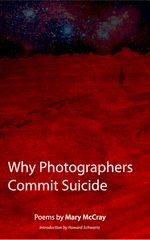
I'm only reminded of all this because last week USA Today published a story about how Elon Musk plans Seattle office for Mars colonization.  The poems in Why Photographer’s Commit  Suicide are based on Michael Collins’ book about similar plans to colonize Mars.

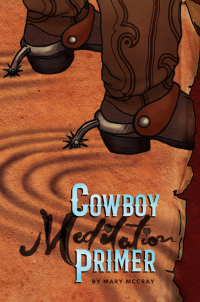
I now worry that my second book will suffer the same tragic fate. It’s another mashup book only this time its a mashup of Buddhism and cowboy stories.  Cowboy stories. Oh dear. Sounds like cowboy poetry. Another literary poetry problem child. Such a throwback. Although they're not cowboy poems!

WfPoetry in the News

Philip Levine who explored the working lives of American people. (The Independent)

Should the poet laureate have to write about the royal birth? (The Guardian)

William Faulkner Makes Us Wonder: What's So Great About Poetry, Anyhow? (NPR)

Palm Tree and the Poetry of M.S. Merwin (The New Yorker)

Yeats’ 150th Birthday Parties (The Guardian)

British punk poet Dr. John Cooper Clarke hits U.S. at last (SF Examiner)

Arthur Sze Finalist for Pulitzer Prize (Albuquerque Journal)

Documents confirm fascists murdered Spanish poet Federico Garcia Lorca (World Socialist Web Site)

From the archive, 27 April 1915: Editorial: A Poet’s Death; The death of Rupert Brooke leaves us with a miserable sense of waste and futility, yet it is impossible to withhold even the most precious personalities (The Guardian)

Alissa Quart, The Money Poet (The New Yorker)


Poetry as Usability

Useful

For work I’ve been reading both marketing and usability studies and essays on user interface design. A common idea across all of these areas is the trend toward creating more scannable content. This is primarily because users come to software and Internet pages to accomplish tasks, not to be entertained or enlightened.

Speed readers grab what they need and go! Designers use bolding and other tricks to help people scan a page. I see myself doing it when I come across a list of marketing tips. I scan for the main points and read further where I need to.

I can feel the knuckles crunching on the hands of writing academics, their blood pressure rising to a steam. Is quality reading losing the battle? Reading poetry takes attention. It’s the antithesis of scanning. It’s slow reading.

Monsieur Big Bang and I are also listening to The History of the English Language podcast with Kevin Stroud.  In one episode he describes Old English Scops (or poets) who were once happily employed traveling to villages providing poem-casts of the latest news. Back then, poets were charged with keeping the news flowing in a time when nobody could read or write. Rhyming provided ways of understanding and memorizing that news. Truly, poets were the social media of their day. We’re fine with that right? Well then…check your self-serving diatribes about social media at the door.

Communication efficiency in the old days was good if it served poets. Is language efficiency bad now because poets are left out?  Culture changes and therefore communication changes.  Society is doing what it needs to do. This doesn’t mean that poetry should be eradiated from communication. It just means we won’t use it the way we previously did. Poems are not for distributing the news anymore. They’re for meditative moments, considered protests and language inquiry. Poems are not scannable; but wait, here comes the next experimental poem exploring scannability! Wait for it!


Hard Times for Poets: Quotes and Stories to Keep You Going

FauklknerSome quotes to keep you hanging in there as a writer when you feel like giving up!

“It does not matter how slowly you go as long as you do not stop.” – Confucius

“Fall down seven times, get up eight!” –  Japanese Proverb

“The man who moves a mountain begins by carrying away many small stones.” –  Confucius again!


And some more ridiculous reviews:

 “The final blowup of what was once a remarkable, if minor, talent.”

–  Clifton Fadiman, The New Yorker on Absolom, Absolum! by William Faulkner, 1936

 “…a book of the season only…”

–  New York Herald Tribune  

“The Great Gatsby falls into the class of negligible novels”
–  Springfield Republican on The Great Gatsby F. Scott Fitzgerald, 1925

“Monsieur Flaubert is not a writer.” 

– La Figaro on Madame Bovary Gustave Flaubert 1857


From Bill Henderson's Rotten Reviews


The Biology of Narcissism and Mindfulness and What It Means For Poets

Kristin-Neff1

Poetry writing is a field where everyone is on a mad mission to distinguish themselves from everybody else. The popular complaint among poets is that everybody writes but nobody reads. It’s true that reading someone else’s writing is a compassionate act and not too many writers are on a mission of compassion. They're on a mission of self-esteem. It's exhausting and Kristin Neff is a scientist who has given a Ted Talk on compassion versus self-esteem. She talks about how the self-esteem movement has contributed to the narcissism epidemic and how this contributes to bullying in various populations and the great American fear of being average.

You see the self-esteem drama everywhere: on TV advertising, interacting with drivers on the street, in awful news stories. I see it in MFA ads for poetry programs. In fact, there's a new game in town: tapping into a student's ego to lure them into the program. In Poets & Writers issue January/February 2015 there's an add full of published books with a blank space reading, “The Place for our Next Book is Here” (meaning you!) and in APR's last issue there is an ad stating “Before you write your success story, you have to find your voice.” It's all about your success story! Wow.

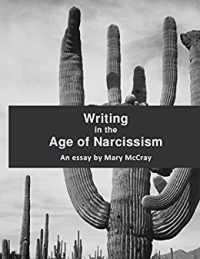
These are topics I cover in Writing in the Age of Narcissism. For years, advertising has been banking on our narcissistic tendencies, our self-obsession and our desire for fame and to consider ourselves above average. 

View the Ted Talk: The Space Between Self Esteem and Self Compassion: Kristin Neff at TEDx Centennial Park Women

More quotes on the topic:

And I'm not the only poet talking about this. Bianca Stone (daughter of Ruth Stone) says, “I’ve always been drawn to science, especially neuroscience. I feel that poets look at the world so differently because of something to do with the way their brains are wired." Bianca Stone, Poets & Writers, January/February 2015

In his essay "Casting Stones" on the Mary Kay Letourneau story called Charles D’Ambrosio talks about the “reflective rush to judge” and “threadbare or disingenuous language which failed to allow for the possibility that [the case] was both simpler and more complex than they were prepared to understand or admit…My felling was, first you sympathize, then you judge – that’s a complex human response. You sympathize first, and until that happens, you don’t understand anything.” Quoted in Poets & Writers, November/December 2014

Read more quotes about writing and narcissism here: http://www.marymccray.com/writing-in-the-age-of-narcissism.html#writers 

Inspired by this, I've decided to embrace my average-ness. I’m an average working writer. And that’s okay. In fact, that’s pretty respectable.


Berry Gordy Jr. and Poetry on TV

BerryYou always hear laments about how people don't respect poetry, how entertainers steal focus from literature, how poetry is meaningless in our society. This is why I love to see celebrities talking about poems on television.

Poets can be bitter butter balls. Their hearts can't see when their heart are closed. And this includes noticing all the good television programs out there.

For years I've been enjoying Oprah's Master Class series. I have about eleven of them banked up on my DVR. I finally watched the episode with Berry Gordy, Jr. I only know about Gordy Jr. from reading histories of Diana Ross, Mary Wilson and Michael Jackson and I've always pictured him as a kind of stern record mogul who created the unlikely but inspiring success of Motown in Detroit. Hearing him talk about his own process was fascinating. He was much more charming and self-deprecating than I anticipated. He also attributes the success in his life to a poem, specifically the poem “If” by Rudyard Kipling.

If you can keep your head when all about you   
    Are losing theirs and blaming it on you,   
If you can trust yourself when all men doubt you,
    But make allowance for their doubting too;   
If you can wait and not be tired by waiting,
    Or being lied about, don’t deal in lies,
Or being hated, don’t give way to hating,
    And yet don’t look too good, nor talk too wise:

If you can dream—and not make dreams your master;   
    If you can think—and not make thoughts your aim;   
If you can meet with Triumph and Disaster
    And treat those two impostors just the same;   
If you can bear to hear the truth you’ve spoken
    Twisted by knaves to make a trap for fools,
Or watch the things you gave your life to, broken,
    And stoop and build ’em up with worn-out tools:

If you can make one heap of all your winnings
    And risk it on one turn of pitch-and-toss,
And lose, and start again at your beginnings
    And never breathe a word about your loss;
If you can force your heart and nerve and sinew
    To serve your turn long after they are gone,   
And so hold on when there is nothing in you
    Except the Will which says to them: ‘Hold on!’

If you can talk with crowds and keep your virtue,   
    Or walk with Kings—nor lose the common touch,
If neither foes nor loving friends can hurt you,
    If all men count with you, but none too much;
If you can fill the unforgiving minute
    With sixty seconds’ worth of distance run,   
Yours is the Earth and everything that’s in it,   
    And—which is more—you’ll be a Man, my son!

Gordy Jr. said he was under great pressure, as his father's namesake, to learn how to be a man in a big, physical sense. He said this poem taught him that there were ways to be a man mentally and it changed his life.


My New eBook is Available

Cover-smallMy new eBook on Trementina Books is now available. Writing in the Age of Narcissism is available for Kindle, ePub, PDF, Sony readers.

If you’re a poet or writer in any other form or genre, you’ve probably witnessed many modern, uncivilized behaviors from fellow students, writers and academic colleagues—their public relations gestures, their catty reviews and essays, and their often uncivil career moves. Like actors, visual artists and politicians, cut-throat pirate maneuverings have become the new normal. It’s what occurs whenever there are more people practicing an art than any particular economy can support.

The difference with writers is their ability to develop highly conceptualized, rationalizations in order to prove their worth and ideals. This isn’t a new phenomenon, but it has reached a critical mass in meaningless attempts to pull focus in a society obsessed with the show-biz spotlight.

This essay traces how the narcissism epidemic affects writers, including our gestures of post-modernism and irony, and proposes an alternative way to be a more positive writer, critic and reader.

Kindle $1.99  Buy
PDF, ePub, Sony $1.99  Buy

Or sign up for my quarterly newsletter and receive a free copy. Just provide a valid email when you sign up.


Ridiculous Reviews: T.S. Eliot

Ts The Waste Land, 1922

“Mr. Eliot has shown that he can at moments write real blank verse; but that is all. For the rest he has quoted a great deal, he has parodied and imitated. But the parodies are cheap and the imitations inferior.”

New Statesman

“…it is the finest horses which have the most tender mouths and some unsympathetic tug has sent Mr. Eliot’s gift awry. When he recovers control we shall expect his poetry to have gained in variety and strength from this ambitious experiment.”

Times Literary Supplement


from Rotten Reviews compiled by Bill Henderson


Is Reading Dead? Does Poetry Matter? Should Life Be Art?

Art-project

In the June 2014 issue of The Atlantic, there's an article blurb by William Deresiewicz that reminds me of some of the poetry essays I've been reading lately: "There is an idea in there somewhere, but it can’t escape the prose—the Byzantine syntax and Latinate diction, the rhetorical falls and grammatical stumbles"… the difference between "text that urges us ever onward" and text that like "boulders, say stop, go back.”

I also enjoyed a recent sketch from the show Portlandia about art overstepping the life boundary and how every celebrity and artist now seems to want to force the rest of us into the inescapable project of their own performance-piece-life. Watch the sketch here.

In Hector Tobar's piece called "Reading is Dead" from the LA Times,  Tobar comments on famous celebrity editor Tina Brown's insistence that reading is dead (because she doesn't read or that as an editor she failed to sell magazines). Tobar quotes a website commentator's frustration with people who declare everything dead:

“This week, a reader at the American Conservative (which also reproduced [Tina] Brown’s words), took to his or her keyboard and responded on the website’s comments section with a summary of all the “death” talk he or she’s been reading about lately: 

“Death of the novel, death of lyric poetry, death of literature, death of cursive writing, death of writing itself,” wrote the commenter, a lawyer from Philadelphia. “Death of August holidays. Death of looking at the stars. Death of romance. Death of marriage. Death of church music, death of Western Christianity, death of liberal American Judaism, death of American Judaism generally, death of religion generally. Death of democracy in Europe. Death of the moral community. Death of Western civilization …. Death, death, death.

Declaring things dead is so dead. And Tina Brown is a classic narcissist.

My friend Mary Anne sent me this article from The New York Times: "Poetry: Who Needs It?" by William Logan. Which reminds me, a friend of mine once gave me a book of reviews by William Logan and I think I lost it.

Anyway, Logan doesn't see the fact that most people don't have a need for poetry as indicative of disaster. He says most people are also "unlikely to attend a ballet, or spend an evening with a chamber-music quartet, or the latest exhibition of Georges de La Tour."

Excerpts:

"A child taught to parse a sentence by Dickinson would have no trouble understanding Donald H. Rumsfeld’s known knowns and unknown unknowns.

[but]

You can life a full life without knowing a scrap of poetry, just as you can live a full life without ever seeing a Picasso…"

In other news, the Academy of American is running a Poets Forum Oct 16-18. Read more here.


« Older posts Newer posts »

© 2026 Big Bang Poetry

Theme by Anders NorenUp ↑