Reinventing the Life of a Poet in the Modern World

Category: Poetic Realities (Page 4 of 10)

New Media Reader: The New Stereo vs Neil Young

KeyboardTime to continue on our journey with the New Media Reader. The next essay in the book is "New Media: from Borges to HTM" by the textbook's editor, Lev Manovich.

Our editor describes new media as any computer-based artistic activities. However, that definition expands to interactive exhibits in museums and new tools of commerce, computer games, Artificial Intelligence (AI), networks, multi-media, 3D modeling (and now 3D printing), CD Roms (has-beens), DVDs (practically has-beens), animation rendering tools…

Pieces are presented and aided by computer software, algorithms, different media and semiotic logics, text parsing, image manipulations.

He says digital medias challenge our “romantic ideas of authorship" (because of the interactivity, the collectives, the on-the-fly publications).

He says digital media pieces challenge our ideas of the one-of-a-kind object (because of the infinite copies and infinite states).

He also says they challenge our ideas of a centralized distribution of control (for example, the Internet network that has bypassed the art industrial/commercial system).

Digital media challenges our deeply held conceptual, ideological and aesthetic beliefs.

Cyberculture even possibly challenges our ideas about our own human identity and culture.

The keywords are modularity, variability and automation.

On the downside, some people have developed a literal fetish for the latest technologies.

Manovich says new media is always an incorporation of the old, morphs with the old, guided conceptually by old media (just the names of tools alone: page, frame, desktop, icons, maps, zoom, pan). 

At one time proponents believed new media would build a better democracy because there would be less centralization of propaganda and that more intimacy between people online would "eliminate distance.” Disinformation and propaganda have since exploded but from de-centralized spaces (so they were half-right). 

There were worries (as there is with every single communications innovation, including the printing press and motion pictures) that new media would cause the erosion of moral values and would destroy the relationship between humans and world (which is not looking like such a crazy idea now). 

The real breakthroughs have come with "faster execution of sequences of steps, sorting, counting, compositing, changes in quantity and quality (he singles out new recent forms, like the music video and photomontage between 1985-1995). 

He then tracks a very interesting historical mesh of a timeline:

The Modernism era ends, Post-Modernism begins, new visual/special communication techniques are used to challenge societies attitudes, constructivist design, typography, cinemograph editing, montage, mainstream computers cut-and-paste, memes, windows, tables, filtering reality in new ways, collage, media assets, film, audio, raw data processed and mined, manipulating databases, search engines, simulations.

In the 1960s we saw interactive happenings, performances, installations, processes, open systems, (we didn’t always need computers for this, by the way), the principles of modern GUI were articulated, networks created and imagined…

…finally realized in the 1970s with the Internet, UNIX, object-oriented programming, better networking, workstations, real-time control, the graphical interface (Macintosh 1984), draw and paint programs, creativity tools, the first inexpensive computer, Atari with sound, video games, movies, Photoshop, (a key application of post-modernism, he says), big business goes online, government goes online, higher education goes online.

In the 1990s we have real-time networks and an exploding Internet, “a radically horizontal, non-hierarchical model of human existence in which no idea, no ideology, no value system can dominate." Fast forward to QANON and the Russians exploiting social media algorithms in 2018 and dominating the fringe of each political party, fully controlling one.

Manovich calls the Internet a “perfect metaphor for new post-Cold-War sensibility.”

It's good to remind us right now this textbook is old

The challenge to the "romantic idea of authorship" never did prove its point fully. Most humans still seek a somewhat direct communication between other humans. Engineers have been the only ones to declare this point won; we’re not even close to a consensus of artists, writers or art critics.

The same goes with the challenge to the one-of-a-kind object. Original art, the handmade culture of etsy.com all still thrive. Museums still have more stuff than they can display in a hundred years.

But the point about distribution, this is what I feel is still relevant and revolutionary. It's a double-edged sword, though. Sure, you can easily disseminate your own work now but so can everyone else. And some messages are full of much more propaganda and mind-manipulation than others.

All cultural gifts are problematic. Take Manovich’s explanation of the web browser itself as a cinema screen (I know Millennials who don't own TVs anymore), a music player (ditto: no stereos or portable devices), a museum, a library, a game console.

Just try to share with a Millennial or Gen Z person any kind of pop culture artifacts. They're a generation of people disabused of the idea that pop culture must be owned and living inside their habitats. This means sharing a mix-tape with a Millennial or Gen Z aficionado is very challenging as music (for example) has become oddly re-centralized. The Neil Young vs. Joe Rogan controversy of the day shows just how precarious that centralized stereo system can be.

Conspicuous Poetry Products: Poems in Valentino Ads

The New Yorker has been publishing ads by Valentio where the word Valentino is mentioned in a poem.

One ad displays Valentino in larger font size with a poem by Ocean Vuong called “Gian Giacomo Capriotti to Leonardo Da Vinci.”

IMG_20210824_134223

The other one I've seen is this ad with “The Feminine as Armor” by Janet Mock.

IMG_20210824_134214

I hope the poets were paid well.

NaPoWriMo 2021 is Coming

Sweep-and-shepIt's that time of year again. National Poetry Writing Month starts this Thursday. To be honest, I don't have it in me to write a poem a day all April this year. I'm working on a long HTML project for a class, plus I'm wiped out from the Covid-adventures with my parents and I have guests coming soon. And my brain is fried. But I don't want to miss a year of NaPoWriMo.

So, I figured out a compromise. I've had a set of fairy tales poems I've been sitting on for decades and have had no time to revise them, although I've added a few here and there. Plus, I really don't think they'll ever find a home in a book; it's been done (Anne Sexton).

I could easily revise a poem a day and have decided to use those poems to gather together a set of 30 for NaPoWriMo. Some of them are in pretty good shape but some are pretty rough. Hopefully this will be productive work.

See you on Thursday.

The Essay Project: War Writing (It’s Closer to Home Than You Think)

MerrillThe essay I dug up for this week is definitely from the Sarah Lawrence essay class because Lamont and Annie actually put their names on the first page, which is nice, because then I can remember them. They found a Jan/Feb 1996 article in The American Poetry Review by Christopher Merrill about poets and the war in Sarajevo, “Everybody Was Innocent: On Writing and War.”

Aside from this essay, we can all sense we’re living through unprecedented times right now, relatives against relatives, old friends against old friends, teams against teams. I watched The Social Dilemma last weekend on Netflix and fears are mounting regarding civil wars in most established democracies around the world right now. This is no longer a far-fetched idea. And it seems social media has done a lot of the work to create a monstrous dystopian reality for all of us. 

As writers we all may soon be called upon to become war writers right inside of our own poems about place. This will become the same project.

When I read news reports of Sarajevo back in the 1990s, I  remember feeling very moved and very removed. So reading this essay again gave me both a flashback on that feeling and an entirely new perspective.

In this article, Christopher Merrill visits Sarajevo and interviews an ‘embedded’ poet there. Which reminded me, I subscribed to APR for a few years and never read a single article like this in the journal, only academic reviews and landscapes. I wish APR had been as hard-hitting when I subscribed.

The article talks about the special issues around writing about war, such as:

“I want to explore some of the ways in which writers can approach a subject extensively covered by the media: when television cameras shape our perception of a tragedy like Bosnia, how can writers respond to it without, as Sarajevans say of some visitors to their city, ‘going on safari’ – shopping for material, that is, like tourists?”

We can easily replace the idea of television with cable news and social media.

1996 was a year of commemorations, Merrill stated: the liberation of Nazi concentration camps, Hiroshima and Nagasaki, V-J Day, the shootings at Kent State, the fall of Saigon…

    "it is important to remember that more than fifty wars are now taking place around the world. The Cold War is over, and we are deep into the Cold Peace.”

Merrill talks about how in Sarajevo the war script was flipped, how in typical wars, the majority of the casualties were soldiers. But in Bosnia, the majority of deaths were civilian. He talks about the “sense of ambiguity integral to the talks of writing about war. Nothing is as it seems…despite what pundits and politicians would have us believe.”

He quotes Vietnam writer Tim O’Brien:

“In war you lose your sense of the definite, hence your sense of the truth itself, and therefor it’s safe to say that in a true war story nothing is every absolutely true.”

He talks about the “enormous power of television” and how “CNN has the power to shape events” and again for us it's the cripplingly awesome power of social media and the Internet.

The article quotes Greek poet, Odysseas Elytis, translated by Olga Broumas and T. Begley, who says that during World War II,

“An entire contemporary literature made the mistake of competing with events and succumbing to horror instead of balancing it, as it should have done”

in contrast with the example of Henri Matisse who:

'‘in the years of Buchenwald and Auschwitz…painted the juiciest, rawist, most enchanting flowers and fruits every made, as if the miracle of life itself discovered it could compress itself inside them forever.”

This reminded me of the immense and moving humanity to be found in Georges Perec’s novel Life A Users Manual. Merrill says,

“This is, of course, no small task—even in peacetime. And those who rise to the occasion in war are truly heroes of the literary imagination.”

He considers Bosnian poet Goran Simic one such hero, “discovering meaning in this tragedy.” He also quotes Ferida Durakovic,

“Before the war I didn’t really like Goran’s poetry. It was too hermetic to me. But now it’s so clear and direct. Now he only writes about what’s important.”

Merrill says what interests him is how Simic “looks at the crevice between what the media finds and reality itself.”  Merrill talks about Sarajevan humor “at its most biting with a profound moral vision….” and this most haunting warning by journalist Dizdarvic,

 ‘the victory of evil continues on unabated—the powerlessness of good, the triumph of chaos over order, the verification of defeat in the match between humanity and the bestial goes on…that Sarajevo’s story is not unique—many other towns like it lie along the road of the madmen who have ruined it. As a Sarajevan who has seen and lived through these events, I am compelled to broadcast a warning: there are sick people in the world who now understand that they are dealing with a public that, when it comes to international politics, is egotistical, incompetent, and unrealistic. We are witnessing a renascence of Nazism and Fascism, and now one is willing to call it to a halt. We are witnessing the abolition of all recognized human values.”

That was 1996.


“This insight,” Merrill says, “is one reason why the War Congress closed its session with Ferida Durakovic reading a declaration asserting that ‘the writer exists to face evil.’” Merrill says, “Televised images of war are revolting, but we grow used to them. The writer’s task is to change that.”

Merrill talks about Tobias Wolff’s memoir, In Pharaoh’s Army: Memories of the Lost War,

”Wolff went to see at eighteen dreaming of Melville, and it may be said that he went to war to act out something from Hemingway. A writer’s education depends upon the stripping away of illusions about the world—and the self. There is no better place to do that than in a war, where you quickly come up against your own cowardice.”

Merrill ends with a comparison of the witnesses versus the watchers:

“The difference between witnessing and watching is a function of the imagination. Witnessing comes from the Old English for to know; watching is related to waking as from sleep. First we watch and then, if our imaginations are sufficiently engaged, we witness. What I wish for is to make witnesses of us, not just watchers, because in the Age of Television [the Internet] no one is innocent.”

We are at the precipice, if not in the midst, of a civil war, a global civil war and also a very local civil war. It is here. How will we write about it?

NaPoWriMo 2020: The Final Set

Baddass

Yesterday was the end of NaPoWriMo 2020. I’m sure coronavirus made these poems bleaker than normal. I’m also sure my zapped energy levels made some of the poets a bit Wallace-Stevensish and too vague on certain days.

The month sped by however. Each year feels like it's a shorter time span of work.

Notes on my process this year: the only thing I researched ahead of time were the list  of self help topics. Each morning around 8 am I began to work out a poem with some raw notes. Then I’d log onto my computer and draft the thing out, polishing it as much as I could before I ran out of time and had to start work.

Here is the full set:

The Death of Self Help

  1. Mastering the Wheel
  2. Nobody Else Is Their
  3. Setting Goals
  4. Take It Easy
  5. MessyVerse
  6. The Magic of PPT
  7. Ten (Contextually Snarky) Words to Improve Your Vocabulary
  8. Mouse in the Maze
  9. Sinkhole
  10. Time Boss
  11. Good Habits are Rice Cakes
  12. Dealing with Grief
  13. Preach
  14. Good Boy!
  15. Identity Politics
  16. Vulnerable 
  17. Syns of the Self
  18. Treasure Island
  19. Electric Fence
  20. Fresh Start
  21. Something Is Happening
  22. Self-Help Workbook
  23. Side One: Furtiveness
  24. Side Two: Assertiveness
  25. Restaurants
  26. Scaffolding
  27. Range of Motion
  28. The Great Love
  29. Mount Catharsis
  30. The End


Electronic Literature: Weirdwood Manor

WeirdwoodI just finished iPad reading this interactive novel called Weirdwood Manor. Although the word finished is relative. After spending money for 6 books in the series, I got to the end only to realize the end hasn’t been written. I was so pissed off.  There was no warning about this fact when I purchased the first 6 “books.” It’s like buying a novel and then getting to the end to find out you need to buy another novel that contains the real ending.

Not cool.

There were some good things about the story: it's a good example of narrative gaming (happily more heavily on the narrative than most) and it’s all about the love of books. There is a good system of hints to help you find every hidden thing, although you can’t easily get back to items you’ve missed unless you reread the entire book and touch all its hidden areas again, which is crazy. Since there wasn’t much payoff for peaking behind every hiding place, I stopped trying to go back and get a perfect "score." I also got tired of the puzzles after a while; they took too much manual dexterity for me (an old fart who never plays online games) and I can only imagine how kids with disabilities would do with them.

The music is great and the story is full of fun allusions to other fairy tales.  But the end dissolves into a tangle of imaginative theory about the nature of imagination.

Next book release date? Nowhere to be found doing a quick Google search so I’m moving on. Hope it all turns out.

NaPoWriMo 2020: The Death of Self Help Halfway!

Half

I'm halfway through National Poetry Writing Month for 2020. It's been quite a struggle to do these poems this year for some reason, maybe because the topic is kind of cerebral or maybe it's Coronavirus. Yeah, that's surely making the set a bit darker this year. Not just the virus itself but the politicization of the situations by people who are the primary victims of self-help mythologies.

Yeah, that doesn't help. 

Read the poems here: https://www.marymccray.com/napowrimo-2020.html

Poetry in the World

DylantArticles At-Large

I'm still reading New Yorkers. Years ago my friend also started sending me The Altantic and like the other magazine, I'm really behind. Here are the poetry related articles I've come across…

The Last Rock-Star Poet by James Parker (about Dylan Thomas)

BishoplowellThe Poet Laureate of Englishness/A Poet for the Age of Brexit by Adam Kirsch (about A.E. Housman)

The Odyssey and the Other: What the epic can teach about encounters with strangers abroad and at Home

Encrypted: Translators confront the supreme enigma of Stephane Mallarme’s poetry

Tragic Muses: What Elizabeth Bishop and Robert Lowell taught each other about turning pain into art

And I’ve been holding on to this gem of an article from Atlas Obscura for years: An Algorithmic Investigation of the Highfalutin “Poet Voice’ by Cara Giaimo. The author ponders the poetry reading and the sound of that wacky performance voice, “a slow, lilting delivery like a very boring ocean.” She opposes this to the similarly stilted NPR voice or Podcast voice.

Poems at Large

BirchboxMy monthly Birchbox subscription comes with five beauty product samples in a box with a card of instructions on how to use them all (because the bottle brandings are so Spartan and useless). There were poems in two of my recent boxes.

One box came with a special card inside. The card’s cover says “This is not a beauty box.” Except it totally is. The first inside page goes on to explain the company has learned that the world of beauty “is not simple” because their customers previously felt “overlooked by the entire industry because beauty isn’t their top priority” because they have kids and jobs and such.  And then page two goes on to say the usual “you deserve time to take care of you, you, you.” It’s an annoying message because it completely contradicts the message on page one. Then, on the back is a poem called “You: A Poem” about how “This is for You./The best of you…” including all the synonyms of your feelings the marketing companies want you to associate with their product: joy, perfection, power, lovable, kick ass, essentially the “you, you always wanted to be.” The poem states, “You may be out of moisturizer,/but you’re not out of time” and “Because the best of you,/requires a little time, with you.” The poem ends with, “(For once it’s all about you)” (no end period).

SummitThere are some superfluous commas hanging around this poem…and a TON of narcissism, a vice marketing is enabling us with at every corner and intersection. "Have it YOUR way."

Which makes the reference to “for once” a bit absurd. It’s always about you, that's why the poem has been added to my Birchbox. And that’s why we’re collectively losing our minds and killing each other out here.

Ok. Part of this is the Narcissism summit talking. Sounds True hosted a 10-day Understanding Narcissism conference, a 20+ hour conference on all aspects of cultural Narcissism. It was really great.

LikethisInside another one of the recent boxes was a perfume sample of Like This (subtitled LEtat d’Orange and Immortal Ginger is also part of the label so I was pretty confused about what the title of the product really was) created by actress Tilda Swinton.

Anyway, the card containing the sample says the perfume was inspired by the poet Rumi with no explanation.

So I went online and found this page where the description of the perfume elaborates:

Etat Libre d’Orange launches a new fragrance in March 2010, second celebrity perfume in a row, this time inspired by the English actress Tilda Swinton. Her favorite scent is the scent of home, so she wanted a fragrance that will be a magical potion with that kind of smell. Mathilde Bijaoui created for her a composition of yellow tangerine, ginger, pumpkin, immortelle, Moroccan neroli, Grass rose, vetiver, heliotrope and musk.

"I have always located my favourite fragrances at the doorways of kitchens, in the heart of a greenhouse, at the bottom of a garden. Scent means place to me : place and state of mind – even state of grace. Certainly state of ease. My favourite smells are the smells of home, the experience of the reliable recognisable after the exotic adventure: the regular – natural – turn of the seasons, simplicity and softness after the duck and dive of definition in the wide, wide world.

When Mathilde Bijaoui first asked me what my own favourite scent in a bottle might contain, I described a magic potion that I could carry with me wherever I went that would hold for me the fragrance – the spirit – of home. The warm ginger of new baking on a wood table, the immortelle of a fresh spring afternoon, the lazy sunshine of my grandfather's summer greenhouse, woodsmoke and the whisky peat of the Scottish Highlands after rain. I told her about a bottle of spirit, something very simple, to me : something almost indescribable, so personal it should be. The miracle is that Mathilde made it.

The great Sufi poet Rumi wrote:

If anyone wants to know what "spirit" is,
or what "God’s fragrance" means,
lean your head toward him or her.
Keep your face there close.

Like this.

TsThis is possibly my favourite poem of all time.

It restores me like the smoke/rain/gingerbread/ greenhouse my scent-sense is fed by. It is a poem about simplicity, about human-scaled miracles. About trust. About home.

In my fantasy there is a lost chapter of Alice in Wonderland – after the drink saying Drink Me, after the cake pleading Eat Me – where the adventuring, alien, Alice, way down the rabbit hole, far from the familiar and maybe somewhat homesick – comes upon a modest glass with a ginger stem reaching down into a pale golden scent that humbly suggests : Like This…"

Tilda Swinton

Here is the Rumi poem in its entirety:

If anyone asks you
how the perfect satisfaction
of all our sexual wanting
will look, lift your face
and say,

Like this.

When someone mentions the gracefulness
of the nightsky, climb up on the roof
and dance and say,

Like this.

If anyone wants to know what 'spirit' is,
or what 'God’s fragrance' means,
lean your head toward him or her.
Keep your face there close.

Like this.

When someone quotes the old poetic image
about clouds gradually uncovering the moon,
slowly loosen knot by knot the strings
of your robe.

Like this.

If anyone wonders how Jesus raised the dead,
don’t try to explain the miracle.
Kiss me on the lips.

Like this. Like this.

When someone asks what it means
to 'die for love,' point
here.

If someone asks how tall I am, frown
and measure with your fingers the space
between the creases on your forehead.

This tall.

The soul sometimes leaves the body, the returns.
When someone doesn’t believe that,
walk back into my house.

Like this.

When lovers moan,
they’re telling our story.

Like this.

I am a sky where spirits live.
Stare into this deepening blue,
while the breeze says a secret.

Like this.

When someone asks what there is to do,
light the candle in his hand.

Like this.

How did Joseph’s scent come to Jacob?

Huuuuu.

How did Jacob’s sight return?

Huuuu.

A little wind cleans the eyes.

Like this.

When Shams comes back from Tabriz,
he’ll put just his head around the edge
of the door to surprise us

Like this.

And I loved this New Yorker cartoon and have kept it for a while and I'm ready to throw it out now:

Cartoon


"They rifled through our drawers, ransacked our closets, and completely redeveloped the central character in Carltron’s novel.”


And finally, a Tom Jones poem my friend Julie sent me a while ago because we're always on the lookout for pop-culture poetry, "Because I cannot remember my first kiss" by Roger Bonair-Agard.

But who doesn't remember their first kiss?

New Nomination for Cowboy Meditation Primer & Cowboy Article

Waterbarrel

I feel somewhat of an anomaly: a fan of movie westerns who is ambivalent about John Wayne. I prefer Sergio Leone movies and their offspring for their complexity and visual sweep. Also, Wayne seems to me a bit of a water barrel with legs. 

Anyway, I came across this article about him in The Atlantic from a 2017 stack I'm working my way through: "How John Wayne Became a Hollow Masculine Icon, The actor’s persona was inextricable from the toxic culture of Cold War machismo" by Stephen Metcalf. 

The article is pre-me-too by a year so it's not about mansplaining or questionable sexism. It's more about John Ford and how their relationship led to a toxic kind of iconography.

"…from the bulk of the evidence here, masculinity (like the Western) is a by-product of nostalgia, a maudlin elegy for something that never existed—or worse, a masquerade that allows no man, not even John Wayne, to be comfortable in his own skin…There was an awful pathos to their relationship—Wayne patterning himself on Ford, at the same time that Ford was turning Wayne into a paragon no man could live up to."

This, I thought, was a brilliant assessment of where were now:

"Schoenberger herself alludes, perceptively, to “functional masculinity,” and if I read her right, this is the core of her provocative argument. Masculinity as puerile male bonding, as toxic overcompensation and status jockeying—this is what’s unleashed when masculinity no longer has an obvious function. Divorced from social purpose, “being a man” becomes merely symbolic. So, for example, robots in factories and drones on the battlefield will only make gun ownership and mixed martial arts more popular. To push the thesis further, as men become less socially relevant, they become recognition-starved; and it is here that “being a man” expresses itself most primitively, as violence."

Does that sound a little like the Incel violence we've been dealing with?

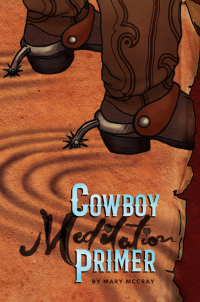
In other news, Cowboy Meditation Primer, has been named finalist in the New Mexico/Arizona Book Awards. Winners to be announced at a ceremony in early November. 


« Older posts Newer posts »

© 2026 Big Bang Poetry

Theme by Anders NorenUp ↑