Reinventing the Life of a Poet in the Modern World

Category: Poetic Realities (Page 2 of 10)

Poems in Pop Culture: Ted Lasso

This summer I finally was able to watch Schmigadoon on AppleTV. I decided to watch Ted Lasso after that since I had heard so many good things about it. I finally finished the three great seasons last night. One of the best TV shows period. Music and poetry turned out to be artfully placed on the show.

In season 3, episode 11, there was a Philip Larkin poem, “This Be The Verse” about the ongoing trauma passed from parents to their children.

The poem marks a crucial point in the final two episodes, finally convincing Ted he should return to America to his son, thus wrapping up his whole adventure coaching a football team in Richmond.

Here is the poem:

This Be the Verse

Philip Larkin

They fuck you up, your mum and dad.
They may not mean to, but they do.
They fill you with the faults they had
And add some extra, just for you.

But they were fucked up in their turn
By fools in old-style hats and coats,
Who half the time were soppy-stern
And half at one another’s throats.

Man hands on misery to man.
It deepens like a coastal shelf.
Get out as early as you can,
And don’t have any kids yourself.

Due to the popularity of the show (and the serious treatment of the poem in the plot), there are other sites who have explicated the poem and its placement in the show.

SCREENRANT’s explication  says, “…in the series’ penultimate episode, Mae pulls through with some elderly insight for Ted that helps him get over a mental hurdle….which offers a perspective on the cycle of nurture and upbringing, a common theme throughout Ted Lasso. From Ted to Rebecca to Jamie, one of the show’s central concepts is about how adults are still effected by the way they were treated in their youth. In Ted’s case, he dealt with serious trauma regarding his father’s suicide at a young age, and his mother’s upbeat and positive personality prevented him from truly healing from the incident, instead repressing his emotions on the matter. This was similar to her upbringing, as she was raised against therapy and taught to never talk about difficult subjects. The poem in Ted Lasso season 3, episode 11 demonstrates a cyclical nature, implying that she is simply passing on the faults she received from her parents.”

The Pop Poetry blog, which looks very interesting, has a great overview of both the show, the poem and Larkin. The post says that Larkin is more well-known to British readers but I remember Larkin being a revered poet among the instructors of Sarah Lawrence College. Pop Poetry calls the poem Larkin’s “Stairway to Heaven” and puts the poem in context with his other poems.  Go here to read the great post: https://poppoetry.substack.com/p/larkin-lasso.

Pop Poetry also has a post about how the show famously misquoted Walt Whitman (maybe on purpose): https://poppoetry.substack.com/p/ted-lasso-misquotes-walt-whitman.

More good stuff from Pop Poetry: https://poppoetry.substack.com/.

What is Poetry: Is Poetry Like the Other Arts?

Art, Artifice and Ancestry

“They seek and cannot find the meaning of the music.
We see only postures of the dream,
Riders of the motion that swings the face
Into view under evening skies, with no
False disarray as proof of authenticity.”

This is from John Ashbery’s greatest hit, “Self-Portrait in a Convex Mirror,” a great contemplation of art for any self-portraiture artist.

I guess you know when any blog post begins with an Ashbery quote, this is going to take a minute.

After a bit of a break we are moving on ahead with Elisa New’s questions about poetry from the Harvard MOOC on Emily Dickinson. This week’s question is about how poetry is like or different from the other arts. I started with this post last week and stalled after the brief categorical musings below.

I started  by listing out all the arts I could think of: the so-called plastic arts (3D things like sculpture), drawing and painting, photography, the fabric arts, music, film and animation, theater and dance and the writing arts. There’s also decorative arts (furniture and home goods), experiential art (like happenings), digital art (including game design) and fashion design. Some would include architecture. There are probably more I’m missing.

I guess the answer to a question like this is sort of hierarchical, (and I’m going to come back to this later), because on some level the impulses to make art are all the same. And there are mashups happening between all these art forms. So in that way, it’s very fluid.

You could argue that writing is very verbal and verbal arts would include poetry, prose, theater scripts, screenplays and the lyric part of songwriting.

Some physical artists use word play as well, either as abstract material or as literal content to add another layer of meaning to physical objects. Likewise, some writers work with spatial ideas on paper.

I’ve always thought writing entailed the least amount of physical skill. Many of the arts demand a good deal of hand-eye coordination. Magic fingers. The physical arts are very tactile obviously. Writing happens mostly up in your head.

Of all the arts, music seems the most abstract and nonverbal (apart from lyric writing). But many of the other arts can be plenty abstract, as can writing itself if words are separated from the things they attempt to signify.

And here is where I hit a wall last week. What else is there to say about this? I am always trying to figure out the buckets and usually find out buckets themselves are problematic. If you ever have to make an arbitrary bucket choice in your categorization scheme, something is wrong with your buckets.

Over the last few weeks, my friend Jen has been conversing with me over email about the 2024 Joni Mitchell book Traveling (Ann Powers) and about jazz fusion and purism. For example, in the book we learn that many jazz purists insist that what Joni Mitchell was doing was not jazz but jazz fusion. I was telling Jen today that I never really understood what the word fusion meant, (just one of those obscure jazz words, you know) before we started talking about it. And I went down a rabbit hole last week wondering about the other music genres. Did they all have a sort of renegade fusion gang pulling at their neatly sewn seams?

Like is there blues fusion? I often research Cher’s 1970s torch catalog for my other blog and many of those songs are defined as blues songs, but they seem more like pop/blues. Would torch songs be considered a kind of fusion?  Is there a rap fusion, a classical fusion (would Liberace sit here?). Does fusion just mean a mashup?

I was telling Jen today that I think my whole problem is that I can’t see the boundaries of anything. I really struggle with this. Music genres, movie genres, writing genres. Where are the boundaries of the western or  horror genres? How is a prose poem different from flash fiction?  What the hell is fictional memoir?

The Exorcist  is a prime example for me. It’s mostly a mid-1970s auteurist drama IMHO. I just Googled that term to see if it was a thing. Not only is it decidedly not a thing, but the first movie that came up for it was Al Pacino’s comedy Author! Author! which I love for predictable reasons: it’s got a dramatic actor in a comedy pretending to be a wacky family drama but is ultimately about a completely failed family system. What’s not to love about that??

But back to The Exorcist, which is a slow burning candle depicting mainly the breakdown of single, working mother with a few scary scenes thrown in that tap into the horror genre and were so remarkable that they captured our idea of what genre that movie was.

It’s very fuzzy for me, as you can see. And so when anyone exploits the complexity of the buckets we’ve culturally created, (with a comedy horror or a western horror movie, for example), I’m delighted. I’m in my space.

And I think my problem with buckets is not just because I overthink my buckets (which I do), but because of the way my brain works to categorize anything. Should we categorize the Lucky Charms marshmallows by color or shape?

But also I struggle for a plethora of other reasons, like living through postmodernism, being part of the Gen X group, influences I have encountered starting with my father, who himself organically resists buckets and loves both Lucinda Williams and ABBA songs.

As I was thinking about all these issues: fusion and types of art, I was also working to understand my poetic ancestry. Poets like Joy Harjo have been calling for poets to create a written genealogical chart of our writing influences. And I’ve been having trouble with this, too, because I’ve been mistakenly focusing on my teachers and mentors, who did influence me but not really my taste (or lack thereof). I kept trying to draw up from Howard Schwartz to his teacher and then up to that man’s teacher, all the way back to Theodore Roethke. But that never feels right. I don’t think my experiments are really related to those people at all. They were just guides and mentors, (versus textual influencers), trying to help me do my own thing not something like their thing. My poetry is really nothing like Howard Schwartz’s or Theodore Roethke’s poetry.

When I’ve talked about my interest in Queer Culture, (most recently in my Cher blog), this has probably been my greatest influence. Even if you’re not LGBTQ+, you can have a queer sensibility, (see the book Camp Grounds, David Bergman). And I think this has to do with the gay male culture I’ve been exposed to as a Cher fan and my sympathy not only with those artists politically, but very importantly aesthetically. And the aesthetics very broadly include camp, drag, the celebration of guilty pleasures but also the idea of textural resilience and bullying, and as a woman who was pressured in many ways to be a “sweet Mary,” the tools of subversion.

So this morning I was reading an essay on the New York Poets (Frank O’Hara, John Ashbery, Kenneth Koch, Barbara Guest and James Schuyler), and I realized I was unavoidably influenced by these poets (and a plethora of ancestors between them and me) and their ideas of genre fusion, their slippages in tone. Were they being serious or funny in their poems? Were they making fun of pop culture or revering it? I feel I can fundamentally understand that they were doing both at all time. Because I too, cannot fairly see the boundary between comedy and drama or pop culture and anything else. And it’s not surprising that the two pillars of this school (Ashbery and O’Hara) were gay men.

The New York School poets targeted the boundaries between high and lowbrow art, including poems that reference movies, symphonies, French fiction, pornography, epics, cartoons (this is Brian M. Reed’s list from this morning’s essay in The Cambridge History of American Poetry)…and most famously abstract expressionists paintings.

Reed goes on to say these writers adopted “the same impassioned tone toward both elite and popular culture which can leave a writers taste level in doubt, as well as lead to a reservation considering his or her fundamental aesthetic values.”

Or I would argue a reservation considering the idea of fundamental aesthetic value itself.

Or the fact that some of us can only see one bucket.

Later Reed says, “the poets permit themselves to scramble, invert, reinvent, and otherwise tinker with every available discourse without respecting any of them as sacred or outside the limits…[and they] exalt in this freedom by making artifice and artificiality a central theme in their work.”

Later Reed says the New York School poets would also “draw attention to the problem of artifice, probing its zero degree, the boundary between art and nonart.”

So this problem is hierarchical, we can see again. Where is the boundary between say rap and pop or comedy and drama? Then where is it between movies and photographs? Between poems and song lyrics? Between high and lowbrow? Between art and nonart?  The good and the bad?  A yen and a taste? The opinions of ourselves and the opinions of others we love and admire? The border between the self and others period?

It all feels irrelevant then when you can’t find the edges.


The sculpture at the top is “Rethink Plastic” is by the artist Javier Jaén.

What is Poetry: Where Is the Poem?

We are continuing through Elisa New’s queries on what poetry is, questions she posed in the Harvard Emily Dickinson MOOC. This week I’m actually going to combine eight of her questions into one, because they’re all related.

1) Is a poem still a poem if one only entertains one’s self with it internally?

This reminded me of Emily Dickinson. Does the poem exist in her chest (as in her bosom, as in a poem only internal to her) or in her chest (as in a very physical hope chest or chest of drawers where she hid 1800 or so of her poems during her lifetime)?

In the first scenario, the poem has not been physically written down yet, like possibly millions of other poems she never officially wrote out on paper. In the second scenario, she is still the only one (in her lifetime) entertained by them. Scenario #2 is still barely removed from “internally” and yet significantly different from “internally” because it is the only place that those poems have potentiality, the potential to be read in the future by another reader.

Once a poem moves from your brain to an external media, it assumes a future audience, even if you hide it somewhere. I feel the same way about journals, they assume an audience even if they are “private.” Only thoughts inside your head are truly private.

2) Where is the poem?

This question feels like a Zen Koan to me. I don’t even think we need to answer this one; we can just soak it in. But this question implies a poem taking up space in the world: where is it? A poem has a physical location. If a poem is only read aloud, does it have a physical location? Does a poem have to happen on paper to have a physical location?

3) Where does the poem really happen?

In my interpretation, this question implies a poem happening in time: a happening. “When” does it happen would be more accurate. A poem comes to be in a moment of time or a span of time. Is the time from thought to composition to appreciation all the time?

4) Where does a work of art really live?

This broadens the question out to all the arts and specifies its existence beyond being born in space and time. Where does it live out its life? In the collective mind? In our individual imaginations? Somewhere else? Some objective space (can it exist without other readers/listeners)? If a poem has been recited in a forest and there is nobody there to hear it…

5) Does it live in intention?

Here Elisia New starts to move through the stages of creation. The artist has intentions. The Adventures of Huckleberry Finn by Mark Twain is a great example of this. Twain specifically states that he does not have certain intentions for the novel:

“Persons attempting to find a motive in this narrative will be prosecuted; persons attempting to find a moral in it will be banished; persons attempting to find a plot in it will be shot. BY ORDER OF THE AUTHOR”

All the readers disagreed. There was a moral. There was symbolism in the Mississippi River which he also did not want attributed to his work. Georgia O’Keeffe consistently claimed her flowers were not vaginas and penises. Viewers don’t agree. They have agency to interpret what they see.

So you could argue that author intention is practically never the place where a piece of art lives. Artists give it their best shot and then release it into misinterpretations and multiple-meanings. I think this is why artists associate their work with the idea of having children: birthed by them but ultimately beyond their control.

Besides, intentions often exist before any work has been committed to any media. Million of ideas never come to life. Intentions are just part of the morass of our minds.

6) Does it live in the throes of production or composition?

This is the most fascinating stage for me, drafts, editing, iterations. In some cases, new drafts even occur post-publication, like W. H. Auden’s later-day revisions and Marianne Moore’s undoing of her poem “Poetry.”

Sally Bushnell’s book Text as Process explores the meanings of drafts and versions and it’s fascinating. She goes through different kinds of draft versions and levels and theories of composition. And the book made me think immediately about the singer Cher’s demos and remixes. Cher’s demo for the song “After All,” although it was technically a draft, became the final, “canonical” version of the song (with Peter Cetera’s vocal added later).

Similarly, there are album versions of particular songs and then often a fleet of remixes for songs delegated as “singles” or potential “hits.” And sometimes these “versions’ get confused. For example, maybe it’s the dance remix of a song (“When the Money’s Gone”) that is the one to chart as the hit, not the supposedly “canonical” album version of the song. Other times, later remakes of an artists song can take on another life. Cher’s song “Bang Bang” has not only been covered many times by other artists but by Sonny and Cher themselves who created later-day versions on live and studio albums, sometimes with altered lyrics. Where do those songs live in this sense? Which song is the version?

Maybe songs and poems exist in a separate space above and beyond all their variations.

7) Does it live as it’s appreciated by a social body?

This is where art moves beyond the artist and into society. The social body could be as small as one person (for example, love poems exchanged between two people) to small aficionado groups (at some point Cher’s fans were a large group, then a small group, then a large group again), or a small workshop group to a huge group of social media fans or best selling and anthologized poems. The size doesn’t matter.

To me the debate is between question 6 or 7. Are drafts considered poems proper? In some cases, definitely yes. Some drafts (things considered unfinished) become famous products. Especially drafts left incomplete when the artist dies. Maybe not all drafts are “canonical” but some can be promoted to canonical pieces.

Drafts that are never seen by readers ever, neither by researchers documenting famous creators in process or drafts published in published anthologies, are those drafts not still poems? Like some kind of twin to their more famous later-day finished draft?

8) Does it live when it’s canonized and is cherished through the ages?

This is an easy no, for me. Fame and success widely wax and wane. This rubric would exclude many, many artists who were discovered sometimes long after their deaths, from Emily Dickinson (who took decades to gain respect) to colonial poet Edward Taylor (who had to wait 200 years upon discover) and this illustrious list of major writers. The canon is fickle…thankfully. Generations disagree on who the “important poets” are.

Alternatively, poets like Katharine Hepburn’s poet, Phelps Putnam, was one of the most popular poet’s of his day. Now he’s considered Katharine Hepburn’s poet, although she was not even famous yet when he wrote about her.

Canonization and being cherished by hordes is irrelevant to the existence of a piece of art. If one single other person read or hears the poem, it  exists.

I find it interesting how instinctually most artists yearn to impress their elders, their mentors. Audrey Hepburn for Cher is a good example of this but every artist has their people. But consistently artists always impress their youngers instead, the fans who come up behind them. This is often because mentors are part of the past. And this can feel frustrating. Thwarted intent again.

It speaks to the timing of your influence. You want to be anthologized, awarded and feted in your lifetime, benefits that are typically bestowed by elders and mentors in positions of power over the canon. But the most famous of artists and the artists with the great longevity are always fetted by their fans and this often happens long after their own deaths. Fans are crucial to post-mortem reputations. Fans have kept Shakespeare in business forever.

And post-death, does the artist possibly even care? In that sense, poems are more permanent than their poets. And so maybe we should move on to the question: where does the poet live?

What is Poetry: Should Poetry Be Heard or Read

We’re making our way through Elisa New’s queries on what poetry is, questions she posed in the Harvard’s Emily Dickinson MOOC. Here’s the next question in the list: is poetry language other human beings necessarily hear or read?

It’s interesting that New specifies “human beings” because obviously animals overhear poetry spoken by humans, like a racoon stuck in an attic overhearing a poetry reading downstairs. It must sound like pure music for them, like listening to any unfamiliar language. But it’s humans who need to experience their language as poetry or want to. And there are humans who are satisfied to experience poetry simply as nonverbal music. Fans of Gertrude Stein, for example.

New also specifies the word “necessarily” as if this is the way we have to experience poetry, as a necessity, and the other way is possibly superfluous.

It’s probably not necessary to overthink New’s casual questions here but the fact is the hoomans have never been able to agree on an answer.

Some of us believe poetry is best experienced as spoken word. Poetry is primarily aural in this case. Some of us believe the page is where the poem is set in stone and formalized. And the page itself, the white space, the visual is crucial to its meaning.

And they both have a point here. Much depends upon what properties of a poem the author was working with, sound or visual tricks. It’s hard to bring visual chicanery to life in a spoken performance. On the other hand, you can get a slight idea of the sound effects when reading a poem silently, but you get a better understanding of them when you read a poem out loud.

Poetry predates printing and so spoken word and memorization is at the heart of its history. Musical elements made it easier to perform and pass along poems. Often, it’s the musical elements that set poetry apart from prose.

But then the printing press happened. Poems could come alive in the minds of readers and not just in the ears of listeners. Now we have even newer publishing platforms like web browsers and interactive applications.

In one MOOC I attended on Electronic Literature, the teacher talked about “affordances” which were like beneficial properties of any one platform. For example, you can take a book to the beach, get it wet and it won’t conk out on you. It’s still a very usable media platform even when damp.

On the other hand, a book in an e-reader might short-circuit when wet, but is weightless and doesn’t take up room in your house if you decide to keep it. You can also search it for content very effortlessly and quickly.

Likewise, our mouth is a platform with some very beneficial affordances.

Everyone has a greater need toward one or another affordance. I personally like the look of books in my rooms. I like the feel of books and paper.

Interestingly, I was going to search images for this post, one for “poetry reading” (as in the live event) and “reading poetry” (as in the book). But the search engine, of course, didn’t know the difference. So putting the words “poetry” and “reading” in the search field brought back everything and that is kind of metaphorically nice.

These are pretty stereotypical images of both options. The dark room with a spotlight and a dramatic performer gesturing with their hands. Contrast this with the manicured reader, enjoying nature no less with a latte with some artfully applied whipped cream.

So every one will have their own personal answer to this question; and how could it be otherwise? We all have different aesthetic needs.

For me, music itself satisfies my need for music. And the music of poetry often overwhelms me during poetry reading performances. The rhythms send me drifting off into my imagination and I come back a minute or two later having missed whole sections of the poems. There’s also the poetry reading grunt that I find pretty grating.

But then again I love to attend public discussions of poetry and literature, like the sessions of The Los Angeles Festival of Books and I like Ted Talks and stand-up comedy. So I do like the physical human presence of communication. It’s a fine line between that and other forms of spoken word.

I’m much more interested in poetry as a visual artifact. So for me, the page trumps the performance.  Whereas for the live performance of a conversation, lectures or the performance of music itself, this is not the case.

Music has such a strong nonverbal element, regardless of its lyrics, a strong energy of spirit (in all its variation). Poetry, albeit with its own kind of spiritual effect less powerful, is more verbal and idea-based, despite experiments exploring the boundaries of that with either nonsensical or mostly musical writing.

For me, music does music so well. And reading platforms give poetry more opportunities to do what it does so well.

What is Poetry: Deliberate Craft Controlled by the Maker

We’re working through Elisa New’s very interesting questions about poetry from the Emily Dickinson Harvard MOOC. The next question is a big boy: “Is poetry a deliberate craft controlled by a maker?”

And here I think Elisa New is asking about how much control we have over our creations, how much of the poem comes from inside us versus how much comes from something outside of us. And this is really a spiritual (and biological) question about where our consciousness begins and ends.

You might believe you are a singular entity, biologically and mentally speaking, or you might believe you are part of a larger system of energy or thought.

I personally am agnostic in pretty much every spiritual sense: not ruling anything out but not fully accepting of any belief system. I’m spirit-curious, as it were. Non-committal. I have commitment issues, religiously speaking. I was raised by one stalwart atheist and one reluctant atheist.

I believe it was the writer Will Storr who said it takes just as much faith to believe in ghosts as it does to not believe in them. And you could pretty much take that perspective to any kind of spiritual dilema.

Anyway, as it pertains to writing and creative thinking, I have had three kinds of experiences around this.

1) Writing with the conscious mind: this includes a conscious effort to brainstorm, organize, draft and edit work.

2) Subconscious accidents and architectures: these are unplanned things that happen but that are traceable back to training, experience, expertise and other subconscious activities happening in your own brain. Sometimes natural, serendipitous connections and subconscious decisions are made with details and architectures.

3) Outside contributions: here is where it gets a bit spiritual. Some writers believe in a real external muse, a mystery or a loved one or maybe input from God or ghost writing. Poet James Merrill believed his content was being provided by a Ouija board in his book The Changing Light at Sandover and poet Jack Spicer was another major poet who believed language was “dictated” to him and he was not “an agent of self-expression.

This question has prompted me to go back through my own experiences in writing poems (from high school to now) and make a survey of my various “phases.”

High School Phase in St. Louis: this was my first, exploratory, practice of poetry (reams of it!) handwritten in notebooks, a lot of high-school love stuff and play with free association. It’s marked by a lack of training and very little reading of other poetry. And not a lot of thinking about how creativity works.

Undergraduate College Phase in St. Louis: these were my first advanced classes in the explication of literature, my first poetry-writing workshops, the happy discovery of writing mentors/teachers (the first encouragements I received to continue on). I started to meet other poets (amateur and professional), started to read poems (contemporary and the canon). This period was marked by my revolt against the idea of a poems written in a series (no idea why; it seemed pretentious) and embracing metaphorical writing, especially the extended metaphor poem. My word choices became more conscious as I had discovered the magical uses of a thesaurus. All this was firming the muscle of my conscious writing skills.

Graduate School in Yonkers: I was getting continued encouragement and realizing I was wrong about the series-based poem thing. I actually loved doing series work and would continue to do basically that going forward. I was also learning to write narrative poems (the Mars poems) and telling small stories. I was doing more conscious-writing skill-budling.

Post-Grad School in Los Angeles: here I started a deep dive into Buddhism and Zen Buddhism and was developing an interest in telling my family history on my father’s side, having an epiphany of confluence for those two interests while reading Zen and the Art of Falling in Love by Brenda Shoshanna, which eventually resulted in the cowboy book. The family history got dropped and I was practicing more long-form narrative poetry instead. This to me was some unconscious work starting to happen, some happy accidents, integrations and conflux of various separate interests and ideas.

Writing in New Mexico: this period is marked by starting on the NaPoWriMo challenges while I was temping at the Institute of American Indian Arts in Santa Fe. These were yearly explorations in form prompts and series poems on speed. After moving to Albuquerque, I started to take MOOC surveys on the history of American poetry, the final phase being “Electronic Poetry” or digital poetry after which I began exploring browser-based poems.

Now, from the beginning to this point I had never experienced anything like writer’s block on any writing projects except maybe day-job assignments in marketing (which were miserable experiences). For good or bad, I’ve always had plenty to say, a lot of obnoxious opinions. Maybe once in a while I’ve had a problem with a plot point or a spot of rhythm or word choice, usually needing help ordering a series or a book. For spelling and punctuation, I will always need another set of eyes (if I can find them).

But here is where it starts to get weird. For all the NaPoWriMo projects from 2013-2021 and including 2024, the writing was mostly directed  by me. I had complete authority over those poems (in my mind at least). There were some subconscious happy accidents, some parallelism I didn’t consciously intend or a clever plot point that designed itself.

In 2021 I started what turned out to be a two-year project of dictionary poems. This was a project inspired by Lohren Green’s Poetical Dictionary (2003) and I had assumed I’d have complete authority over not only the the containing poems but the words themselves.

I soon found out that I was unable to insist upon any of my own words. If I picked out a word I wanted to use, I would always get writer’s block. This was the first time in my life experiencing a block over anything. What the hell! I could pick as many words as I wanted but poems went nowhere over and over again. There was no rational argument I could make to the mysterious muse.

And it’s not like words just came to me from the outside. That didn’t happen either. I would come up with a few words every few days and a voice (that didn’t seem to be me) would almost nudge me with an encouraging voice telling me that “maybe you should explore that word.” And I would have to wait for that nudge or I couldn’t proceed. So f**king weird. And I had no control over how often words would be sort of “approved” by this voice. How frequently they would come or not come.

At the same time I was working on another series, NaPoWriMo 2022. I was pretty busy doing that and hoping to put the dictionary poems on hiatus. But that month a large bunch of dictionary words came in a fury and I found myself often posting two poems a day, one NaPoWriMo poem and one (or more) dictionary poem. It was crazy-going until I finally appealed to the voice (or whatever it was) to stop sending me dictionary words.

Almost in a huff, the words stopped and they stopped for what seemed like months. Was this myself in a huff with myself?

I can’t characterize much about the voice but it almost seemed to have a gender and an age. But hey, let’s not go there.

For that NaPoWriMo year in 2022, I had a similar but not identical experience with “the voice.” These poems were based on pop and rock songs and I did determine (for the most part) which songs I was going to write about. I also felt I had authority over the hook for each poem and their narrative direction.

The voice (and it did seem like the same voice) appeared only to help me with particular problems. For example, I had a big problem with the poem for the song “Ne Me Quitte Pas.” That poem was a hot mess involving literally a shipwreck. Figuratively, the poem was a wreck itself. I opened up my mind to suggestions from outside of myself and I received back the idea to use Theodor W. Adorno’s famous quote about “there can be no poetry after Auschwitz” as a alternative guiding principle for the poem. Big help. Thank you very much.

Similarly, I became stuck with the poem for the song “Could It Be Magic.” I couldn’t get a direction or any traction with it. All I knew was that the poem was half-written and I got very angry every time I worked on it. Why was I getting so angry? Then one day while I was in Cleveland, Ohio, visiting my parents an answer popped into my head like a gift.

It was the song making me feel angry. Incredibly, the response I needed was not only the answer to my question, but it was the answer to the poem and the whole set of poems. It was amazing!

In another section of the set, the muse was completely unhelpful. I had a placeholder song for a poem (and a placeholder story to go with it) that I did not want to use. I wanted to use another song by that artist but I couldn’t yet find it. Also, the story was too enigmatic. It didn’t fit with the other more direct poems in the set. I was blocked again.

I opened up again for help. The voice returned but this time with an adamant no in response. The voice said unequivocally, “this is the song and this is the story you get.”

Well, I couldn’t believe this was true. Surely, open-mindedness would prevail and another song by that artist would come with and new idea, just like it did for those other problematic poems. This artist had many songs, after all, and I had months to prepare. As the day of publication kept getting closer, I felt nervous but never resigned. I kept checking in; the voice kept saying no. This is the song; this is the story. So aggravating! Up until the day of publication, I kept hoping for a new idea and that voice never waivered. To this day, I see that poem like the flaw in the Navajo blanket, the open door that defines the whole set.

I have not experienced either of these experiences since those projects of 2021 to 2023.

And I can’t honestly tell you I even believe in this voice or the idea of an external muse. It’s not very rational and human perspective is so limiting and easily misled. Maybe I just have a very active imagination. Maybe I have a deep, subconscious creativity.

Maybe the longer you practice writing, the more deeply you go into your thinking mechanisms and the weirder that might seem. On the other hand, maybe the longer you practice writing the more you are able to tap into intelligences beyond yourself.

So in answer to this question of whether poetry is a deliberate craft controlled by its maker, I really couldn’t say.

What is Poetry: Language or Music

We’re working through Elisa New’s very interesting questions about poetry from the Emily Dickinson Harvard MOOC. The second question is really two of her questions: “Is poetry native language at all? Is poetry a kind of music?”

We’ve argued about this previously, most notably when Bob Dylan was awarded the Nobel Price in Literature in 2017. Well, I guess it was just me arguing with the points made by New York Times poetry critic David Orr. I can’t paraphrase it all here. Suffice it to say I’m suspicious of anyone who thinks poetry is not music and language both.

The use of “Native” is interesting in the first question. Does this mean pre-language versus learned language, like toddler-speak? Or does it mean pre-history language like petroglyphs? Or some kind of under-language that is always with us, some emotional language?

Poetry for me has a pretty big umbrella and it involves an implication of permanence. I mean every writer intends a kind of permanence for their work, (a possible stay against death), but poetry tends to have a greater shot at a longer shelf life. Poetry is not inherently disposable like, say, political opinion or podcast reviews. The topics are more universal, the tone meant to strike more deeply into the psyche.

I am always considering the place of petroglyphs as poetry, too, and our hesitancy to label American Indian verbal rituals as poetry. Unlike verbal ceremonials, someone took the time to write out concepts in petroglyphs. I have some petroglyphs on the hill behind my cul de sac. And as far as “native” language goes, (in all senses described above), they “feel” like poetry to me. They explore something intellectually serious and they strive to be permanent.

Often they intend to commemorate a special occasion or idea.  As does music.

Poetry has always challenged the boundaries even poets have tried to attach to “poetry.” Poetry should this and poetry should that. Always they are trying to contain the idea of poetry around themselves, their work or their taste. Musicians do this, too. Maybe so did the petroglyph writers. Humans love to tell each other what to do.

Is poetry simplified language? Except that it can be delightfully complex and convoluted. Is it a simplifying of our experiences? Except that it can illustrate the complexity of our experiences. Is it elevated language? Except that it can be coarsened language. Is it a narrative? Except that it can be non-narrative. Is it form? Except that it can challenge the idea of form.

It uses words. Except sometimes it tries to loosen words from their moorings. And it can be gibberish. It can be written in any language system (petroglyphs). It can be pictorial sometimes or can employ the same intention with symbols (petroglyphs).

It is not music. Except that it often is imbued with music. It’s almost impossible to separate poetry from any trace of music, any occurrence of rhythm and rhyme.

It may even be a third thing, a hybrid teetering in-between and pulling from native pre-language, sophisticated layers of modern languages and also ice-skating with tropes of music. If not an in-between thing, it is maybe an ever-morphing thing that grabs from all of its neighboring communication systems. It is possibly undefinable.

We could let it go, this attempt to nail it down. But tell me what’s the fun in that?

What is Poetry: What is it Made Of

(Atom sculpture)

Years ago I took some Harvard MOOCs (Massive Open Online Classes) with Elisa New. And during the class on Emily Dickinson she went through a list of very interesting questions about poetry.

She noted that certain Dickinson poems theorize about “what poetry is, what poetry is made of.” And then New goes on to ask multiple questions around the substance and boundaries of what poems are, what poetry is.

I’ve collected these questions and we’ll be exploring them for the rest of the year, starting with the opening inquiry: what is poetry made of…

….which you can’t very well answer, by the way,  without speaking figuratively.

I would answer this by saying poems are made of heart and brain matter, the substance of yearning, suffering and joy, the desire to nail down the salty, sugary in-betweens-ness of our lives.

It is made of nothing from the periodic table of elements, not even the breath or paper it finds itself delivered upon. It is both a voice and not a voice in every sense of the word. It has no DNA or nucleus.

It has a big charge without any atoms.

It has no matter and yet it does.

Poetry is one of the only human things on Earth not made of carbon.

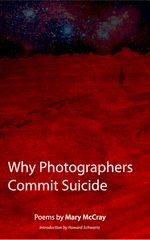
And this reminds me of a love poem from my first book, Why Photographers Commit Suicide, “Monogamous Carbon: A Classified Ad” written back in the early 1990s when I lived in Yonkers, NY, and was writing science poems for my MFA at Sarah Lawrence.


The Essay Project: Concepts vs. Identities

I hear there’s a saying in recovery therapy that says, “don’t should on me.”

And I think about this phrase a lot when I’m reading and hearing how poems should be this way or that way, how people should be this way or that way, or how the problem with X,Y or Z is that it should be. Men should be. Women should be. The Other Side should be.

I’m slowly reading a book called Advanced Poetry, a sort of poetry course put together by Kathryn Nuernberger and Maya Jewell Zeller.

Each chapter has writing exercises and extra readings online and so reading it is taking me time. In fact, I’m only up to the chapter about a poet’s “voice” where they spend time discussing the New York School poets, specifically Frank O’Hara and all the experimental alternatives to writing confessional poetry. The chapter explores the tensions between the two exercises, writing confessional/identity poetry and writing experimental/modernist poetry, illustrated most clearly in two essays the author’s have included online.

Delusions of Whiteness in the Avant-Garde” by Cathy Park Hong  was a somewhat ground-breaking article that calls out conceptual or experimentalist poets for being clueless, and alternatively insensitive or rude, on the issue of identity politics, for not producing pure-language experiments, as they do, or for writing, as Stephen Colbert’s character would say on his old Comedy Central show, from the vantage point where “I don’t even see race.”

However you feel about the term “identity politics,” marginalized groups sharply feel their status in the world. For example, I can’t forget at any time that I am a woman. Honestly, I’ve led a pretty easy and privileged life. But I can still face obstacles as a woman. What if I get pregnant? What if I apply for a manly job, like kicker on a football team? What if I piss-off either other women or men but saying something perceived to be wrong for my gender? My womanness is very much a part of my idea of myself.

And my ideas of myself are always tricky. I get tangled up in them when I try to seek out a religious or cultural identity for myself because my father grew up on Indian reservations (as a white boy) and passed a lot of cultural artifacts down from the Hopi and Tohono Oʼodham (which is the childhood and young adulthood he experienced). That was passed down with our New Mexico heritage which is very hybrid as well. However, genetically I am not Hispanic or Native American. So what am I, culturally speaking? You can’t escape focus on your identity when it is blurred or marginalized or hated. You don’t have the luxury to not think about it. The world forces your identity upon you. And then you can criticized for talking about it.

From the point of view of modernists and experimentalists, we should be able to shred our identities and write in an authorless, language-based way. Hong calls this out as clueless. It is possible we will never get to a place of social equity ever and pretending this can be so (through art manifestos) doesn’t ever make it so.

The other essay is “Delusions of Progress” by Daniel Borzutsky which really takes some time to unpack Hong’s statements.

The experimentalists (or conceptualists) are pretty cliquey. That’s another issue. They can be pretty dismissive of other poetries. On the other had, political writers operate with such urgency, they often feel the same way. And their point can be well taken. For example, if we don’t solve the environment crisis and we all die off, there will be no humans to make the poetry experiments. So there.

This is not a new problem. I’m also reading about the beginnings of modernism. Modernist poets like T.S. Eliot wanted to push back against “sentimental poets,” women poets of the time. Poetry should be to escape the personal, he believed. Confessional poetry sprouted up to push back against that. Also, there were some women and minority poets during the time of Eliot who were using non-experimental or traditional forms and structures to talk about their lives in political ways.

It has always seemed to me more a matter of privilege than overt racism, although you could draw political lines between the two groups. The modernists were ironically very politically conservative. Eliot and Pound were famously antisemitic during WW2. They latter-day New Critics not only believed a poem should stand as an artifact free of biography, but as a critical force they shut down the poetry of the political left which disappeared from the canon and the academy for almost 100 years, along with popular poets of the day, whatever their politics were, poets like Edna St. Vincent Millay, Louise Bogan…etc. More recent modernists evaluations and anthologies in both America and England are just beginning to bring those poets back into our critical awareness.

This is not to say some experimentalists are not racist. But many of them just have the privilege of their race or sex not being a barrier or under threat. They can’t or don’t want to write about their whiteness. So they tool around with words instead. I just want to say that their doing this isn’t the problem. Their experiments in and of themselves are not clueless or wrong. It is all their critical judgements, their exclusive shoulding, their grand ideas about their own place in the poetry canon that is clueless.

I do get energized, myself, from procedural and language experiments but I have always sympathized with poets who want or need to write poems of witness and social concern. And now that I feel my own future jeopardized as a person in the new era of aggressive incels, I understand this much more viscerally.

Borzurtsky’s article is a good discussion on these struggles and he comes to conclude that maybe this isn’t a discussion about poetry at all, but how you “position yourself in the world, about how you want to live your life.”  He says, “the politics of form is really a discussion about the politics of content.”

To dismiss identity poetry is tragic, he feels, because he has seen “poetry have a transformative effect on individuals because of a poet’s willingness to speak, directly and honestly and vulnerability, about ‘identity,’ about political and social experience, about what it means to survive in a world that wants to kill you.” (or enslave you, or make rape legal…)

And we have to remember, in some countries you were (and still are) killed or jailed for writing witness  or political poetry. To say this kind of poetry isn’t “serious” enough is just absurd. No government is going to kill you for writing a procedural poem.

Borzurtsky goes on to say “I think about how small and incremental it feels to write poetry in our over-saturated, a-political landscape.”

Which reminds me of the joke, “Why are poets so cutthroat? Because the stakes are so small.” Poets are already marginalized. This becomes a nonsensical skirmish at some point. Because I would never want to see the poetries of witness vs. experiment made into opposing camps. Not only are there excellent and important poets who traffic in both exercises, we desperately need them both to exist.

I’ll say that again: we desperately need them all to exit.

We absolutely need a poetry of witness, identity, and social concern. But we also need the laboratory poets, the scientists’ scientist, the poets’ poets like Marianne Moore and Gertrude Stein (who ironically supported some antisemetic bad actors herself because she was so vehemently anti-left). Many Harlem Renaissance writers and women writers at the onset of modernism used traditional poetry forms to protest the idea that they were not smart or genius enough to write in forms (Claude McKay, Edna St. Vincent Millay). We need all the things.

Forms (like music genres) have no politics. It’s the judgement about them that has politics.

By the way, Advanced Poetry as a text-book is happily inclusive of British and American poets of all kinds. It really puts the “trans” in trans-Atlantic.

NaPoWriMo Starts Soon

Ok…so my life is a series of slow-burning calamities at the moment.  I just lost my favorite fella last Wednesday and my mother has been in and out of the hospital for the last two months, with that situation ongoing,

I had to bail suddenly on a dying computer last Tuesday and set up a new one quickly in case I will need to return suddenly to Ohio. And plenty of other dramas are going on concurrently. In fact, this year is proving to be the worst one yet. I have been wallowing in funny animal and baby reels via Facebook and I’m not sorry at all about that.

The world needs more funny baby and animal videos right now. It’s something we can all get behind, no matter what our ideologies. My favorites have been the voice-over antics of Rxckstxr and following the adventures of Branston Pickle and Gizmo or any reels of Dads doing silly things for their little kids.

But I do not want to postpone my final NaPoWriMo another year. Absolutely not. So God help me I will begin the final set of poems starting Monday, April first.

I may not finish them by the end of the month. I may not finish them by the end of next month either. It may take me until July to get them all up, but finish this we will.

Check here periodically for postings of the as-yet-untitled set of poems: https://marymccray.com/napowrimo-2024-by-mary-mccray/.

Why Do I Write?

Sometimes when I need to find a page quickly on my website and I don’t know where it is I’ll just google it. Like “Mary McCray NaPoWriMo.” It’s faster than browsing around for things. I learned this trick at ICANN because the site has tens of thousands of pages (full transparency, you know).

If I search my name on Bing, that search engine asks me very politely “are you sure you don’t mean porn star Marie McCray?”

If I search my name on Yahoo!, that engine just gives me results for porn star Marie McCray.  (“Surely that’s what you want, right?”)

If I search my name on Google (and this is why Google is king, I guess), I get a handy information card to the right that actually returns Me. But Google has decided for some reason that I’m a Journalist.  Which is very funny because I’ve never written a piece of professional journalism in my life, unless you count those old reviews on Ape Culture (which had the grand distinction of not being very good).

I can see now that I need to get new pictures. One of the things I dread doing (more on that below).

I have some good friends on the East Coast who I saw last August. They’re a couple: one is a writer/poet and the other is a musician. I’ve known them since back in the Sarah Lawrence days.  We’ve had some great conversations over the years about being artists and I remember touring the lair of the musician last summer and the two of us got to musing about why we keep working even though we haven’t “succeeded” and how we would still keep doing it whether we were successful or not. Because we love the doing part and we probably couldn’t stop even if we tried.

I figure feeling this way helps us forego the constant assessments of our value. It’s more about what we value. But this doesn’t make it easy.

It’s tough out there. I know three graphic designers (web and print) who struggle to find work because the Internet has decimated their opportunities, just as it has for writers.

But often I have to remind myself that for poets, it’s been this way for about 100 years already. We were once on top of this culture heap, but then dime-store novels sent us packing; and then motion pictures arrived to soak up everyone’s leisure time. And then TV came. And then the computer games. And then the Internet.

And motion pictures were far from the first disruption to human kind. The printing press put those monks out of business, which was a shame because apparently they were drawing little hidden penises in everything).

Media change is relentless. And we find ourselves in the middle of yet another disruption because annoying human beings keep inventing things like stone tools.

But considering there are still thousands of poets writing and reading poetry even though it’s been 100 years of deeper and deeper losses, we must be working with a different rubric of success. But if you want to join the Irrelevant-Media club, you know where we are. We keep on like dysfunctional little windups.

Alternatively, I know two writers, (one of them lives in my house), who, if there’s no money or promise of money down the line,  they do not write. Period.

Another close friend I spoke to recently works in a medium that I would consider mostly a labor of love. And for years they’ve been doing it just because they love doing it, they said. Recently, this changed to working for “something big,” a term that is a vestige of this person’s former life in Show Business.

It’s such a commonly ringing bell lately, I can’t help but think that, despite what anybody says, fame and money are what everybody wants.

Sometimes I even doubt myself. I mean even those monks wanted to be remembered by someone, otherwise they wouldn’t have been drawing all those funny little penises in all those old books.

I’ve been reading an essay about Robert Frost over the last few days, “Robert Frost and Tradition” by Siobhan Phillips.” Phillips says “Frost courted fame on the widest scale and became by some measures the most well-known English-language poet of the twentieth century.”

Frost said, “there is a kind of success called ‘of esteem’ and it butters no parsnips.”

And esteem buys you no butter, that’s for sure. You can’t argue with that.

I have another visual artist friend I’ve know a very long time, a very talented artist, but this person has what I would call a  problem of self-motivation and over the decades hasn’t produced very much. Recently I had dinner with this person and they said apropos of nothing, “I really thought I would be famous by now.” I had some very unfriendly thoughts at that point and then when I got my sea legs again I said, “So how is Becky?”

I mean I have problems of my own but I have some self-awareness about it. For example, I also another friend who gives good advise about networking: go out and hob-knob with other poets (oy!), join poetry groups (no), give readings (good lord!), network through teaching (I’ve seen that and I consider it a Faustian bargain). I didn’t want to do any of that. And that’s on me. I like to think of it as a handshake with mediocrity.

I’m also been reading a poetry anthology sprinkled with rediscovered poets going back to the Colonial era, poets who never published in their lifetimes but are being uncovered even now like hidden treasures. And I think how nice that sounds to me sometimes. You get the fame if not the money and you don’t have to deal with any of the bullshit, like poetry grunts at public poetry readings. (Thank you to Ann who reminded me I sent her that poem many years ago and completely forgot about it.)

But I’ve been thinking more deeply right now about where this ambivalence around success comes from. And like most things, it probably resides in my early childhood experiences, particularly with bullies. I grew up in a place where you would be a target if you won or if you lost. So the safe spot was right in the middle. When I learned what grey rocking was I was like Yes! I am a master of grey rocking. I imagine a little black belt around my little inner grey rock. Literary grey rocking. It’s perfect.

Robert Frost also wrote a great deal about futility, from the futility of building a fence to the futility of conceiving a child (he lost three, arguably four). However, he saw no futility in poetry. He famously said,  “every poem is a momentary stay against the confusion of the world.” And how does one monetize that?

I was writing something the other day and I referenced the game Mousetrap. I played this game with my friends Diana and Lillian when we were kids. We didn’t even bother playing the game. We just set up the mousetrap and set it in motion to see all the ways it wouldn’t work. Due to small manufacturing mistakes, the contraption rarely did work. In fact, it was an exciting miracle if it ever did.

I started writing for reasons that are not all that flattering to me. It was over a boy, of course.

You know that thing you do when you find out somebody you like enjoys some activity or experience and so you try to get into that thing so that you can build a kind of bridge with that person?

I have a bad history of these bad ideas around boys. But in this particular case, through a series of happy and sad Mousetrap-like events, I started writing poems which randomly sent in play a boot kicking a yellow bucket, knocking out a silver rolling ball down a green staircase and through the red slide, knocking the green man off the blue diving board and into the yellow tub which shakes down the red mousetrap. And here I find myself 39 years later having written many hundreds of miraculous poems.

When I first started writing, I firmly believed you had to be a dead poet to be famous poet. (I didn’t know any but dead ones.) And misguided by that belief, I did not stop writing. I just lowered by expectations.

Real, real low.

Of course, there are many very well-known poets, but nobody in my immediate family would be able to tell you the name of a single one.

It’s all relative.

Romanticism idealized both eschewing fame and expecting it. And many of us are stuck there in that perplexing purgatory.

In the forward to Margaret Atwood’s book Negotiating with the Dead, a Writer on Writing she lists two full pages of reasons why writers write including some really funny examples:

  • To show those bastards
  • To delight and instruct
  • Or else I would die!
  • Because I didn’t want a job
  • To make myself seem more interesting than I was
  • To attract the love of a beautiful woman
  • To rectify a miserable childhood
  • To serve art
  • To serve history
  • To make a name that would survive my death
  • To experiment
  • To expose appalling wrongs or atrocities
  • To give back

There’s plenty more. Later in chapter three, entitled “Dedication,” Atwood talks about the Lewis Hyde book The Gift: Imagination and the Erotic Life  and quotes Hyde to say, “any equation that tries to connect literary value and money is juggling apples and oranges.”

Atwood talks about economic exchange versus gift exchange. She says

“the part of any poem or novel that makes it a work of art doesn’t derive it’s value from the realm of market exchange. It comes from the realm of gift, which has altogether different modes of operating. A gift is not weighted and measured, nor can it be bought. It can’t be expected or demanded; rather it is granted, or else not. In theological terms, it is grace,  proceeding from the fullness of being.”

She says, “There are four ways of arranging literary worth and money: good books that make money; good books that don’t make money; bad books that make money; bad books that don’t make money.”

So obvious it sounds ridiculous.

According to Hyde, the serious artist would be well advised to acquire an agent who can mediate between the realm of art and the realm of money….he may then remain modestly apart….Lacking such protection, he will have to maintain a very firm division in his own soul.”

Poets are obviously lacking such protection. If you’re a writer of privilege, as I am (I have a safety net or two), this is probably an easier “division of the soul.” Being a poet is a dangerous vocation, being an artist is a a risky vocation if you need that money.

Each of us in on a different path with different needs and opportunities.

Now all this is fully granting how awfully depressing it is when you speak through art and no one responds or responds in the right number of YouTube views or the response is confusing and ambiguous or your efforts don’t move the mountain of the muse itself. I know plenty of artists who tried for a while and then stopped.

And then some mediums of art cost more money than others. Films require big outlays, for example.

But then I think of a lifetime of effort I’ve spent writing many hundreds of poems, paying off a gigantic loan to have been able to go to Sarah Lawrence College (still not done yet).

I’ve never had a fortune in money, but I’ve spent the Imperial Palace in time. And how do you qualify that?

And it was my idea. Am I due a reward for it? Nobody came to me and asked me to do it.

“We really need this poem, Mary.”

I can’t get back this whole life. Nor would I want to. For me my art is like my love. Given freely or it has no value at all. No exchange required.

But then I think fundamentally I’m working under the paradigm of the gift exchange and not the market exchange. Of course I would like to be read, but on a much lesser scale of readership that those who are working under the market exchange.

It’s like throwing parties. My parties are very small. They’re like the parties in the Katharine Hepburn/Cary Grant movie Holiday (one of my favorite things ever). I feel like I’m essentially the Mrs. Potter character trying to find that very small party beyond the very big one, the more electric one on the third floor with all the eccentric and funny screwballs: Johnny, Linda, Professor Nick and Ned. Those people seeking “of esteem” over the blinding bling downstairs, the people who make due with imaginary butter on their enchanting parsnips.

« Older posts Newer posts »

© 2026 Big Bang Poetry

Theme by Anders NorenUp ↑