Reinventing the Life of a Poet in the Modern World

Category: Books to Read (Page 7 of 14)

Poetry Cocktail: Three Second Generation Northeastern Women Poets

I read a big stack of poetry this summer and I wanted to talk about all of them but I’m feeling a bit overwhelmed by the stack. It's so big, actually, that themes stared to emerge. I decided to talk about two or three books at a time in what I’m calling poetry cocktails.

For over a decade I’ve had three women poets in my to-do stack, three women I've always confused with each other because the only thing I knew about them was that they were all commonly referenced by fellow female students at Sarah Lawrence College back in the 1990s. And if we were talking about Louise Glück, I’d always confuse her with Marilyn Hacker who I would always confuse with Maxine Kumin. I had the same face for all of them.

This month I decided to read three of their books and straighten myself out. And wow, these women couldn’t possibly be three more different as poets, women and thinkers. What a treat to unsort this knot.

Seven-agesI started with Louise Glück’s 2001 book, The Seven Ages. I think my friend Ann sent me this book almost ten years ago.

As Glück’s professional, elegant photo sessions always show, she is  beautiful, elegant, feminine and very New-York-City-smart looking. Daughter of the X-Acto knife inventor, she attended but did not graduate from both Sarah Lawrence College and Columbia University.

The poems in this book cover frustrated love, betrayal, and childhood. Her poems appear as parables, fables and idea-based lyrics on existence. Her love universe is passionate but frustrated, somewhat withheld. Possession of the earth reoccurs. She’s very direct.


From her poem “Solstice”

“Why should we be forced to remember:
it is in our blood, this knowledge.
Shortness of the days; darkness, coldness in winter.
It is in our blood and bones; it is in our history.
It takes a genius to forget these things.”

Gluck1From the poem “Stars

“Only (softly, fiercely)
the stars shining. Here,
in the room, the bedroom.
Saying I was brave, I resisted,
I set myself on fire."

Poem the poem “Memoir”

“And if when I wrote I said only a few words
it was because time always seemed to me short
as though it could only be stripped away
at any moment.”


Winter-numbersWhen I looked up Marilyn Hacker, Amazon immediately compared her to Adrienne Rich, I guess because they are both iconic lesbian poets. But I feel I connect with Hacker much more. To me, she seems much more to the point, even if she is talking around the point. I’ve always found Rich to be somewhat impenetrable and obscure. Hacker is from another area of New York City than Glück is, the Bronx not Manhattan. She graduated from NYU and her parents were Jewish immigrants. I have a signed copy of her book, Winter Numbers, from 1994. I was at Sarah Lawrence College at that time so either she visited SLC or I attended one of her NYC readings. 

I have to say this: I hated the format of the book (published by Norton). The top margins are too crowded and I felt the font size was too big. it felt claustrophobic. If you look at Hacker’s catalog of books with Norton on Google Images, you’ll see that the covers are all formatted the same way, like old MCA  greatest hits albums of the 1970s.

Mca1 Mca2

Hacker, like Glück, tells fables and  fairy tales, which was very popular (and effective) with second wave feminist writers, (see Anne Sexton’s famous “Cinderella” poem). Hacker also approaches her topics very directly with the plain-spoken language of a lived life.

From her poem “Against Elegies

“For every partisan
there are a million gratuitous
deaths from hunger, all-American
mass murders, small wars,
the old diseases and the new.

MarilynhackerWho dies well? The privilege
of asking doesn’t have to do with age.
For most of us
no question what our deaths, our lives, mean.
At the end, Catherine will know what she knew,
and James will, and Melvin,
and I, in no one’s stories, as we are.”

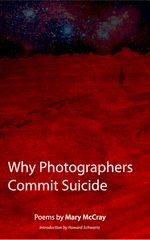
Her poems are full of great rhythms and she excels in writing interesting, unstuffy forms: pantoums,  crowns of sonnets, (I love me some sonnet crowns!), villanelles, crowded couplets. In the 1990s, everyone on the East Coast seemed to be writing travel poems. I heard so many affected travel poems at Sarah Lawrence, I was inspired to spoof them, which was the early impetus for the Mars poems that became my Sarah Lawrence thesis and later book, Why Photographers Commit Suicide. Hacker could easily have been one of those poets. She includes many European travel poems in this book, (a series of “Street Scenes”), and also includes poems about her Jewish heritage and the Holocaust. The final long poem is about her experience with breast cancer, “Cancer Winter.”

“Groves of Academe” is a great poem about her students who don’t read poems.

Hacker's love poems also contain disappointment but less from a perspective of loneliness and reservation. “Letter to a wound” and “Letter on June 15” are great examples. In “Nearly a Valediction” she says:

“You happened to me. I was happened to

You were the weather in my neighborhood.
You were the epic in the episode.
You were the year poised on the equinox.”

Her poem’s titles are vaguely porous, academic and unfulfilled. The poems themselves are much more conversational than their stilted titles. This didn’t appear to be happening ironically.


LuckMy Maxine Kumin book, Looking for Luck, from 1992 was also inscribed so I must have seen her read too. This was the last book I read of the three and Kumin seemed to exist somewhere between Glück and Hacker. Kumin is also the daughter of Jewish parents like Hacker but attended Catholic grade school. She's a heterosexual poet but nontraditionally feminine like Glück. Kumin spent much of her career in New England and like Hacker, Kumin is deft in the use of forms.

Kumin’s poems offer much more of a tone of greatfulness than the other two. Her topics in this book cover farm critters including horses and rats, gardening and, yes, foreign travel poems, although hers are in Bangkok. In the bulk of the book Kumin takes on the vocabulary of the farm and its many jobs. She also talks about teaching poems to prisoners, nature and  traveling across America.

In “Ars Poetica: A Found Poem” Kumin equates the nursing of a horse to the nursing of a poem, both by using indirection to get the job done.

In another poem about poetry, she says:

“The boggy hollow is dark and perilous,
Sometimes language impedes, sometimes it helps.”

In the poem “Hay” Kumin covers hay farming and milking cows. 

Maxine-kumin“Allegiance to the land is tenderness.
The luck of two good cuttings in this climate.
Now clean down to the alders in the swale,
the fields begin an autumn flush of growth,
the steady work of setting roots, and then
as in a long exhale, go dormant.”

Like Hacker and Glück, her poems don’t finish off in a flourish of wisdom. She’s more practical than even those two lyric plain speakers.

The poem “On Visiting Flannery O’Connor’s Grave” deals with how unceremoniously O’Connor is treated at her grave site.  “The Poet’s Garden” delineates a brief history of American Poetry. The poem “A Brief History of Passion” weaves the love story of her parents with romances happening simultaneously in literary history among D.H. Lawrence, Virginia Woolf, and Rainer Maria Rilke.

Of the three books, I had only read the Kumin's previously and it contained marginalia written in very slight (and retrospectively annoying) pencil marks. Why did I underline what I underlined decades ago. What I chose to highlight recently never did match up to what I was connecting to back then. That marginalia writer seems a stranger to me now. But that stranger was in fact me. Do we even connect at all?


A Book About Paradox, Surprise and Uncertainty in Poetry Craft

10windowsJust like the book Nine Gates (which I reviewed in 2014), I loved this book of Hirshfield essays although they were difficult. Did the book live up to its subtitle? Probably not but maybe it's a miracle the book had a subtitle at all considering the nebulous, ethereal subjects they explore. This book is not really for beginners; it’s strategy is so particular and pensive and one which requires good amounts of concentration.
Here is my take on what the essays cover and a quote from each section, although I don’t think cover is really the right word, more like "make exploratory expeditions into."

1. How a poem “sees”

 “Poetry’s generative power, then, lies not in its ‘message’ or ‘meaning’ nor in any simple recording of something external to its own essence. It resides within the palace of its own world-embedded, intertwining existence.”

2. Poetic statement

“…the narrow alleyways of rhetoric, the differing fatigues of failure and success. There is no way of telling in advance what part of our knowledge will be needed at any given moment.”

3.  An introduction to Basho

“Basho’s haiku describe and feel, think and debate. They test ideas against the realities of observation; they renovate, expand and intensify both experience and the range of language.”

4. The idea of the hidden in poetry

“The union, like all metaphor, brings revelation and addition, while it also covers, complicates, veils.”

5. Poetry and uncertainty

“For those willing to let themselves feel it, any story leaves behind an uneasiness, sometimes at the center, other times at the edge of perception, and like the remainder left over in a problem in long division, it must be carried. Literature’s work, and particularly poetry’s, is in part to take up that residue and remnant, to find a way to live amid and alongside the uncertain.”

6. Windows in poems

“…a window can coincide with the poem’s emotional center of gravity and pivot.”

7. Poetry and surprise

“Cognitive and creative discoveries are made in the same way as much of biological life is: by acts of generative recombination. Disparate elements are brought together to see if they might make a viable new whole.” 

8. What is American in Modern American Poetry

“…there is the migrant traveler’s perennial hunger and search for what can be made known, made home, that leads American poets, more often than not, toward the respite and sustenance of the local and radiant detail.”

9. Words’ transformative power

“Beauty unbuckles pain’s armoring. Unexpected startlement unfastens the psyche’s fortifications.”

10. Poetry and Paradox

“Art makes open cases, not closed ones.”


Survey of Books on New Mexico Poetry

I did a lot of summer reading this year. For years I’ve been working on two big New Mexico-themed projects so I’ve been reading essays, anthologies, tracking down art books. Here is a survey of what I’ve been reading so far.

Poems-american-westPoems of the American West, Everyman’s Library Pocket Series, Edited by Robert Mezey, 2002

This book proves an editor really does set the tone and style of an anthology. Mezey has somewhat modern and abstract tastes, which I liked, but would have liked a wider survey of different styles. His "west" goes all the way to Canada and out to California.

TurqTurquoise Land, Poetry anthology from the New Mexico State Poetry Society, 1974 and Sandscript, volume 2 of the NM State Poetry Society, 1976

Although there are plenty of what you might call amateurish pieces here, (or what I prefer to call workshop poems), I found some of the best ALBQ landscape poems in these books. Most ALBQ poems I’ve found so far have been very urban (to be expected), but I’m always been attracted to ones that deal with land forms around the city.

RenaissanceNew Mexico Poetry Renaissance, Edited by Sharon Niederman and Miriam Sagan, 1994

This is my favorite anthology so far. This book provided me with my longest list of poets to investigate further and involves a good, short sampling of each poet with some biographical information.

TtrailThe Turquoise Trail, Edited by Alice Corbin Henderson,  1928

This is the first anthology of gringo poetry in New Mexico. It primarily samples the Santa Fe and Taos poets of the 20s and 30s. I found a few poets to investigate later. What frustrated me most about this book was just trying to locate a copy; it proved how lacking historically significant books of New Mexico literature are from its public libraries. You might find some of these books in reference sections if at all. They’re not being reprinted and not being repurchased for the libraries although I found my copy for $6 on ebay.

I experienced the same issue with the Santa Fe novels Fire in the Night, 1934, by Raymond Otis and No Quarter Given by Paul Horgan, 1935. I had to find those two on Abe’s online bookstore for rare books.

JgfThe Selected Poems of John Gould Fletcher, 1988

One of the poets I pursued after reading The Turquoise Trail was John Gould Fletcher. I liked his poem “Rain in the Desert.” Fletcher made a few trips to Santa Fe in the 1930s and was on the periphery of editor Alice Corbin Henderson’s circle. This anthology has a sprinkling  of Arizona Poems  including “Cliff Dwelling,” “Rain in the Desert”, and other southwestern poems like  “The Last Frontier,” “Crucifixion of the Skyscraper” (which reflects the New Mexico circles dis-satisfaction with urban areas),  “On Mesa Verde ” and “The Burning Mountain” (I wonder if this is about the Sangre de Cristos). Fletcher was a southern Calvanist and the bulk of his work is gloomy and fate-obsessed and not about the southwest. 

IcIn Company, An Anthology of New Mexico Poets After 1960, Edited by Lee Bartlett, V.B. Price, and Dianne Edenfield Edwards, 2004

This one was a total slog including copious amounts of modern and experimental poetry (which, in its defense, it admits to in its subtitle). Most poems were decidedly not about New Mexico or the idea of place (fair enough). But 520+ pages of this point of view was too much and mostly unremarkable stacked up against other, more famous, experimental work. I may have been less harsh after only 250+ pages.

I also came across a self-published book while visiting the ghost town of Chloride, New Mexico. This is one of the remaining ghost towns which actually courts tourists. It has a gift store, a museum and a café and the town is only one street long! The book I found was South to Southwest by Patsy Crow King. She says these are poems for her grand-kids and it looks like my copy was one of ten printed. All the pages are printed fully bolded and in a big font. Certain poems have words missing, capitals misused, errors in punctuation (although she lead her local creative writing group and won some of its prizes as president and contest chair). She also includes some of her husband’s poems in the book.  But that said, she's actually an interesting rhymer and there are three poems of historical interest, one on Chaco Canyon, one on Monument Valley, and one rare gem about the ghost town of White Oaks, New Mexico.

Other recommended NM Lit Books

SantafeandtaosSanta Fe & Taos, The Writer’s Era, 1916-1941, Marta Weigle and Kyle Fiore, 1994

This is an amazing book filled with historical yet gossipy details about 1920s/30s Anglo writers who settled in Santa Fe and Taos.


SpudSpud Johnson & Laughing Horse by Sharyn R. Udall, 1994

After you read Santa Fe & Taos, The Writer’s Era, you’ll want to get a hold of this book. Again, missing from New Mexico libraries. I found it on Abe’s Books.


DesertastheticThe Southwest in American Literature and Art, The Rise of the Desert Aesthetic by David W. Teague.

I bought this book in Paris of all places. It’s a bit dry but these are fascinating essays on the change in American aesthetic consciousness among Europeans, the very idea of the west and how artists and writers contributed to changing those ideas about what was beautiful and transcendent about a landscape.

LadyThe Desert is No Lady, Southwestern Landscapes in Women’s Writing and Art, Edited by Vera Norwood and Janice Monk

Textbook like in size and depth but, again, essays with amazing overviews of southwestern landscape writing from many more perspectives: Native American, Hispanic, Cowboy/the Anglo settler, and the modern artistic zones of New Mexico today.

Past books I’ve read:

ModwestThe Modern West: American Landscapes, 2006

A coffee table book on modernism in western photographs and art. But the best overview of western landscape concepts.

OdesAdobe Odes by Pat Mora, 2006

The Desert is No Lady lead me to Hispanic poet Pat Mora. These odes are full-bodied reflections of New Mexico.


MudMud Woman, Poems from the Clay by Nora Naranjo-Morse, 1992

Meditative and lyrical poems about clay-building and the experience of commerce in Indian markets. The book includes fascinating photos of her pieces.


SunSun and Saddle Leather, Charles Badger Clark, Jr., 1915

A tiny volume of cowboy poems in older forms.


SongsSongs of the Cattle Trail and Cow Camp, collected by John A. Lomax, 1927

This was my grandmother’s book. Recently I found a list of old southwestern and Mexican ballads my grandfather loved when he was 19 back in the 1920s. I’m still looking for a recording of a song called “Friendless and Sad”…it wasn’t in here.


RedearthRed Earth, Poems of New Mexico, Alice Corbin Henderson, 1920

You can find cheap knock-offs on Amazon but stick it out for a nice hardback copy reprinted from The Museum of New Mexico. It includes artworks matched to the poems. Considering Henderson was the ringleader of the poets in The Turquoise Trail and that fact that Henderson was co-founder of Poetry Magazine with Harriet Monroe, I had high hopes for this book. I was disappointed, but there are a few evocative moments.

Fray Angelico Chavez, Selected Poems, 1969 Fray

Chavez is a poet from Wagon Mound originally, known to be a Catholic historical revisionist. I wanted to sense some kind of locality in this slim chapbook of poems but they were mostly kind of dry.


PlacepurposePlace as Purpose, Poetry from the Western States, Edited by Martha Ronk and Paul Vangelisti, 2002

Los Angeles' Autry Museum published this book of poets who just happen to be from the western states, not necessarily poetry about the western states. And again, we’re talking about western states here as opposed to southwestern states. Lots of experimental pieces. Annoyingly, there’s no table of contents.

ChisholmAlong the Chisholm Trail and Other Poems, George Rhodes, 2012

Not specifically a New Mexico book but this one was a winner in the Independent Book Awards. It has a great cover and some poems I liked. Mostly contains cowboy forms.  Cowboy forms are good to read but get old after large quantities are consumed, much like experimental pieces.


HallCactus and Pine, Songs of the Southwest, Sharlot M. Hall, 2006

Hall is an Arizona historical figure and this is a collection of her poems I picked up at her museum in Prescott, Arizona. She hated the idea that Arizona and New Mexico were once proposed to exist as one big state.


BacaCowboy Poetry Matters, From Abilene to the Mainstream, Contemporary Cowboy Writing, Edited by Robert McDowell, 2000

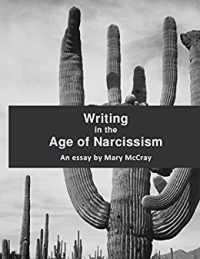
This is Story Line Press' gesture to bring back cowboy poetry (along with other forms). The movement gets a bit too political for me (see my essay about this topic, Writing in the Age of Narcissism), but this is actually a good anthology of poets writing in this genre sort of now.

LoveCowboy Love Poetry, Edited by Paddy Calistro, Jack Lamb and Jean Penn, 1994

Way over-designed but a good anthology.


BacaSelected Poems of Jimmy Santiago Baca, 2009

Baca is a famous local poet with a personal story of triumph. The movie, A Place to Stand, based on his life does not yet have a distribution deal I’ve seen a version of it that was beautiful and captivating.


10 Ways To Be A Better Poetry Reader

EdourdManetDignified reading: Edouard Manet's The Reader

For many, it's a challenge to be habitually reading poetry. If you were a student of poetry in college (like me), you were often given a list of recommended poetry works by your esteemed professors. Why was it always so impossible to penetrate these lists?

Because another person's list is simply that: another person's journey, not yours. Their list is all about them. And you need to build your own list, a list that is all about you! That’s the journey of life and it's the same with poetry.

You need to find your own way. And I can tell you that once you do, reading poetry becomes something you look forward to, if not an all-consuming adventure.

Start by thinking about your own interests and obsessions. As you search for books to read, one title or article will lead to another and, before you know it, you’ll have a lengthy list of poetry to find and read. Find those titles that connect with you. Soon it will start feeling like a quest.

1. Explore by Style

Are you’re interested in perfecting your own poetic style or exploring the tricks other poets are using? Are you looking for new ideas of craft? You can search for books of poetry based on style. Look for classical formalists writing in rhyme, meter or particular forms like ghazals or sestinas. I went through a phase of trying to figure out why sonnets were so satisfying in length and I can’t pass up a crown of them.  Anthologies can help you find writers who are working in particular forms. You can also follow conceptual poets this way as well, poets working with types of automatic or computer-generated content, poets who have developed various experiments of chance and theory.

2. Topic Quest

Are you interested in psychological topics, historical topics, scientific topics? Are you interested in books about a particular place? Do you want to read food poems, murder poems, ghost poems, cowboy poems, Zen poems? I have gone through searches on all of these topics over the years. I even have a very eclectic taste for pop-culture poems that mention singer-actress Cher. Whatever your obsession may be, there are poems out there for you.

3. Meet the People

Soon you'll find your favorite poets and will want to read all their books. You might be swayed by the cult of celebrity and want to read books by poets who make the news or win awards. You can also develop your own quirky explorations. Recently, I’ve been buying the books of faculty poets at every college or university I visit. My sister-in law likes to buy t-shirts from colleges all over the country; I buy books of faculty poetry. I make an extra stop at the university bookstore in every town I visit. Essentially it’s about meeting people and hearing what they have to say. You can figure out a map-of-meeting that interests you.

4. Fancy a Publisher

Sometimes you find you like a certain publisher and the way they publish their books. You like their paper or binding style, their cover artwork, or the type of works they publish. Something about their style amuses your sensibilities or you appreciate their political, cultural or social mission. As a fan of a publisher, you can explore their catalog.

5. Support Your Friends

Sooner or later, we all have friends who publish. At least many of our teachers have already published. I try to buy all the books my friends publish and at least one book by all my teachers and published acquaintances. Yes, sometimes it's about your karmic bank account. But it’s also about listening to your friends and appreciating what they do. Knee-jerk support combats natural feelings of competitiveness, jealously and superiority.

6. Follow Your Sensibilities

Each generation has sensibilities: diner culture sensibilities of the 1950s, Beatles-era sensibilities of the 1960s, New Wave and GenX sensibilities of the 1980s. It’s not quite a style; it’s not quite a topic. It’s about experiences, living with old or new technologies, processing changes and modernity, and how your generation consumes and makes sense of it all. Because I’m a GenXer, I tend to seek out poets who write about pop culture, feminism and identity in an ironic, irreverent ways.

7. Poetry Readings

If you go to a poetry reading, which 99% of the time is a free experience, buy the poet’s book. I’d even say whether you like it or not. No one's getting rich here. If you support the cause, support the cause. You just might be surprised what treasures you bring home. And a book that doesn't speak to you now may speak to you in 10 years. I’m often dismayed to hear poets brag about supporting their local economies at the grocery store but they can’t seem to bring themselves to do it at the local book store.

8. Unlikely Places

Be on the lookout for poetry in unlikely places: garage sales, art shows, history museums, local city museums. I found a poet in a local city museum in Bandon, Oregon, during a family reunion. The woman who wrote the book was about the age of my mother and had experienced a remarkably similar childhood as my mother had on the coast of Oregon. Finding that book enabled me to understand my mother’s experience in a fresh way. (I also found a picture of my grandfather on the wall at that museum!)

9. Recommendations

As I mentioned earlier, recommendations are often problematic but, once in a while, a friend will let you in on a great, secret find. I’ve been sent boxes of books by friends and it sometimes takes me years to get to a book. I can't tell you how many times I've cried out, “Book! Where have you been all my life??” and fretted that I hadn't made my way to the book sooner. But that’s how life is: stuff comes to you when it comes to you. Also be on the lookout for recommendations in journals, online and from reviews in old newspapers.

10. Free Books!

Big tip time: don’t assume everything marked "Free" is worthless. Don’t be a hoarder but take a book or two from the free pile at events, garage sales and those boxes on the stoops of used book stores. Give it a shot and see what you find. It’s like supermarket surprise!

Soon you’ll find that one book truly does lead to another and another. You can look for ideas in bookstores, literary journals, poetry anthologies, poetry textbooks, publisher catalogs like Copper Canyon's seasonal catalog. I’ve found a few amazing Zen books there. You should also be open to finding poetry in museums, on TV shows, or from teachers in other disciplines. My mindfulness teacher used to start each week’s class with a poem!

Without opening yourself up to finding new poetry, you'll miss out on reading friendships, surprising epiphanies and the amazing journey of reading your books.


Meet Poet Sherman Alexie

AlexieI haven’t made a post recently on poetry I've been reading. This is because I’ve been mired in New Mexico poetry anthologies. Report coming soon!  

I visited the local CNM library in search of New Mexico poets. Didn’t find any. But I did find many Sherman Alexie works. Alexie is not a New Mexican poet but he is an American Indian poet from the Spokane tribe located in Washington state. Although Spokane is very different from the tribes of southwestern New Mexico, he does provide both profound and humorous insight into the American Indian Experience. I started with the oft recommended children’s novel The Absolutely True Diary of a Part-Time Indian. As described, it was excellent and a perfect place to start with Alexie if you’re a confused gringo. Truly, if you’re looking for Indian perspectives you have millions of alternatives. Natalie Diaz is a very hot Mohave poet right now. Joy Harjo is a perennial favorite of mine. But just check out this Wikipedia list.

I’m becoming really attached to Alexie in fact and the well-rounded way he talks about race reminds me of Richard Wright (just perused Richard Wright’s collection of haiku at the library). Like Wright, Alexie knows how to balance the complexities of race by using both good and bad characters from all sides. Good white people and bully white people. Good Indians and bully Indians.  And the badness that ensues when trying and failing to be good.

Similar Alexie stories occur in poems, short stories and the novels, like Grandma’s stolen powwow regalia which shows up in An Absolutely True Diary and in short stories from the collection Ten Little Indians. An Indian mother singing Donna Fargo’s "Happiest Girl in the USA" is another story that shows up in different fiction and poems.

The poems in One Stick Song (2000) are also a good introduction to Alexie with poems like "Unauthorized Biography of Me," "An Incomplete List of People I Wish Were Indian," "The Mice War," "Sex in Motel Rooms," "Powwow Love Songs." In his stories and poems, Alexie can describe both Rez life and city life. What I like about his poems, they’re all different in tone and format.  

The Business of Fancydancing,  (1992), contains poems that are a little rougher. But worth reading are "War All the Time," " Misdemeanors," "Missing," "The Reservation Cab Driver," and "Giving Blood." Alexi is good at setting the scene and giving you a tight kick in the pants.

Diary Ten One


Poetry Magazine, Poetry in Mainstream News (April)

4-2015-cover-360

I've been subscribing to Poetry magazine this year. I can't say I'm completely enjoying my first few issues but April 2015 has much to recommend in it. The issue is dedicated to hip hop poetry and I enjoyed almost every poem.  Nate Marshall lists a 7-point blueprint for BreakBeat writing and Kenneth Goldsmith's conceptual manifesto ends the issue. Good fodder for discussion on what poetry is supposed to do. There are some truths in there, some narcissisms and quite a few contradictions.

I'm busy working on my NaPoWriMo pieces. Met a few new poets over there. Hello Poetry has gotten into NaPoWriMo in 2015.


Poetry In Mainstream News

Cat Poetry

Charles Bukowski’s Unpublished Cat Literature Can Be Yours In October (Flavorwire)

People

“I Am Not a Nature Poet”: Why Robert Frost Is So Misunderstood (Flavorwire)

2I love it when my blog obsessions overlap. In 1975 Brit Pop Star David Essex appeared on Cher's solo TV show (YouTube). Now he's released a book of poetry, Travelling Tinker Man & Other Rhymes. (The Independent)'

Charles Simic Displays a Poet’s Voice and His Passions (The New York Times review)

Tomas Tranströmer died last month at the age of 83

Poetry Drama

Stepson of poet Anne Cluysenaar receives life sentence for her murder (The Guardian)

Poet Lawrence Ferlinghetti laments changing San Francisco (PBS NewsHour)

The new Maya Angelou stamp quotes Joan Walsh Anglund by mistake (People Magazine)

Making Poetry Vibrant (and Not Complaining)

Miami poet R.M. Drake reinvigorates enthusiasm for poetry through Instagram (Miami Herald)

No One Cares About Poetry? Right. Check Out China's Vibrant Scene (1,200 years later, is Chinese poetry entering a new golden age?) (PRI)

'Sidewalk Poetry' Project To Take Literature To Cambridge Streets—Literally (The Artery)

Gentleman Poet’s Hunt & Light Kickstarts New Poetry Book (Dan's Papers)

Remembering Peggy Freydberg, a 107-Year-Old Poet Whose Career Was Just Getting Started (Vanity Fair)

Take a Poet to Lunch in April (My San Antonio)


eBook Formatting and Frank O’Hara

EbookformattingI'm a big believer that you don't need to fork over money to an eBook designer to create an eBook version of your poems. That is, beyond what you will spend to design your physical book. There are many poets out there insisting poetry can't be designed for electronic book reading. But I've been reading books of poems on my Kindle for years now. And if they're priced right, I buy books of poems on my Kindle I normally wouldn't buy in print. This usually happens when I want to test out a new poet or when I want to read a book but not necessarily "collect" it on my bookshelf.

There are special formatting issues for poems on eBook. Some special indenting creates problems, but over the last few years these issues have been overcome by some lit-minded, html-savy people who are generous enough to share their tricks with us.

Your Poetry eBook, Quick and Easy Formatting for Kindle by D.L. Lang is a great start for newbies. It's cheap and quick and informative for any poet who wants to stay up-to-date on how their books are made. 

Looking to Read

Publishing by Gail Godwin was recently reviewed in Entertainment Weekly, whose review tells us the book “explores the writer’s shifting place in the publishing industry’s disheartening transformation—from a place where tweedy editors spent years nurturing gifted young writers to a marketing machine where authors must now come with ready-made personal brands.”

The Frank O’Hara Project

City poetI just finished my first big experiment in reading someone’s collected works at the same time I read the biography. This idea started when I finished Edna St. Vincent Millay’s biography and then started her selected poems having forgot all the anecdotal stories from the biography.

I decided to slowly go through Donald Allen’s collected tome of O’Hara while reading City Poet by Brad Gooch, or as Monsieur Big Bang like to call it, that big book by The Gooch.

I started at the end of 2013 and finished just before Christmas in 2014! It took a year of bedtime reading!

I loved the biography and how its stories and poets overlapped with my studies on local Santa Fe poets over the same time-period. For instance, one line of the biography declares how O’Hara despised Vachel Lindsay.

The collected poems were a bit of a slog, containing over 400 pages of small printed verse. Many of his experiments were interesting at first but tedious after many incarnations; but I felt by the end of it I had my own personal little selected list of gems.

In any case, his famous poems are famous for a reason.


Poems About New Mexico and the World

HowweI went to the library and checked How We Became Human, Selected Poems by Joy Harjo to see what she had to say about New Mexico as place. Harjo is one of my favorite poets period, definitely my on the top of my list in the category/almost-genre of American Indian poets. In her first anthology I was looking for any 1970s references to New Mexico places. Harjo does come back to New Mexico quite a bit in her writing and she seems to view New Mexico as a spiritual, if not physical, home place when she references the Sandia Mountains, Albuquerque streets and the more southern Manzano Mountains.

But Harjo is really one of the most well-traveled and cosmopolitan modern poets we have. She moves through towns all across American and abroad and digs into the concrete of it all, so to speak. This fusion of urban and outpost gives her work uniqueness. Take for example her older poem "3 A.M." about being in an airport and trying to get back to Hopiland. There are also quite a few Indian themes in how she handles alcohol and the ideas of futility and fate. Like many Indian writers she's in a struggle of locating: locating her foundation of history, locating a sense of belonging, even locating asuvivor’s-guilt sense of existing, and locating forgiveness.

JoyHarjo feels unique to me however in the sense of how she writes eye to eye with her reader. Much of American Indian poetic tone contains a spiritual distance inherent. Harjo is much more intimate. She’s not some voice-over spirit speaking from the stars. She’s on the street and across the table from her reader.

I always love to find moments of Harjo talking about the earth’s circling revolutions. This occurs again and again: “a whirring current in the grass,” “swirling earth,” “slow spin like the spiral of events.” The swirling is often coupled with descriptions of women in crisis, turmoil, madness, and lostness.

This is a great collection of poems. All her greatest hits are in here: “She Had Some Horses,” “I Give You Back,” “I Am a Dangerous Woman,” and “Perhaps the Word Begins.”

Poetry Received

As a holiday greeting, the Academy of American Poets sent me a holiday postcard with a Larry Levis quote from the poem “Winter Stars

The newCopper Canyon Reader catalogue also came. I sensed a shift in poems this time, many more experimental poets although still with a spiritual cast. My favorite new book samples:

  • Erin Belieu – Slant Six ("humor and horror in contemporary American life—from the last saltine cracked in the sleeve, to the kitty-cat calendar in an office cubicle."); New York Times Review
  • Yosa Buson – Collection Haiku of Yosa Buson translated by W.S. Merwin and Takako Lento
  • Fady Joudah – Textu – a new form of 160 character long poems influenced by texting and Twitter

 My autumn issue of Poetry London also came a few months ago. When I reflect back on this subscription I want to say I haven't enjoyed it. It's a bit dry and the magazine itself is unwieldy and downright ugly. But I have to admit some of their poets and reviews have stuck with me over the last few years. I still don’t like the layout, material or covers of this magazine, with such big photos you can see the pores on the chins of poets. It’s just distracting. Where's some tabloid airbrushing when you need it?

CK Williams has a great poem in this issue about climate change called “The Sun, The Saint, The Sot,” taking on an impossible topic and making it poetic. CD Wrights is included in the issue too. I always get those two confused. I liked her “Obscurity and Winter Sun” poem which is sort of about writing.

There are always a large amount of experimental, language-y poems in the magazine and whenever I read these pieces I think of the neurosis of the Internet age and how the world is full of too much information. I wonder if these poems are depictions of our minds spiraling out.

 The issue provided me with a nice list of "new" poets to look up:

  • Heather Phillipson
  • Fiona Benson – Bright Travelers: A central sequence of dramatic monologues addressed to Van Gogh allows for a focused exploration of depression, violence, passion and creativity.
  • Kathryn Simmonds – The Visitations:  I particularly want to read "Life Coach Variations."
  • Ciaran Berry – The Dead Zoo (available on eBook)
  • Bill Manhire – Selected Poems
  • Nancy Gaffield – Continental Drift – a book about landscapes and borders


A Book About the Dark Side of the 1970s

Sister_Golden_Hair_cover-193x300Over on my sister-site Cher Scholar, I've just published a recent interview with the author of a new novel, Sister Golden Hair, about a pre-teen girl named Jesse growing up in the early-to-mid 1970s. I talk to author Darcey Steinke, the daughter of a minister and a beauty queen, about how a celebrity-obsession with Cher works in the narrative and what Cher's "text" means vis-à-vis our struggles with ideals of beauty, role models and holiness. We also talk about the construction of her novel and depicting the trials of a teenager navigating issues of identity.

Interview with Darcey Steinke, author of Sister Golden Hair

Things to Check Out (or not)

AnthLast spring I listed The Anthology of Really Important Modern Poetry by Kathryn & Ross Petras on my list of books to check out in the celebrity poetry genre. I was hoping this book was an anthology of poems written by celebrities, poems collected which had never appeared in full-length collections.

It was billed as having "Timeless 'Poems' by Snooki, John Boehner, Kanye West and Other Well-Versed Celebrities." However, this book does not include any poetry written by celebrities. Instead, the authors have culled bad, embarrassing quotes from press interviews and twitter feeds and turned them into faux poems with snarky line breaks. The authors skewer not only celebrities, but political figures and they slay democrats and republicans alike. 

On the one hand, I did enjoy the ridiculousness of the quotes and the author’s ruthless mockery of them. But on the other hand, I am nagged by the worry that making fun of ridiculous things celebrities say only encourages more celebrities (and all of us really) to make really idiotic comments in order to score some attention. After all, any spotlight is a good spotlight in modern America.

Highlighting the really ignorant comments of celebrities and politicians does not discourage the behavior, it simply lowers the bar.


I've recently come across this new poetry website: http://poetry.newgreyhair.com/ which promises "Punch in the Face Poetry."

I'm way behind on my trial subscription of Poets & Writers but the July/August 2014 issue (find it at your library) is all about finagling a literary agent (for you novelists) and the magazine continues to occasionally deconstruct and analyze good pitch letters.

There's also a good column inside on writing groups for military veterans and one on the life of teaching poetry in prisons. If you're like me you've probably already read quite a few of these testimonials but this one, by Wendy Bron-Baez, was particularly good.

And I want to give kudos to one in the mass of MFA advertisements inside the same issue. Pine Manor College uses images of the published books of its graduates to say all that needs to be said. Very impressive on many levels.


« Older posts Newer posts »

© 2026 Big Bang Poetry

Theme by Anders NorenUp ↑